

The Billion Dollar Business Hidden Behind Google Maps’ Completely Free Service For Everyday Global Users
Google Maps feels like a free public utility to over a billion users, but behind that simplicity sits an eleven billion dollar business built on advertising and API fees, one that quietly bills the delivery and ride hailing apps you use every day.
Highlights:
- Google Maps is estimated to generate around 11 billion dollars a year, used by more than 1.2 million companies
- The platform holds roughly 67 percent market share among mapping applications worldwide
- Most delivery and ride hailing apps do not build their own navigation, they license Google’s instead
- Google introduced usage based API pricing in 2018, ending a decade of free access for developers
- Rivals like Mapbox and Radar now undercut Google’s per request pricing by up to 85 percent
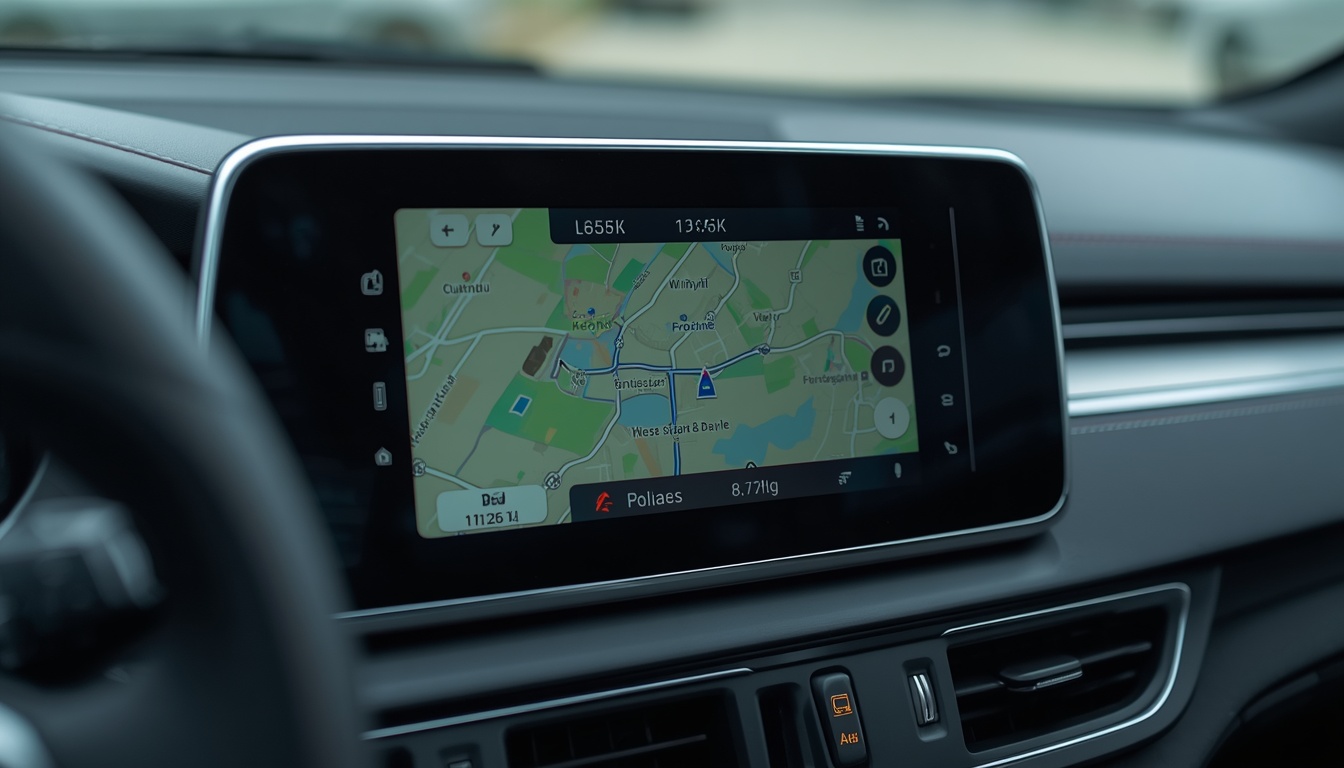
Open Google Maps to find a coffee shop, and nothing about the experience asks you for a rupee. No paywall, no subscription prompt, no advertisement forcing its way between you and your destination. That silence is precisely the point, and precisely what makes Google Maps one of the more quietly effective business models in modern technology.
Google Maps is estimated to generate somewhere around 11 billion dollars in annual revenue, a figure that has held roughly steady across recent years even as the platform’s usage has kept expanding, now serving more than 1.2 million companies through some form of its API, and holding an estimated 67 percent market share among mapping applications worldwide. None of that revenue comes from a fee charged to the person tapping directions on their phone.
The origin story behind this business is a useful place to start, because it explains why the current model looks the way it does. Google Maps began life as Where 2 Technologies, a small startup working out of a garage in Sydney, before Google acquired it in 2004 and launched the mapping product the following year. What followed was over a decade of deliberate, patient infrastructure building, sending vehicles to photograph streets for Street View, layering in real time traffic data, and steadily becoming the default mapping choice embedded so deeply into the internet’s plumbing that few businesses today would seriously consider building their own alternative from scratch.
That patience is precisely what makes the monetisation model work. Google Maps earns its revenue through two genuinely distinct channels, running in parallel rather than competing with each other.
The first is advertising, the more visible of the two, even if most users never quite register it as advertising. Businesses can pay for local search ads, appearing more prominently when someone nearby searches for a coffee shop, a pharmacy, or a mechanic, and for promoted pins, a small paid boost in visibility within dense, pin crowded city views. It looks like a helpful map feature. It functions as targeted local advertising, blended so naturally into the interface that it rarely registers as a sales pitch at all.
The second channel, considerably less visible to ordinary users, is where the larger share of the business actually lives, the Google Maps Platform API, the toolkit thousands of developers and companies license to embed genuine mapping functionality, geocoding, live navigation, business location data, into their own apps and websites, rather than building any of it themselves.
As one analysis of the platform’s economics put it plainly, every ride tracked, every delivery followed on a map, and every “where’s my order” screen a customer checks is, more often than not, Google’s infrastructure running quietly underneath a completely different company’s brand.
For years, that infrastructure was effectively free, or close enough to it that most developers never thought to budget for it. That changed decisively in 2018, when Google introduced usage based pricing across its Maps Platform, a shift that sent real, sometimes startling monthly bills to thousands of websites and apps that had built their entire product around a service they assumed would remain free indefinitely. By then, switching costs had become enormous, a decade of dependency does not unwind easily, and most businesses simply paid.
The pricing structure has only grown more granular since. As of March 2025, Google replaced its old flat 200 dollar monthly credit, once pooled loosely across every API a developer used, with per SKU free usage caps, 10,000 free events for its Essentials tier, 5,000 for Pro, and 1,000 for Enterprise, alongside new subscription plans starting around 100 dollars a month for 50,000 events and climbing to 1,200 dollars a month for 250,000. Actual per request pricing ranges from roughly 2 to 40 dollars per 1,000 requests, depending on which specific API and tier a business needs.
That complexity carries a genuinely important, easily missed consequence. A typical modern application, a store locator, a checkout flow with delivery estimates, rarely calls just one API. It calls four or five simultaneously, geocoding an address, rendering a map, calculating a route, pulling business details, and the combined bill for all of that frequently runs three to five times higher than what a team budgeted for when they thought, simply, we need maps.
That gap has created real commercial room for rivals to compete directly on price. Mapbox offers roughly 50,000 free map loads a month against Google’s approximately 28,500, and charges 5 dollars per 1,000 loads after that free tier against Google’s 7 dollars, while its geocoding pricing runs at 0.75 dollars per 1,000 requests, roughly 85 percent cheaper than Google’s equivalent rate. Radar, another challenger, has publicised a case in which a logistics company reportedly saved 1 million dollars a year simply by switching its navigation infrastructure away from Google, and European focused alternative Woosmap pitches savings of 30,000 to 120,000 dollars annually for mid to large online retailers, alongside a specifically EU hosted infrastructure pitch aimed at businesses wary of routing customer address data through servers outside the bloc entirely, a genuine concern given Google’s Maps and Places APIs route requests through US based infrastructure regardless of where a request originates, creating data transfer complications under EU privacy law for companies handling European customer addresses.
There is a fair, more skeptical reading of this entire arrangement worth holding alongside the admiration this business model tends to attract in strategy write ups. A free consumer product built on top of a decade of infrastructure investment, one that only reveals its true cost once businesses are already dependent on it, is a genuinely effective monetisation strategy, but it is also a textbook example of exactly the kind of platform lock in that regulators have increasingly scrutinised across big technology generally. The EU’s Digital Markets Act has already flagged concerns around Google’s broader self preferencing practices in adjacent areas, and a mapping platform commanding 67 percent global market share, built substantially on a decade of free access that has since been converted into a metered, increasingly granular billing structure, sits squarely within the kind of dominant platform behaviour that same regulatory framework exists to examine.
None of this makes Google Maps a villain in any straightforward sense. The product genuinely works, genuinely useful, genuinely free for the ordinary person checking directions to dinner, and the underlying engineering, a decade of street level photography, real time traffic modelling, and business data aggregation across nearly the entire planet, represents a genuinely difficult infrastructure problem that few competitors have matched at comparable scale even now. Whether that scale continues translating into durable pricing power as genuinely competitive, meaningfully cheaper alternatives mature, or whether businesses increasingly follow Radar’s logistics customer toward rivals offering the same core functionality at a fraction of the cost, is the more interesting question sitting behind this eleven billion dollar business, one considerably harder to answer than simply admiring how quietly it built itself.