
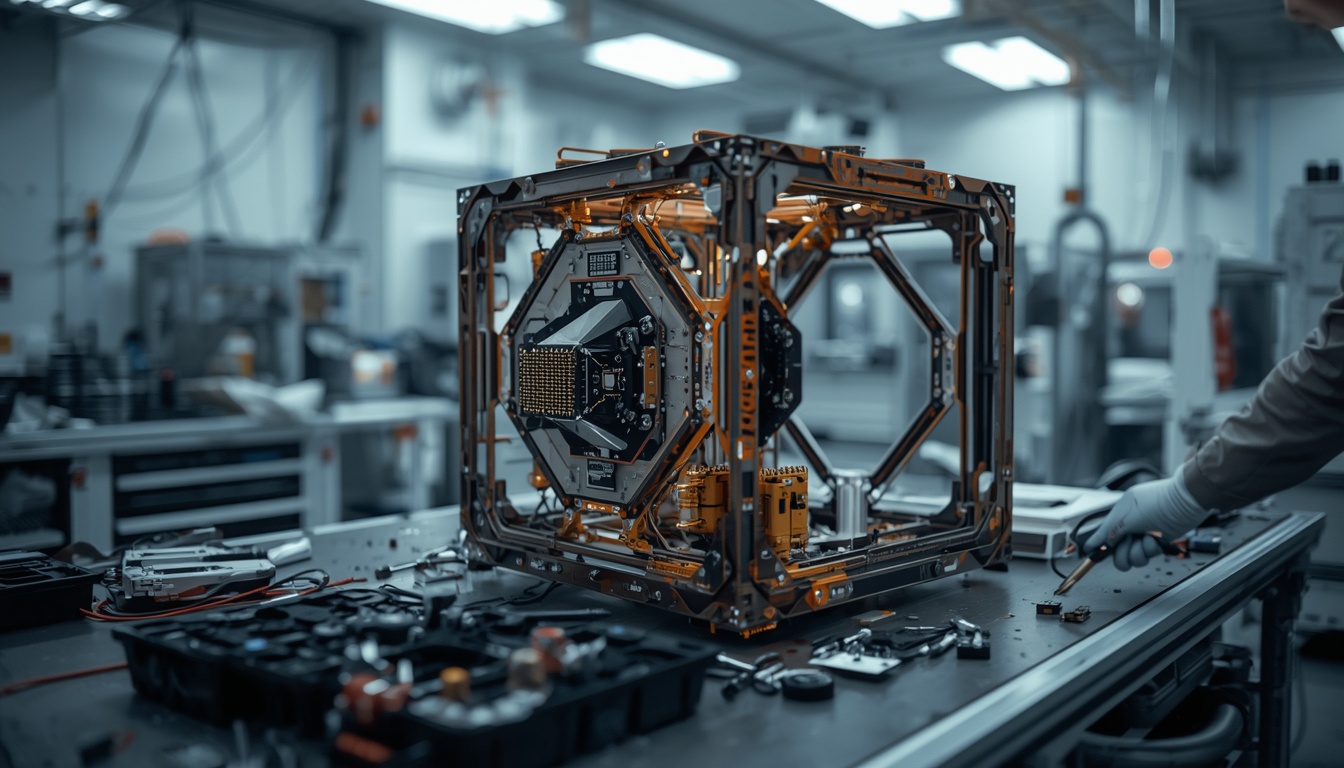
GalaxEye Acquires Bengaluru Spacecraft Engineering Firm StarOps To Strengthen India’s Indigenous Satellite Engineering Capability
Fresh off putting India’s first privately built OptoSAR satellite into orbit, GalaxEye has quietly acquired Bengaluru spacecraft engineering firm StarOps, betting that owning more of its supply chain matters more right now than raising another funding round.
Highlights:
- GalaxEye has acquired Bengaluru based spacecraft engineering company StarOps, according to a confirmed industry announcement
- The deal follows the successful May 2026 orbital launch of Mission Drishti, India’s largest privately built satellite
- GalaxEye has raised over 24 million dollars across eight funding rounds since its 2021 founding
- The company plans to scale its Drishti constellation to 8 to 12 satellites by 2029
- Deal terms and specific details about StarOps were not disclosed publicly at the time of the announcement
Most young space companies spend the months right after their first successful launch doing the obvious thing, celebrating, courting new investors, riding the press cycle. GalaxEye appears to have spent that window doing something quieter, buying a company.
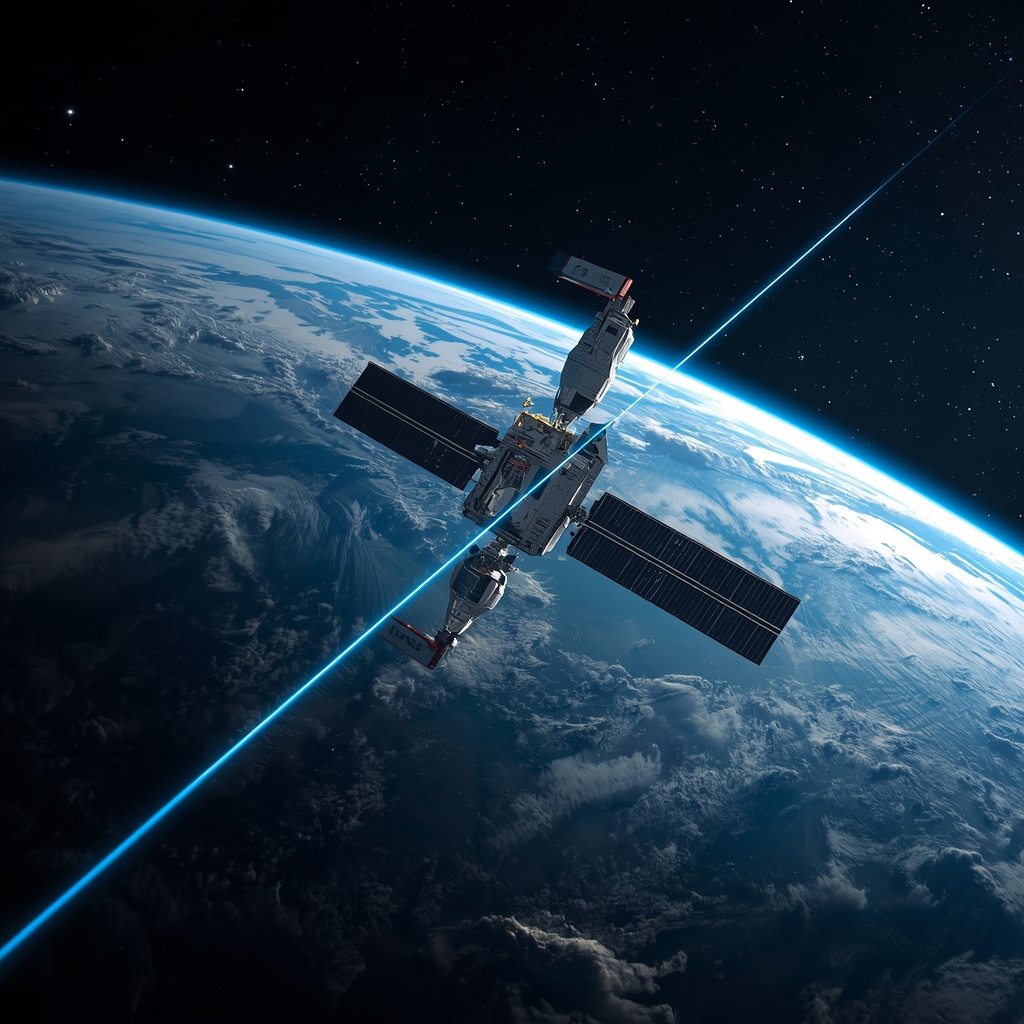
GalaxEye Space Solutions, the Bengaluru based Earth observation satellite maker, has acquired StarOps, a Bengaluru based spacecraft engineering company, according to a confirmed industry announcement. The deal arrives just weeks after GalaxEye’s own defining moment, the successful orbital deployment of Mission Drishti, the world’s first satellite to combine synthetic aperture radar and multispectral optical sensors on a single platform.
To understand why this acquisition matters, it helps to understand what GalaxEye had just finished proving. Mission Drishti, weighing 190 kilograms, launched in May 2026 as India’s largest privately built satellite, the culmination of more than five years of indigenous research and development. The satellite underwent structural testing at ISRO’s own U R Rao Satellite Centre before launch, validating that it could survive the extreme temperatures, vibration, and vacuum conditions of actual spaceflight.
“Mission Drishti marks our first mission and the culmination of over five years of sustained R&D to develop this breakthrough technology,” said Suyash Singh, founder and chief executive of GalaxEye, following the launch. “With the satellite now successfully in orbit, our immediate focus is on completing its commissioning. As we move through this phase, we are already witnessing strong global interest in the differentiated datasets enabled by our OptoSAR payload.”
That single satellite was never the destination, it was the proof of concept for something considerably larger. GalaxEye has said it intends to scale Mission Drishti into a full constellation of 8 to 12 satellites by 2029, building what the company describes as a robust, sovereign Earth observation infrastructure for India, one capable of delivering near real time, all weather imagery for applications spanning defence, agriculture, disaster management, maritime monitoring, and infrastructure planning.
Building a constellation of that scale requires something a single successful launch does not automatically provide, repeatable, in house manufacturing capacity for spacecraft structure, integration, and testing, precisely the domain a spacecraft engineering firm like StarOps would specialise in. Acquiring rather than continuing to outsource that capability is a meaningfully different strategic choice than simply signing another vendor contract, it suggests GalaxEye views spacecraft engineering not as a service it wants to keep buying, but as core competency it wants to permanently own.
That instinct fits a broader pattern already visible in how GalaxEye built its first satellite. Mission Drishti’s early architecture leaned on a coalition of specialised partners working together under a memorandum of understanding, with Antaris providing satellite as a service software, Ananth Technologies handling assembly, integration, and testing, and XDLINX Labs designing the spacecraft bus itself. That collaborative model helped GalaxEye reach orbit on its first attempt, but it also means the company’s manufacturing capability, at least for its debut mission, was distributed across several external partners rather than concentrated inside its own walls. Acquiring StarOps reads as a direct move to bring more of that distributed capability in house ahead of the considerably larger manufacturing demands a 10 satellite constellation will require.
GalaxEye’s own funding history offers useful context for how the company has financed its growth to date. Founded in 2021 by Suyash Singh and cofounders including Denil Chawda, incubated at IIT Madras by alumni who had previously collaborated on Team Avishkar Hyperloop, the company has raised more than 24 million dollars across eight funding rounds from investors including Speciale Invest, LetsVenture, and Infosys. Its most recent disclosed raise came in February 2026, a Rs 5 crore venture debt round from SIDBI, alongside an earlier Rs 8.28 crore non controlling stake investment from drone maker IdeaForge, which said it planned to draw on GalaxEye’s sensing expertise to develop its own drone based sensors.
That funding cadence, smaller, more frequent rounds rather than a single, headline grabbing mega raise, suggests a company that has generally preferred building capability and hitting technical milestones over chasing valuation announcements, and this acquisition fits that same pattern. Rather than raising a large new round explicitly to fund manufacturing scale up, GalaxEye appears to have used its existing position, freshly validated by a successful launch, to acquire the specific engineering capability it needs directly.
It is worth being honest about the limits of what is publicly known regarding this specific transaction. The confirmed announcement establishes that the acquisition happened, but does not disclose deal terms, valuation, StarOps’s founding team, or the specific technical capabilities StarOps brings beyond the general description of spacecraft engineering. That is a real information gap, and it means readers should treat this coverage as confirming the fact of the deal rather than its full strategic or financial substance, at least until either company discloses more.
There is a fair, broader question worth holding regardless of those specifics. Vertical integration through acquisition is a genuinely reasonable strategy for a young space company scaling from one proven satellite toward a full constellation, but it is also a considerably more capital intensive and operationally demanding path than continuing to rely on external partners, one that requires GalaxEye to successfully absorb an entirely different company’s team, processes, and technical culture while simultaneously managing the already difficult work of scaling satellite production. Acquisitions of specialised engineering firms by young, rapidly scaling companies do not always integrate as smoothly as the announcement moment suggests, and GalaxEye’s actual manufacturing throughput over its next several satellites, not this acquisition alone, will be the real test of whether owning StarOps meaningfully accelerates its constellation timeline.
None of this diminishes the genuine significance of what GalaxEye has already accomplished, and what this acquisition signals about its ambitions going forward. A company that reached orbit on its first attempt with the world’s first combined SAR and optical sensor satellite, then moved within weeks to acquire spacecraft engineering capability rather than simply banking the achievement, is behaving like a company that takes its own stated 10 satellite roadmap seriously. Whether that acquisition proves to be the moment GalaxEye’s manufacturing capability genuinely matured, or simply the beginning of a considerably harder integration process the company has not yet had to publicly account for, is a question this announcement raises without yet answering, and one GalaxEye’s next satellite launch, not this deal alone, will help settle.