
Anveshan Raises ₹150 Crore to Take Health Food Beyond India’s Metro Cities
Anveshan just raised ₹150 crore from Vertex Ventures and the World Bank’s IFC , betting that India’s appetite for pure, traceable food can travel well beyond urban drawing rooms and into the country’s vast, price-sensitive heartland.
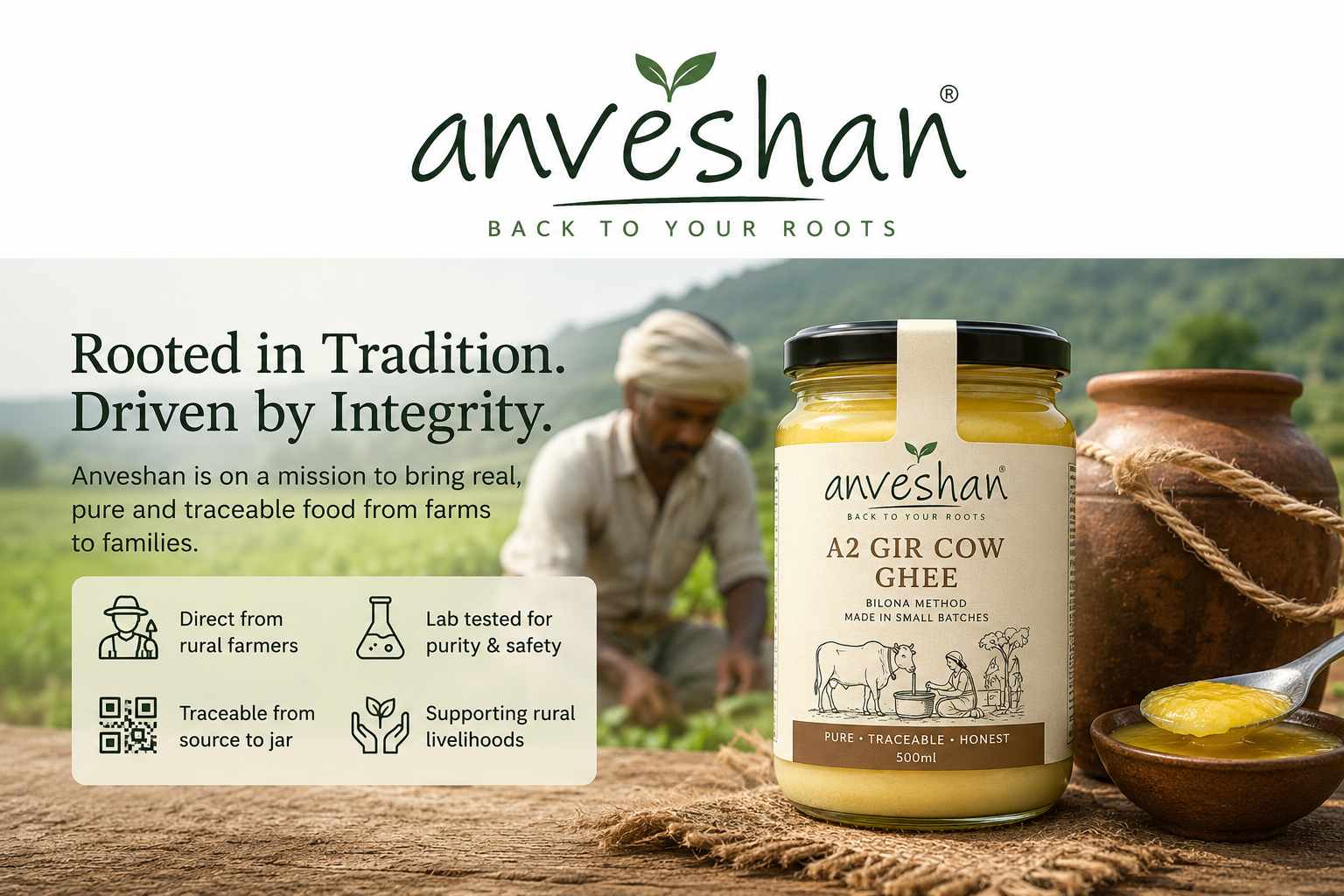
There is something familiar about Anveshan’s packaging. The mason jar, the handwritten font, the promise of something made slowly and honestly. It does not look like a startup product. It looks like something your grandmother kept in the pantry. That is exactly the point.
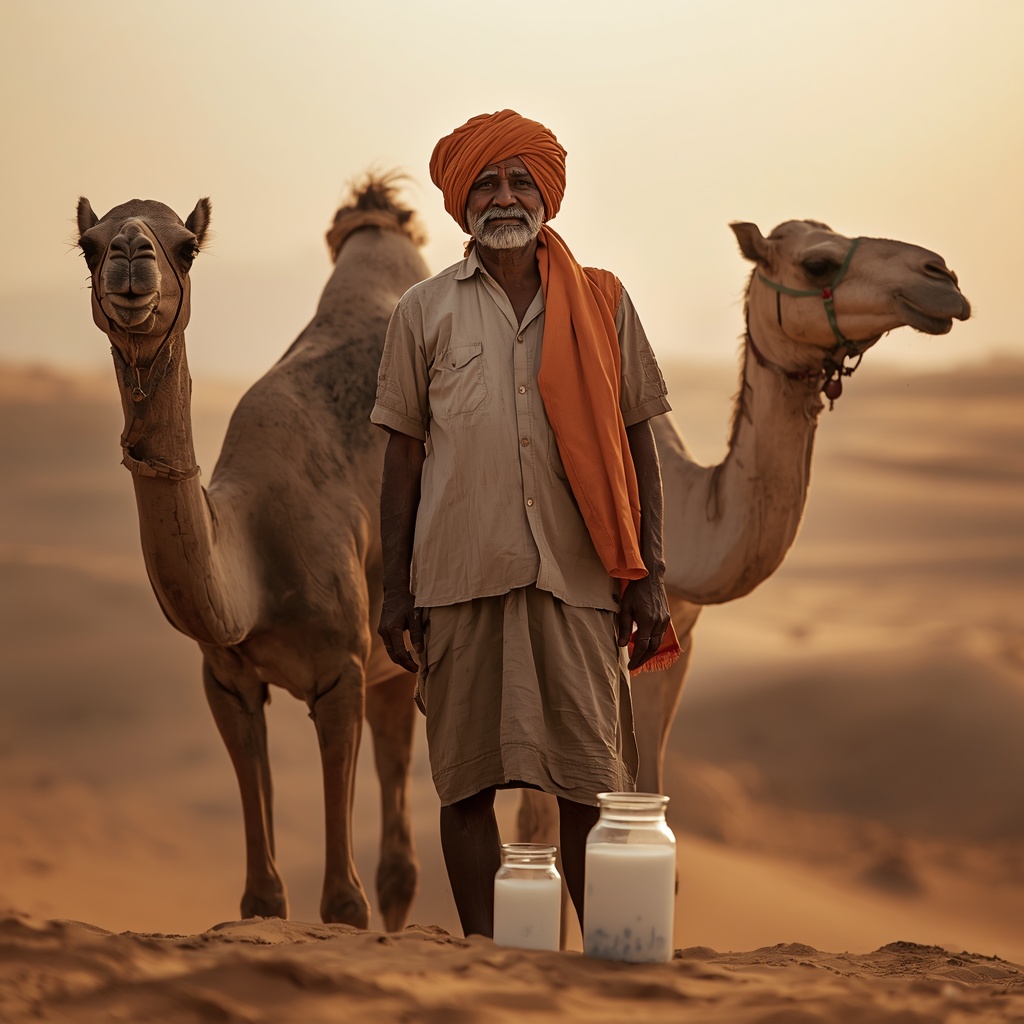
Founded in 2020 by three IIT Guwahati alumni , Kuldeep Singh Parewa, Akhil Kansal, and Aayushi Khandelwal , Anveshan was built on a simple and uncomfortable observation: that most food on Indian supermarket shelves had drifted far from the thing it claimed to be. Ghee that was not really ghee. Honey that had been processed beyond recognition. Oil that had passed through so many industrial stages it bore little resemblance to the seed it came from. Parewa grew up in a farming village in Uttar Pradesh, watched farmers abandon their fields and move to cities, then walked away from a Goldman Sachs placement to do something about it. Khandelwal had struggled with health issues and found relief in her grandmother’s traditional recipes. Kansal brought the same institutional background and a lens shaped by a family of doctors. Together, they built a model that worked backwards from the farmer , direct sourcing from rural micro-entrepreneurs, minimal processing, rigorous testing, and a QR code on every product so the buyer could trace the journey from cow to jar. It was a clean story. And it sold.
On June 1, 2026, Anveshan closed a ₹150 crore Series B led by Vertex Ventures Southeast Asia & India, which put in ₹75 crore for an 8.87% stake. The International Finance Corporation , the private-sector arm of the World Bank Group , co-invested ₹31 crore for 3.66%. The round also included Swiggy co-founder Sriharsha Majety, existing backers Wipro Consumer Care Ventures, Titan Capital Winners Fund, Force Ventures, and boAt founders Aman Gupta and Sameer Mehta, both of whom reinvested. The post-money valuation stands at approximately ₹846 crore nearly double the ₹430 crore at the Series A. Founders collectively retain a 47.63% stake, which matters: it signals the company has not been diluted to the point where execution becomes a committee exercise. Earlier reporting had indicated Anveshan was targeting ₹150–200 crore for this round. The final close at ₹150 crore sits at the floor of that range. Whether that reflects valuation disagreement, strategic discipline on dilution, or simply a comfortable sufficiency is not publicly explained. The capital will go toward manufacturing capacity, product development, offline distribution, and quality assurance infrastructure.
The financials tell a story of real growth alongside real burn. For FY25, operating revenue came in at ₹77.08 crore, up 64.6% from ₹46.84 crore in FY24. But losses widened from ₹5.74 crore to ₹11.88 crore in the same period , roughly doubling in a year where revenue was also climbing steeply. The company now claims an Annual Revenue Run Rate of ₹280–300 crore and has set a ₹1,000 crore revenue target within 24–30 months. ARR claims by Indian D2C startups have historically required scrutiny they are often derived from a single strong month and annualised rather than reflecting sustained performance. The ₹1,000 crore target is a 3x–4x jump that will require the offline distribution thesis to actually work, not just get funded. This is the tension any venture-backed food company carries: growth requires spending on brand, supply chain, and rural partner development. Profitability sits further away as expansion takes priority. The investors know this. The question is whether the market they are expanding into will hold.
The IFC entry is the detail most coverage has underweighted. The IFC does not invest for consumer brand exposure or conventional portfolio diversification. It backs private-sector companies where it believes development outcomes are possible food security, rural income generation, supply-chain formalisation, reduced adulteration in systems that serve low-income populations. Its implicit thesis here is that a company sourcing from rural micro-entrepreneurs, paying fair prices to farmers, and building traceable supply chains is not merely a premium food brand. It is a potential piece of infrastructure for formalising India’s fragmented, often adulterated food supply. That is a public health argument, not a luxury goods argument. And it creates an unspoken contract: if you take development finance money, your model must eventually reach beyond the urban, health-conscious consumer who already shops on your website.
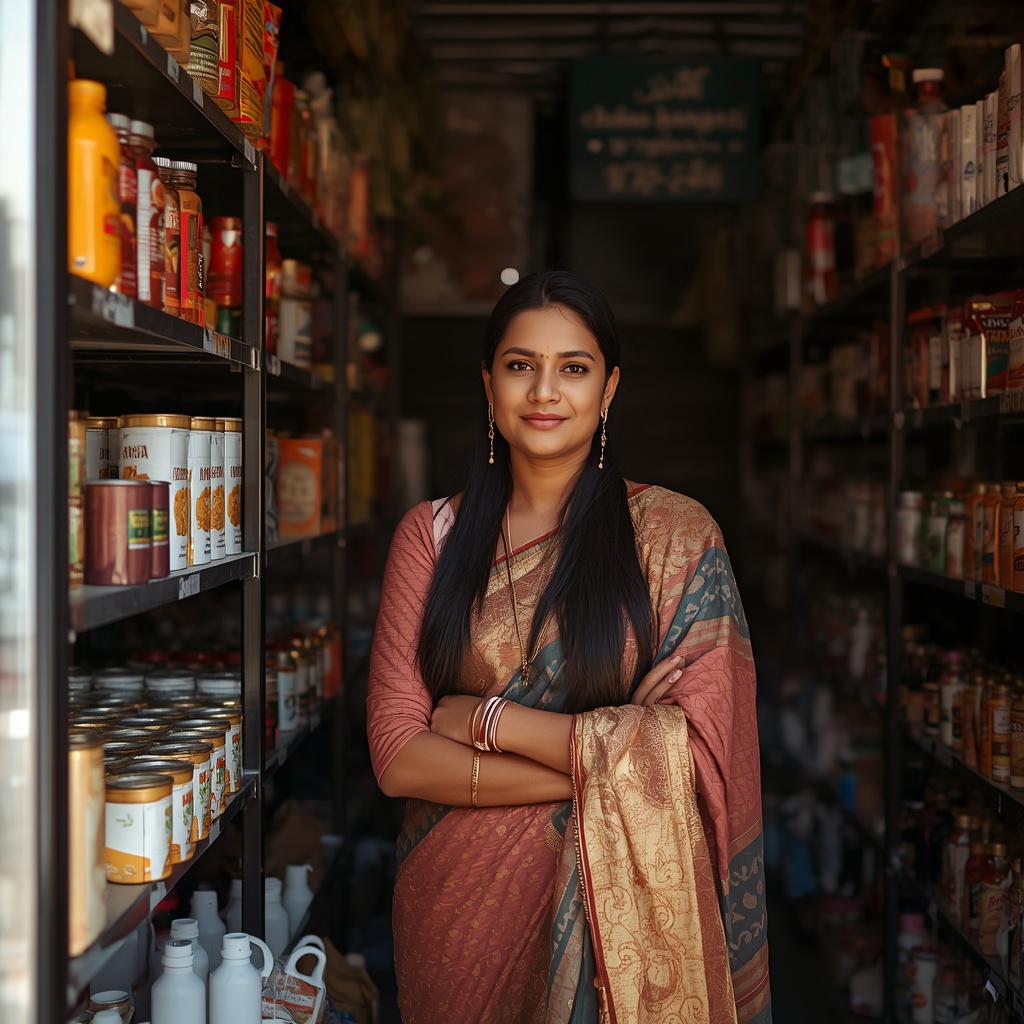
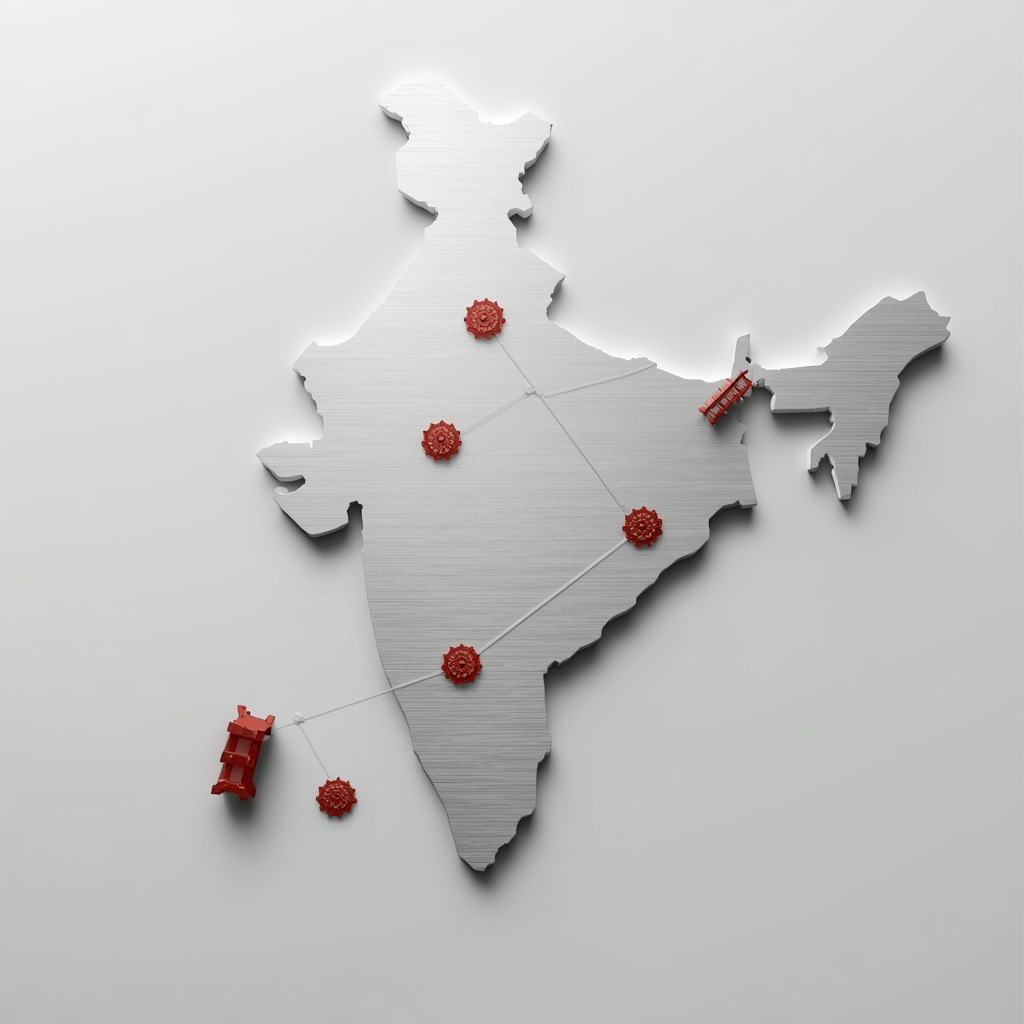
Which brings the story to its central problem. India’s healthy food and organic market is real and growing, estimated at $25.8 billion in 2025 and projected to nearly double by 2034. But it is concentrated. Metro cities are where clean-label awareness is highest, where willingness to pay a 3x–5x premium over commodity brands like Amul or Patanjali is most established, and where D2C digital acquisition funnels work most efficiently. Tier 2 and Tier 3 India is showing signals of movement , Tier 3 cities recorded a 77% surge in digital payments across select categories, and three out of five new online shoppers since 2020 have come from smaller towns. But making the leap from digital payment growth to premium clean-label grocery adoption is not straightforward. It requires health literacy, disposable income above survival thresholds, exposure to brand narratives, and a trust infrastructure that lets a first-time buyer believe purity claims they cannot independently verify. In Mumbai, Anveshan’s QR code and lab reports resonate with a consumer who already reads ingredient labels. In Meerut, that same consumer has lived with Amul and Patanjali for decades. The legacy brand holds the trust default. Displacing it requires either a price point that removes the premium barrier, or a distribution model that builds familiarity through physical retail not Instagram.
The offline push that this round funds is Anveshan’s stated answer. But offline FMCG distribution in India is expensive, relationship-intensive, and slow. Modern trade channels , supermarkets and health stores , skew toward metros. General trade, the kirana network that actually serves Meerut, requires a field salesforce, distributor margins, and shelf presence that erode the premium economics the brand depends on. Competitors are not standing still either. Two Brothers Organic Farms reported ₹98.6 crore in annual revenue for FY25 and is raising its own capital. Organic Tattva, Kapiva, True Elements, and Tata Sampann compete in adjacent lanes. Patanjali is worth singling out as it reached Tier 2 and Tier 3 India not through D2C funnels but through an ideological distribution engine: franchise stores, a nationalist health narrative, and prices calibrated for the price-sensitive buyer. Whatever one thinks of its methods, Patanjali proved that health and purity messaging can travel to smaller cities. The question is whether Anveshan’s traceability-led, urban-premium positioning translates to that terrain, or whether it needs a different price and product architecture altogether.
For the ₹1,000 crore target to land, several things need to hold simultaneously. The offline distribution buildout must move faster than the market’s attention span. The ARR claim must reflect sustained performance, not a single-month extrapolation. The planned Atta portfolio expansion must add volume without diluting the premium brand signal , atta is a high-frequency staple where commodity pricing is deeply entrenched, and a brand built on premium purity risks confusing its own story by chasing scale in a margin-thin category. And the company must either begin narrowing losses as it grows, or make a convincing case that unit economics will eventually catch up with the burn.
Anveshan is not a hype-cycle brand. The founding story is grounded, the product differentiation is genuine, and the investor syndicate with IFC adding a layer of developmental credibility is more serious than most consumer food rounds attract. But the ₹1,000 crore ambition demands honest scrutiny. The premium food paradox in India remains what it has always been: the consumers who most need clean, unadulterated food are often the ones least able to pay for it. Anveshan has the thesis, the capital, and a supply chain model better built than most of its peers. The next 24 months will tell whether India’s interior can be reshaped to meet it or whether, for now, the mason jar stays a metro product.