
Swiggy’s Foreign Shareholding Falls Below Fifty Percent As Company Pushes For Indian Owned And Controlled Status
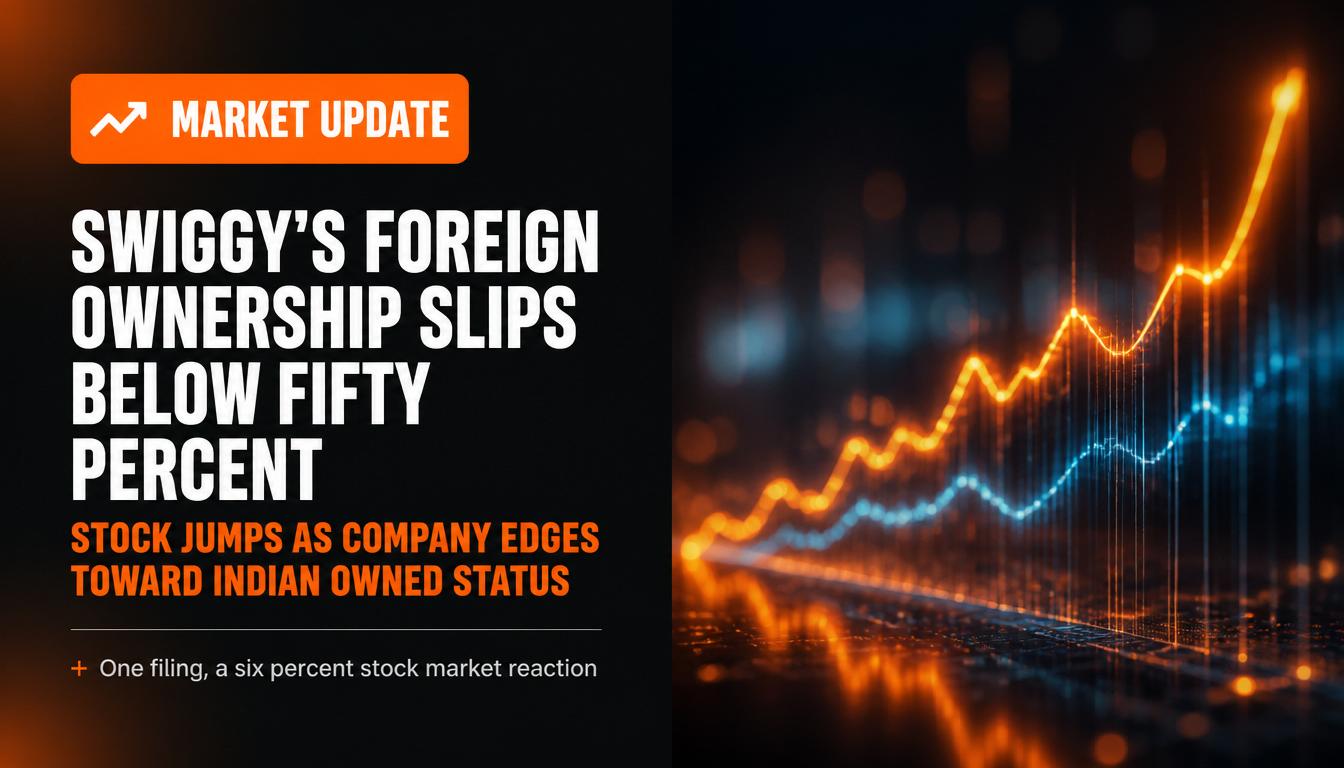
Swiggy says foreign investment in the company has slipped to under fifty percent, pushing domestic ownership past the halfway mark, though a recent failed shareholder vote shows its push for full Indian owned and controlled status is not yet complete.
Highlights:
- Swiggy told exchanges its aggregate foreign investment fell to about 49.76 percent as of July 6
- Domestic ownership has now crossed the halfway mark for the first time since listing
- Swiggy shares jumped as much as 6 percent following the disclosure
- A special resolution tied to the same IOCC push had failed to pass in May
- Swiggy says the shift does not by itself change its control status or voting rights
Numbers on a regulatory filing rarely move a stock price by six percent in a single session, but that is roughly what happened to Swiggy this week after the company told exchanges that foreign investment in its shares had slipped below a symbolic threshold. In a filing dated July 6, Swiggy disclosed that its aggregate foreign investment, a figure that combines foreign portfolio investment, foreign direct investment, and other indirect foreign holdings, stood at approximately 49.76 percent of its total paid up equity share capital on a fully diluted basis. By simple arithmetic, that means domestic, resident Indian ownership has crossed the halfway mark for the first time since the company’s listing, a milestone Swiggy has been working toward for a specific and fairly consequential regulatory reason.
The reason this particular threshold matters so much comes down to a classification called Indian Owned and Controlled Company status, generally shortened to IOCC, defined under the Foreign Exchange Management Non Debt Instruments Rules of 2019. Qualifying for IOCC status is not simply a matter of national pride or symbolism, it carries real operational consequences. Most notably, achieving IOCC status could allow Swiggy’s quick commerce arm, Instamart, to directly own inventory under existing Indian regulations, a structural change that could meaningfully improve operational efficiency, tighten supply chain control, and potentially improve margins in a business segment where Swiggy has been fighting an intense and expensive battle against rivals like Zepto and Blinkit for market share.
Swiggy was notably careful in how it communicated this milestone, and the company’s own language in the filing is worth paying close attention to. The company explicitly stated that the shift in foreign shareholding does not, by itself, result in any change to its ownership or control status under applicable law, and that it has no impact on share capital, management, business operations, voting rights, or the rights attached to its equity shares. That is an important qualifier, because IOCC status under Indian regulation is generally understood to require satisfying two separate conditions, one relating to the actual ownership percentage crossing the relevant threshold, and a second, often trickier condition relating to control, meaning who actually holds decision making power over the company through mechanisms like board nomination rights, regardless of how the raw ownership percentages happen to fall on any given day.
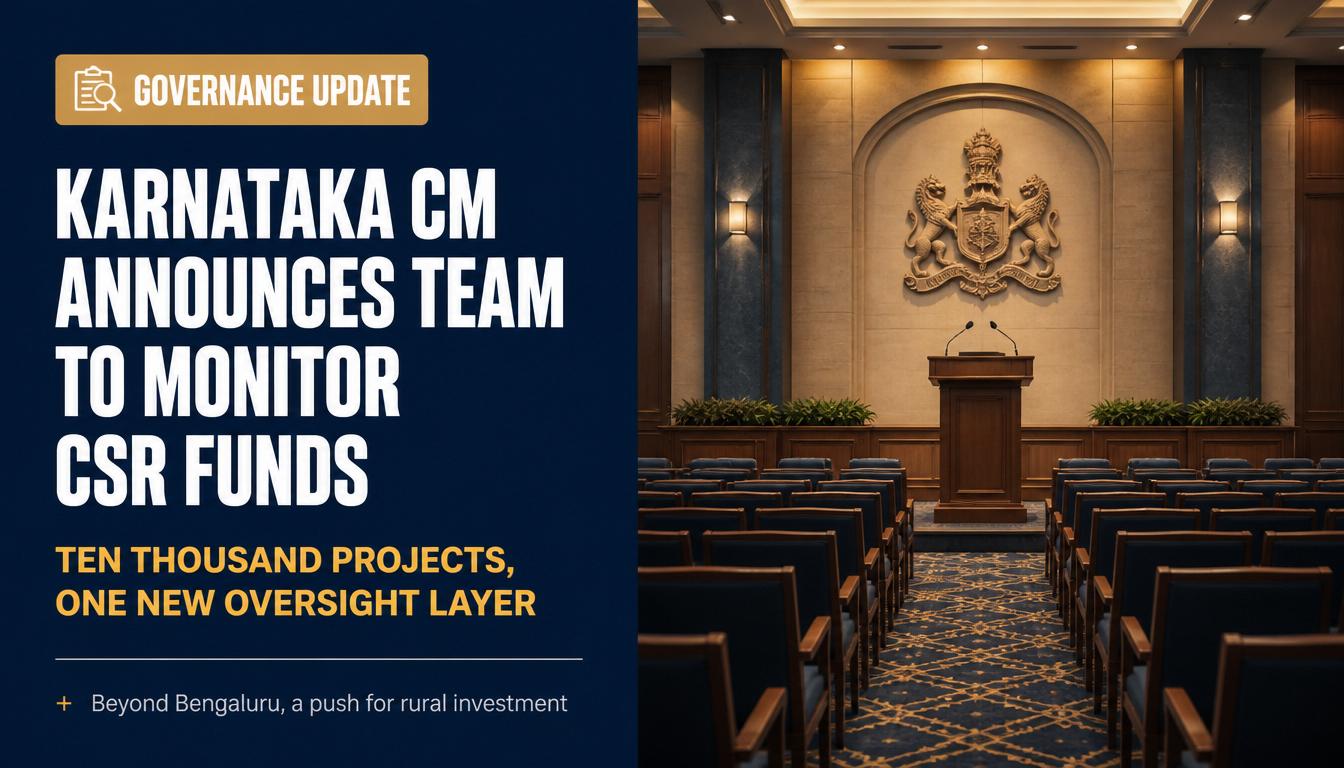
This is exactly where the more complicated part of Swiggy’s story sits. Just weeks before this ownership disclosure, Swiggy suffered what several outlets described as its first major shareholder setback since going public, when it failed to pass a special resolution intended to amend its Articles of Association as part of the broader push toward IOCC status. The proposed amendment, put to shareholders through a postal ballot, received 72.36 percent of votes in favour, a clear majority by most conventional standards, but Indian corporate law requires a special resolution of this kind to clear a considerably higher bar of 75 percent approval. Swiggy missed that threshold by just 2.64 percentage points, a narrow enough margin to be genuinely frustrating for the company, given how close it came to clearing what is otherwise a fairly demanding legal requirement. That particular amendment was reportedly tied to how board control and nomination rights are structured within the company, provisions that matter enormously given the size and influence of Swiggy’s large foreign investor base.
The market’s reaction across these two connected events tells its own story about how investors are actually interpreting this situation. When news of the failed Articles of Association vote broke, Swiggy’s share price slipped roughly one percent in early trade, touching a low near 248.75 rupees on the BSE, a fairly muted reaction that suggests the market had not been pricing in a fast, clean path to IOCC status in the first place. By contrast, when the more recent foreign ownership disclosure came through, showing the 49.76 percent figure, Swiggy shares jumped as much as 6 percent intraday to touch 264 rupees on the BSE. That kind of volatility around what the company itself describes as a disclosure without immediate legal consequence suggests a good part of the market reaction is driven by optimism about where this trend is heading, rather than any dramatic change that has already concretely occurred.
A closer look at Swiggy’s shareholder base helps explain both why this threshold took so long to cross and why crossing it does not automatically settle the control question. According to the filing’s underlying data, MIH India Food Holdings BV, a Prosus linked entity, holds roughly 25.43 percent of the company, a single block substantial enough on its own to carry meaningful influence over governance discussions regardless of what the aggregate foreign ownership percentage happens to read on any given date. Beyond that, 29 separate mutual fund schemes collectively hold about 5.82 percent, 117 foreign institutional investors hold around 4.52 percent between them, and individual investors account for roughly 16.66 percent. That spread illustrates why the ownership threshold and the control threshold can move independently of each other, a large concentrated foreign shareholder like MIH can retain considerable practical influence over board composition and strategic decisions even as the aggregate foreign ownership percentage across all shareholders ticks down below the symbolic 50 percent line.
Taken together, these two developments, the failed Articles of Association vote and the crossing of the 50 percent foreign ownership threshold, paint a more nuanced picture than either headline captures on its own. Swiggy has cleared one leg of a two legged regulatory test, ownership, largely through the ordinary churn of secondary market trading rather than through any deliberate corporate action explicitly designed to hit this number by a certain date. The control leg, which requires more deliberate governance changes such as the Articles of Association amendment that fell just short in May, remains unresolved, and getting there will likely require either a renewed shareholder vote that clears the tougher 75 percent bar, or some other structural change to how board nomination rights are allocated among Swiggy’s largest investors. Company statements around the ownership disclosure sensibly avoided suggesting IOCC status has been achieved, a signal that Swiggy’s own legal and compliance teams understand the distinction between the two even if some of the more enthusiastic market reaction on the day did not.
For a business that has spent the past several years locked in an expensive, margin thinning battle for supremacy in Indian food delivery and quick commerce, the practical upside of eventually securing full IOCC status is real and specific, not merely symbolic. The ability for Instamart to directly own inventory rather than operating through the more constrained structures foreign owned companies are typically required to use under Indian retail regulation could meaningfully change the unit economics of Swiggy’s fastest growing but still loss making segment. Whether that becomes a reality in the near term depends less on where the foreign ownership percentage happens to land on any single day, and considerably more on whether Swiggy can eventually convince enough of its large, concentrated foreign shareholders to support the governance changes that would satisfy the control half of the IOCC test, a negotiation that, based on May’s narrow miss, is evidently still very much a work in progress.