
How Narasu’s Coffee Built A Rs 641 Crore Business Across A Century Without Any External Funding
While venture funded coffee startups burn through investor cash chasing growth at any cost, a hundred year old Salem based family business has quietly built a Rs 641 crore brand without ever raising a rupee of external capital, and that contrast deserves far more attention than it gets.
Highlights:
- Sri Narasu’s Coffee has crossed Rs 641 crore in revenue in its hundredth year without ever raising external funding.
- The company is targeting Rs 1,000 crore revenue within five years and eighteen to twenty percent annual growth.
- Its EBITDA grew by nearly 948 percent in FY24 while its book net worth also expanded, according to filed financial data.
- The brand runs 78 company owned stores and 180 SKUs and is expanding from Tamil Nadu into Karnataka, Kerala and Andhra Pradesh.
- Its distributor network is set to grow from 42 to 150 by the end of the fiscal year as part of a national expansion plan.
Every few months, an Indian coffee startup announces a fresh funding round, a splashy new cafe format, or an ambitious plan to become the next big consumer brand, and business media dutifully covers it as a signal of where the category is heading. Quietly, a hundred kilometres from Coimbatore in the industrial town of Salem, a business older than Indian independence itself has been doing something that gets almost no coverage at all, building a coffee brand worth over six hundred crore rupees without a single external investor ever putting money into it. Sri Narasu’s Coffee turned a hundred years old this year, and the story of how it got here says more about durable Indian business building than most funding announcements combined.
The numbers tell a story worth sitting with. Sri Narasu’s Coffee currently generates Rs 641 crore in annual revenue, and the company is projecting eighteen to twenty percent annual growth going forward, with an explicit target of reaching Rs 1,000 crore in revenue within five years. Export growth is expected to run at fifteen to eighteen percent over the same period. These are not modest ambitions dressed up in humble language, they are aggressive growth targets, the kind that would normally come attached to a fundraising press release and a roadshow deck. Sri Narasu’s has set them without any of that apparatus, funding its expansion entirely through internal accruals and reinvested profit, a model that has become almost unfashionable to talk about in an Indian startup ecosystem where growth is so often assumed to require outside capital by default.
The business itself traces back to 1926, though its modern corporate structure took shape decades later under the stewardship of the Sivanantham family. According to company filings reviewed by Tofler, the operating entity behind the brand posted a striking 947.68 percent increase in EBITDA in the financial year ending March 2024 compared with the previous year, alongside a more modest but still healthy 10.66 percent rise in book net worth. That kind of EBITDA jump, even accounting for the possibility of a modest prior year base, points to a business that has recently found real operating leverage, likely as its retail and distribution investments from previous years began paying off simultaneously. The company currently runs 78 company owned stores and offers 180 SKUs spanning coffee, tea and other food and FMCG products, a portfolio built up gradually rather than through a single dramatic pivot.
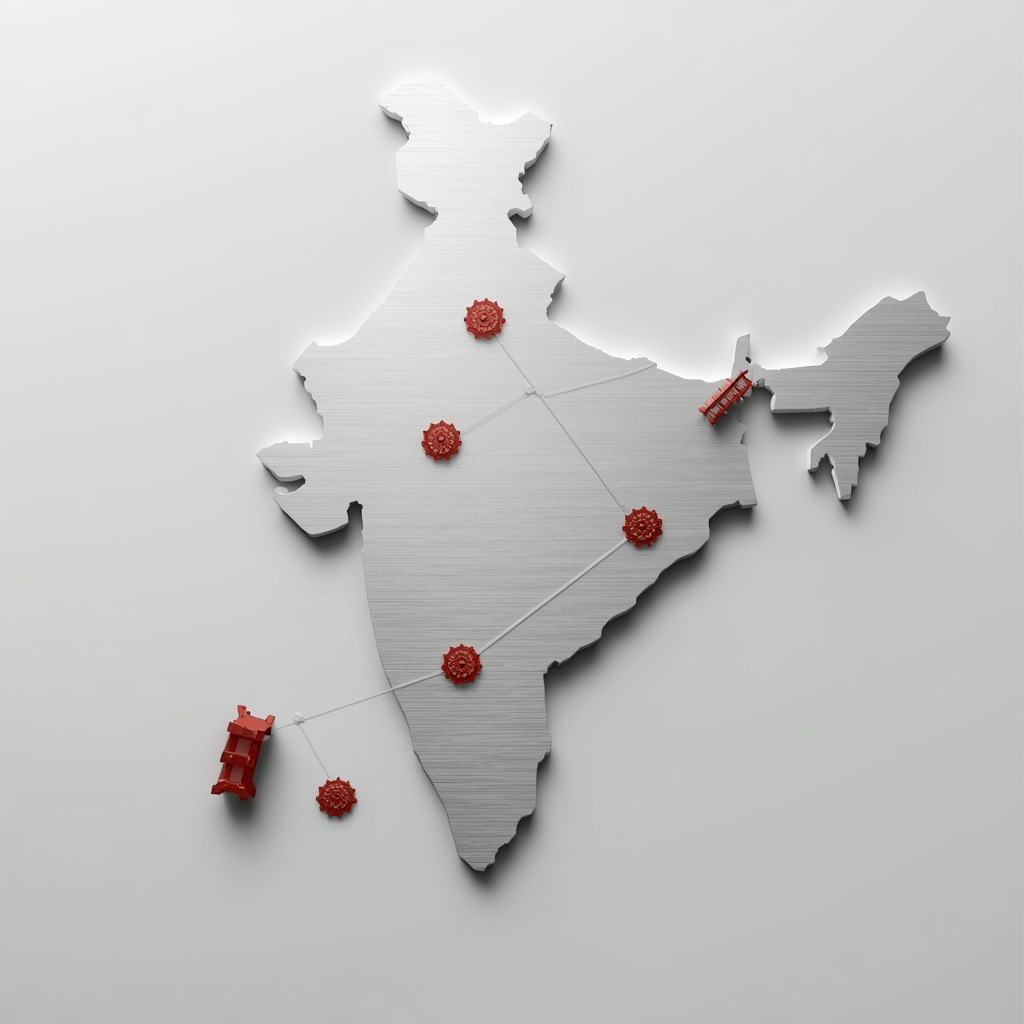
What makes the current moment interesting is the scale of ambition attached to the next phase. Sri Narasu’s is moving beyond its traditional stronghold of Tamil Nadu into Karnataka, Kerala and Andhra Pradesh, with its distributor network expected to expand from 42 to 150 by the end of the current fiscal year. As part of a structured national expansion plan for 2026-27, the company is opening stores in Bengaluru and Amaravati, marking what leadership describes as the beginning of a genuinely pan India push, with 10 to 15 new store launches planned for the coming year. Srudheep S, Managing Director of Sri Narasu’s Coffee, framed the expansion in terms of bringing what he called the authentic south Indian coffee experience to every modern kitchen across India and beyond, describing the Bengaluru and Amaravati launches as the start of a charted three year growth journey. Sivanantham, the company’s Chairman, struck a similar note, saying the company’s focus remains firmly on the future without compromising on the standards and commitment to quality that have defined it since 1926.
That last phrase, standards since 1926, is worth pausing on, because it points to something structurally different about how a business like Sri Narasu’s grows compared with its venture funded competitors. Companies like Blue Tokai Coffee Roasters, Third Wave Coffee and Sleepy Owl, all named among Sri Narasu’s top competitors in industry tracking data, have built their growth stories primarily around external capital, raising successive funding rounds to open cafes, build brand awareness and subsidise customer acquisition in a category where Indian consumer habits are still shifting from traditional filter coffee toward specialty and third wave formats. That approach can generate faster headline growth, but it also comes with a different kind of pressure, investors expecting a return within a defined timeframe, valuations that need to be justified with ever larger growth numbers, and an operating culture oriented around the next funding milestone rather than purely around the underlying unit economics of each store or SKU. Sri Narasu’s, by contrast, has spent a century answering only to its own balance sheet, which means every rupee of expansion has had to earn its way there through actual profit, not projected future profit backed by investor patience.
This distinction matters more than it might initially seem, particularly in a category like coffee retail where store level economics can be genuinely difficult to get right. A cafe format that looks impressive on an Instagram feed can still lose money on every cup sold if rent, staffing and marketing costs are not carefully controlled, and venture capital has a well documented tendency to paper over exactly that kind of inefficiency in pursuit of growth metrics that look good in a pitch deck. A business that has never had access to that kind of cushioning capital simply cannot afford to make the same mistake twice, every store, every SKU, every distributor relationship has had to prove its worth in hard cash terms almost immediately. That discipline shows up in the numbers Sri Narasu’s is currently posting, an EBITDA jump that suggests genuinely improving operating efficiency rather than growth purchased through discounting or promotional spend.
None of this means the funded model is wrong, or that Sri Narasu’s approach is automatically superior in every respect. Venture backed coffee brands have been able to move faster into new store formats, invest more aggressively in brand building and experiment with premium positioning in ways that a purely self funded, cash flow disciplined business often cannot match, at least not at the same pace. There is also a succession and governance dimension worth acknowledging, family run businesses spanning a century eventually face questions about leadership transition and professional management that venture backed companies with institutional board oversight are often better structured to handle. Sri Narasu’s own board currently includes just two active members from within the family, which is a lean governance structure that has clearly worked for a hundred years but will need to evolve as the company pursues a genuinely national, Rs 1,000 crore scale ambition involving significantly more operational complexity than its traditional south Indian base.
What Sri Narasu’s hundredth year does offer, though, is a useful counterweight to a startup funding culture that has, particularly over the last decade, come to treat external capital as an almost automatic prerequisite for meaningful growth. A century old, family owned, entirely self funded coffee business posting near double digit annual growth and an EBITDA trajectory most funded consumer brands would envy is a reminder that patient, organically financed compounding remains a viable, if unglamorous, path to genuine scale in Indian consumer business. It rarely generates the kind of headlines a fresh funding round does, there is no investor to quote, no valuation multiple to debate, no term sheet to analyse. But as Sri Narasu’s now pushes into new states with real ambition and a genuinely improving balance sheet behind it, the quieter compounding story deserves at least as much scrutiny as the louder, funded ones that tend to dominate business coverage of India’s coffee category.