
Why Tulon Materials’ Small Seed Round Matters More Than The Headline Number Suggests
A specialty chemicals startup most consumers will never hear of just raised Rs 10 crore, and the unglamorous category it operates in, industrial resins and additives built from upcycled feedstock, is exactly where India’s next real import substitution story is quietly being written.
Highlights:
- Specialty chemicals startup Tulon Materials has raised Rs 10 crore in a seed funding round.
- The company describes its own mission as proving that chemistry should create a better world, according to its official statements.
- Its core differentiator is reducing dependence on fresh petroleum feedstock by prioritising upcycled and renewable raw materials.
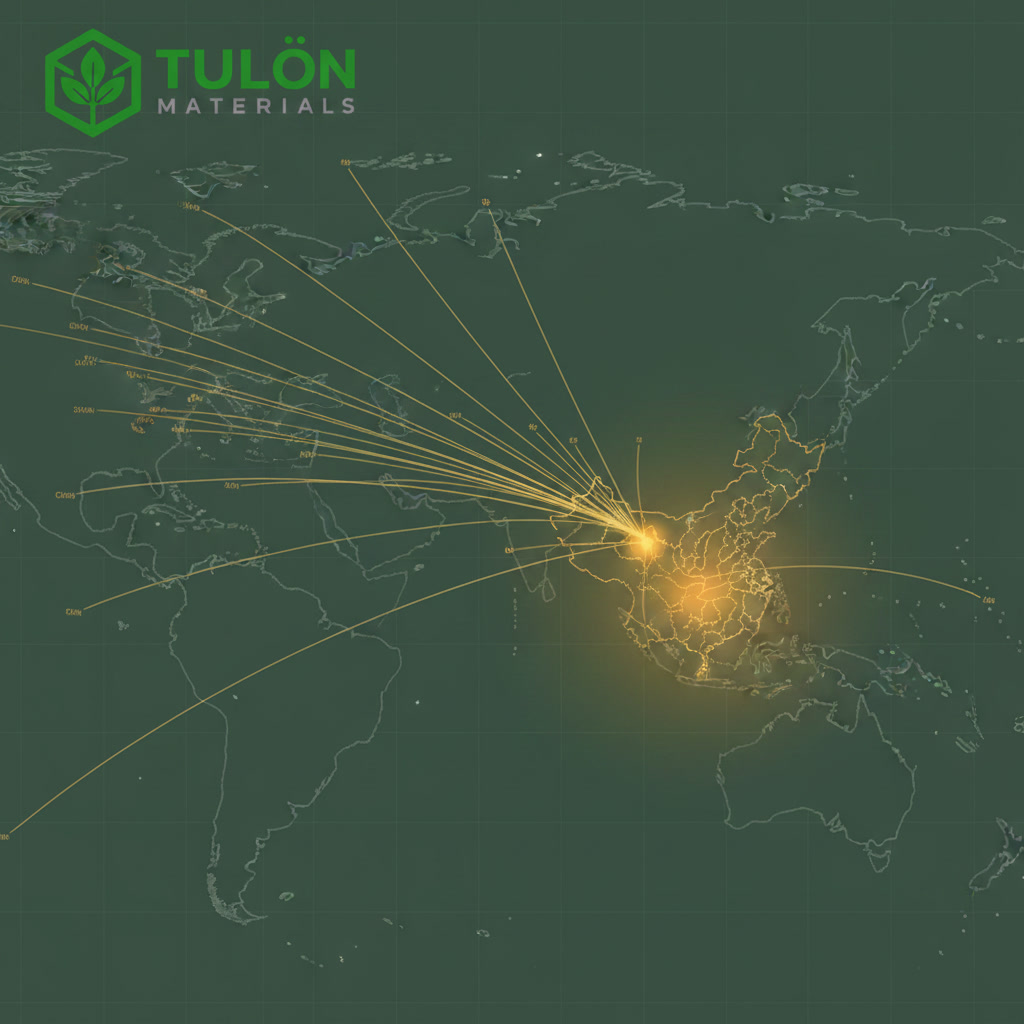
- India imports a significant share of its specialty chemical intermediates from China, a dependency few consumer facing funding stories address directly.
- Publicly available information on specific investors or company spokesperson statements for this round remains limited, reflecting how little visibility this category gets compared to consumer tech.
Ten crore rupees is a small enough number that most funding trackers will file this round under a single line and move on to the next headline. That reflex is worth resisting in this specific case, because Tulon Materials sits inside a category of Indian industrial technology that rarely gets the attention its strategic importance deserves, specialty chemicals, and the seemingly modest scale of this round says more about where early institutional conviction in this space currently sits than about the actual size of the opportunity underneath it.
It is worth being upfront about the limits of what is publicly on record here. Unlike many consumer startup raises that come with a founder quote about their mission or an investor statement about conviction in the space, Tulon Materials’ seed round has not, at the time of writing, been accompanied by a named spokesperson statement or a disclosed investor list in the reporting available. What is on record comes directly from the company’s own public facing statements about its mission and technology, rather than from a press interaction around this specific funding event. According to its own stated positioning, Tulon Materials describes itself as a specialty chemicals manufacturer founded on the principle that chemistry should create a better world, and says its work begins at the molecular level, researching, designing and manufacturing high performance, sustainable chemical solutions engineered for the circular economy. The company states that it actively works to reduce reliance on fresh petroleum feedstock in its processes, prioritising upcycled and renewable raw materials instead, with the stated goal of helping partners meet sustainability targets while enhancing product performance.
Strip away the sustainability framing for a moment and look at what the company actually makes, according to its own product descriptions, innovative resins and additives for architectural and industrial coatings, eco-friendly binders and resins for printing inks and high strength adhesives, specialty additives that enhance material performance, and advanced chemical treatments for the paper and textile industries. These are not consumer facing products anyone will ever see on a shelf. They are intermediate industrial inputs that sit invisibly inside paint cans, packaging adhesives, printed materials and textile finishing processes across enormous swathes of Indian manufacturing. That invisibility is precisely why this category rarely generates funding headlines proportional to its actual economic footprint, and precisely why a round this size, and the near total absence of public commentary around it, deserves more scrutiny than its dollar value alone would suggest.
The specific technical bet Tulon is making, reducing reliance on fresh petroleum feedstock by prioritising upcycled and renewable raw materials, sits at the intersection of two much larger forces that Indian industrial policy has been circling for years without much public narrative attached. The first is the genuinely global push toward decarbonising chemical manufacturing, where feedstock sourced from waste streams or renewable inputs rather than virgin petroleum carries both environmental and, increasingly, regulatory value as export markets tighten carbon disclosure requirements on manufactured goods. The second, and the one that gets discussed far less openly, is India’s structural dependency on imported specialty chemical intermediates, a significant share of which continues to flow in from China, particularly for the kind of performance additives and resin chemistries that Tulon is building domestic capability around. Every rupee of institutional capital that flows into an Indian company capable of manufacturing these intermediates domestically is, whether framed this way or not, a small contribution to reducing that dependency, a strategic priority that has moved from a policy talking point to an active government focus area over the past several years through production linked incentive schemes targeting the broader chemicals and materials sector.
This is where the sustainability narrative and the geopolitical narrative around specialty chemicals actually converge, and where most coverage of climate tech or materials science funding in India tends to pick one framing and miss the other. A company building upcycled feedstock based resins is not just chasing an ESG friendly story to attract impact oriented capital, though that framing helps with fundraising. It is also, functionally, building import substitution capability in a category where India’s manufacturing base has historically been thin, dependent on established chemical majors both domestic and foreign, and where genuine innovation at the molecular chemistry level, rather than just contract manufacturing of known formulations, remains comparatively rare among Indian startups. Most Indian deep tech and materials funding conversations gravitate toward semiconductors, batteries or space technology, categories with obvious strategic glamour attached and executives readily available for comment. Specialty chemicals rarely gets the same billing or the same media access, despite touching a far larger and more immediate slice of everyday industrial output, from the paint on a building to the adhesive in a cardboard box to the finish on a textile export.
The relatively modest size of this seed round, and the sparse public record around it, is itself informative about where investor appetite and media attention in this category currently sit. Specialty chemicals manufacturing is capital intensive in a way that pure software or even many consumer hardware startups are not, requiring real plant infrastructure, feedstock supply chains, quality certification processes and lengthy customer qualification cycles with industrial buyers who test extensively before switching suppliers. A Rs 10 crore seed round is enough to fund early stage product development, pilot scale production and initial customer validation, but is nowhere near the capital a company would eventually need to build meaningful manufacturing scale in this category. That gap between what a seed round can fund and what genuine scale requires is precisely why deep tech materials companies in India often take longer to reach the kind of headline generating growth stage rounds, complete with press quotes and investor statements, that dominate startup news coverage, the underlying technology and market validation cycles simply move slower than they do in software, even when the eventual addressable market and strategic value are considerably larger.
What makes Tulon’s positioning worth watching over the next few years is not this specific funding number, it is whether the company can translate early molecular level innovation into the kind of qualified, reliable supply relationships with large industrial buyers, in coatings, packaging, textiles, that would actually move the needle on India’s specialty chemical import dependency in a measurable way. That is a much harder and slower path than building a consumer app with viral growth potential, and it will likely never generate the kind of funding headlines, or the kind of quotable soundbites, that quick commerce or fintech rounds routinely command. But it is also the kind of unglamorous, structurally important industrial capability building that India’s manufacturing ambitions genuinely depend on, and that most funding coverage, chasing the next big consumer story with a ready made quote, consistently underweights. A ten crore rupee seed round will not by itself change India’s specialty chemicals trade balance. But every company willing to build real chemistry capability domestically, rather than simply importing and repackaging intermediates from established global suppliers, is a small data point in a much larger and far more consequential story than the size of this particular funding round, or the silence around it, would suggest to anyone scrolling past the headline.