
SolarSquare Raises $53M Series C Led by B Capital to Scale Rooftop Solar Across India 2026
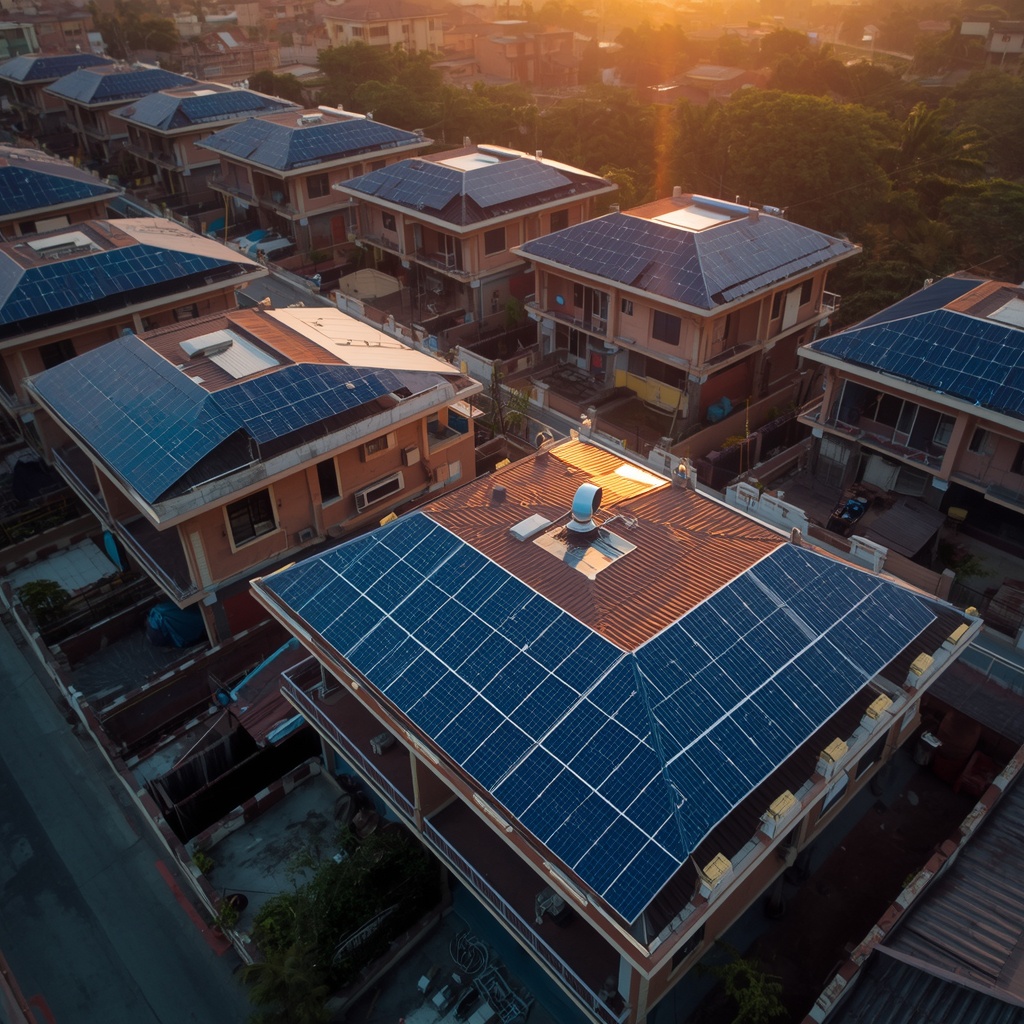
India’s top residential solar brand has crossed $100M in total funding, now clocks Rs 1,000 crore in annual revenue, and is betting that solar adoption, once a niche decision, has become a mainstream consumer choice.
Five years ago, going solar was a decision that most Indian homeowners made once, reluctantly, after a lengthy process of comparing contractors they did not trust. Today, by SolarSquare’s own account, one lakh homes in India are adopting solar every ten days. That single data point captures why investors are writing ever-larger cheques into India’s residential solar sector.
SolarSquare has raised $53 million in a Series C funding round led by B Capital, with participation from existing investors Lightspeed, Elevation Capital, Lowercarbon Capital, Rainmatter, and Good Capital. The fresh round takes the company’s total funding to more than $100 million. The company describes this as the largest venture capital investment ever made in India’s residential solar sector.
Founded in 2015 by Shreya Mishra, Neeraj Jain, and Nikhil Nahar, SolarSquare operates as a vertically integrated brand that handles everything from consultation and system design to installation, financing support, and maintenance. That full-stack approach has been its central differentiator in a market that remains highly fragmented and dominated by small local installers.
The traction numbers are hard to argue with. SolarSquare says it has powered more than 50,000 homes across India and is currently operating at an annual revenue run rate of over Rs 1,000 crore. The company is also the first in India to offer performance guarantees on solar installations, providing homeowners assurance on their investment returns.
The context that shapes this round is as important as the deal itself. India set a target of achieving 500 gigawatts of renewable energy capacity by 2030, with solar expected to contribute more than half. The country became the world’s third-largest solar power producer in 2025, trailing only China and the US, and its cumulative installed solar capacity has surged from about 3 GW in 2014 to more than 150 GW in 2026, aided partly by government incentives and subsidy schemes aimed at accelerating rooftop solar adoption.
Investor conviction reflects this macro tailwind. Karan Mohla, General Partner at B Capital, said India’s energy transition will not be won on the grid alone but home by home and city by city, adding that SolarSquare combines category leadership, strong unit economics, and a proprietary technology and asset-management platform that becomes more valuable with every installation.
Shreya Mishra, Co-founder and CEO of SolarSquare, noted that five years ago they made a conviction-led bet that every Indian home would be powered by rooftop solar, and that at the time residential solar was still nascent, with barely one lakh homes adopting solar annually.
SolarSquare plans to use the capital to strengthen its presence across India, expand into new cities, enhance its technology platform, scale its installation and customer service operations, and broaden its home-energy offerings by integrating battery storage, financing, maintenance services, and energy management technology.
The company competes with ZunRoof, Glow Solar, Mysun, Oorjan Cleantech, and Freyr Energy in the residential rooftop solar segment. Its differentiation rests on three pillars: a vertically integrated model, a proprietary technology platform, and performance guarantees for customers.
The bigger question hanging over SolarSquare’s next phase is not whether it can keep growing, but whether it can maintain the quality and trust that its performance guarantees imply as it scales fast into new cities. Residential solar is a long-relationship business. Installations last fifteen to twenty-five years. What happens when something goes wrong with installation number 100,000 or 200,000? The real test of SolarSquare’s model will come not in the fundraising announcement but in how it builds the operational infrastructure to stand behind every rooftop it touches. The capital is now there. The operational challenge is next.