

India UPI Launches at Galeries Lafayette France 2026: What the Expansion Means for Global Digital Payments
First the Eiffel Tower. Now a premier French department store. India’s digital payments infrastructure is no longer just a domestic success story. It is quietly becoming the world’s most travelled payment rail.
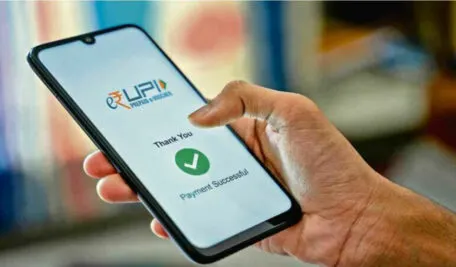
On a Tuesday afternoon in Nice, an Indian tourist walked into the Galeries Lafayette on the Avenue Jean Médecin, picked out something they liked, and paid for it the same way they pay for their morning chai at a kiosk outside their apartment in Mumbai. They opened their phone, scanned a QR code and confirmed the payment in seconds. No currency exchange. No international transaction fee fumbling. No declined card at the counter. Just the same muscle memory they have had for years, working exactly as expected in the south of France.
That moment, quiet and unremarkable as it must have seemed to everyone else in the store, is what the launch of UPI at Galeries Lafayette Nice Massena represents. On June 16, 2026, Commerce and Industry Minister Piyush Goyal formally inaugurated UPI payments at the iconic French department store, making it the latest in a growing list of international locations where India’s homegrown real-time payment infrastructure has taken root.
The launch was made possible through a partnership between Lyra Collect, a French payment services company, and NPCI International Payments Limited, the global arm of the National Payments Corporation of India. Together, they have built the technical bridge that allows a transaction initiated in rupees on a PhonePe or Google Pay app to settle correctly in euros on the French merchant’s side, in real time and without the friction that has historically made cross-border retail payments deeply unpleasant for everyone involved.
“Bringing India’s world-class digital payments platform to one of France’s premier retail destinations marks another significant step in UPI’s global expansion. With the participation of Lyra Collect and NIPL, this initiative showcases India’s ability to deliver trusted, seamless, and interoperable digital solutions at scale.”
Piyush Goyal, Commerce and Industry Minister of India
France is not a new UPI market. In 2024, UPI was launched at the Eiffel Tower in Paris, a launch that was as much symbolic as it was practical, a statement about where India’s payment infrastructure stood relative to the rest of the world. The Nice launch is different in character. A department store is a high-frequency, high-value retail environment. It is where tourists actually spend money, not just take photographs. The Galeries Lafayette in Nice serves a significant volume of South Asian visitors, particularly during the summer travel season. Making UPI available there is not a gesture. It is a practical expansion with measurable economic impact on both sides of the transaction.
What makes this story worth paying close attention to is the pace of the expansion. France is the second country in which UPI was launched in June 2026 alone. Cambodia came first, on June 3, in a ceremony attended by the Governor of the National Bank of Cambodia and senior representatives from the Reserve Bank of India. Before that, UPI had gone live in Qatar, Singapore, Malaysia, the UAE, Bahrain, Nepal, Bhutan, Sri Lanka and several other markets. The pattern is not coincidental. NPCI International has been systematically targeting countries with large Indian diaspora populations and significant Indian tourist footfall, building a network that makes the rupee-denominated digital payment infrastructure relevant outside India’s own borders.
For Indian travellers, the practical benefit is straightforward. They do not have to carry cash, manage foreign currency, worry about credit card acceptance, or pay the exchange rate spread that banks and card networks quietly collect on every international transaction. For French businesses, the benefit is equally tangible. They gain direct access to one of the world’s most digitally engaged tourist demographics. Indians travelling abroad tend to be high-spending, technology-comfortable and loyal to the payment apps they already trust. A merchant that accepts UPI does not need to convince that customer to pay differently. They simply need to have the QR code at the counter.
The wider story here is about what UPI has become since its launch in 2016. It was originally conceived as a way to bring digital payments to a cash-dependent domestic economy. It succeeded at that mission beyond any reasonable early projection. India now processes billions of UPI transactions every month, at a scale that no other real-time payment system in the world has matched. That success generated the confidence, the infrastructure and the diplomatic credibility to begin exporting the system. India is not merely a market for global payment networks anymore. It is building and operating one of its own, and that network is expanding one QR code at a time into shopping districts, tourist sites and transit hubs around the world.
Whether that expansion translates into lasting economic advantage depends on factors beyond just the technology. Regulatory frameworks in each new market need to align. Currency settlement mechanisms need to work cleanly at scale. Merchant onboarding needs to reach beyond flagship stores into the smaller restaurants, pharmacies and souvenir shops where tourists actually spend most of their money. The technical foundation exists. The execution challenge is the one that will separate UPI’s global ambitions from its global reality.