
Airbound Andhra Pradesh Drone Corporation Partnership: India Targets World’s Largest Commercial Drone Delivery Network
A 1.5 kilogram aircraft. Ten paisa per kilometre. One state government and one Bengaluru startup just signed an agreement that could make Amaravati home to one of the largest commercial drone delivery networks anywhere on Earth.
- Bengaluru-based aerospace startup Airbound has signed an MoU with the Andhra Pradesh Drone Corporation to build the Amaravati Capital Region Drone Delivery Network across Amaravati, Vijayawada and Guntur.
- Both parties are targeting 10,000 daily drone flights across Andhra Pradesh within the coming year, a scale that could place the network among the largest commercial drone delivery operations globally.
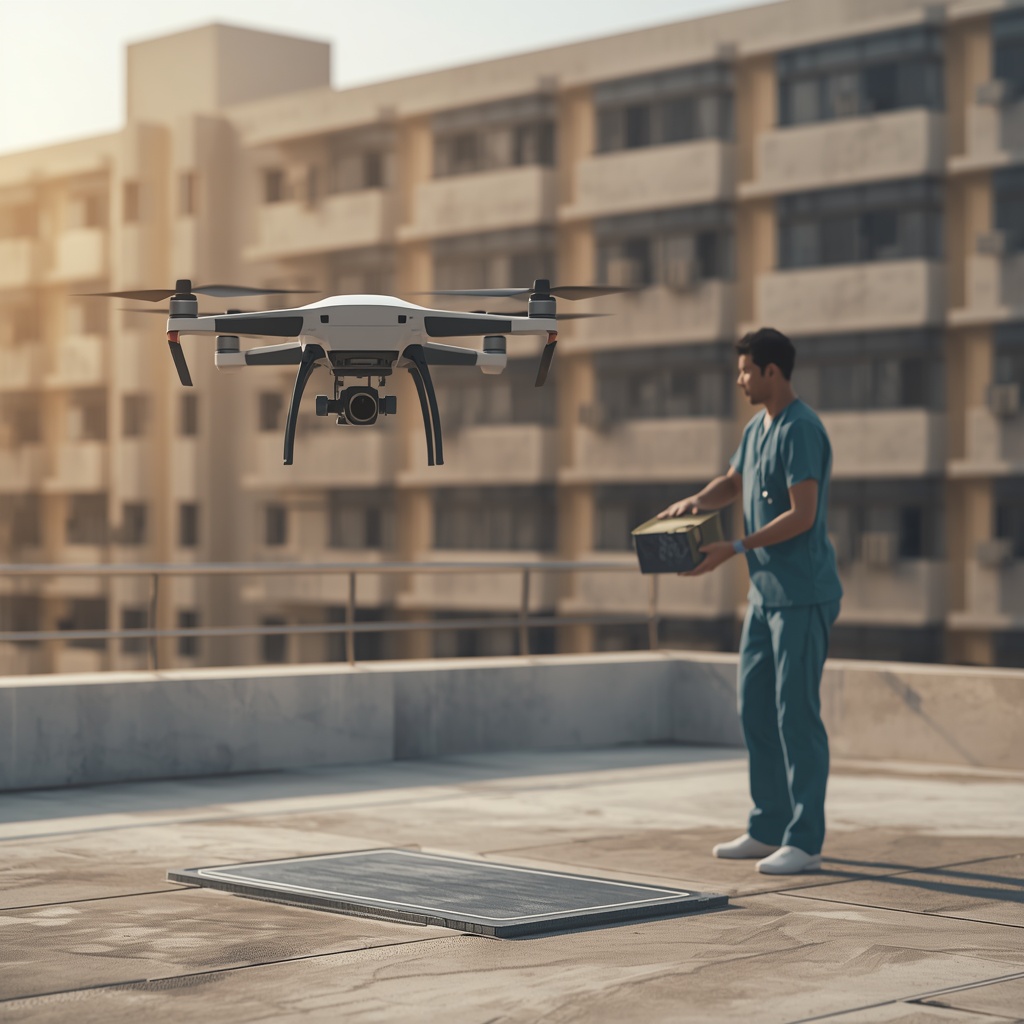
- The network will serve healthcare, logistics and ecommerce, building on Airbound’s existing partnership with Narayana Health, through which it has completed over 1,000 healthcare delivery flights in Bengaluru.
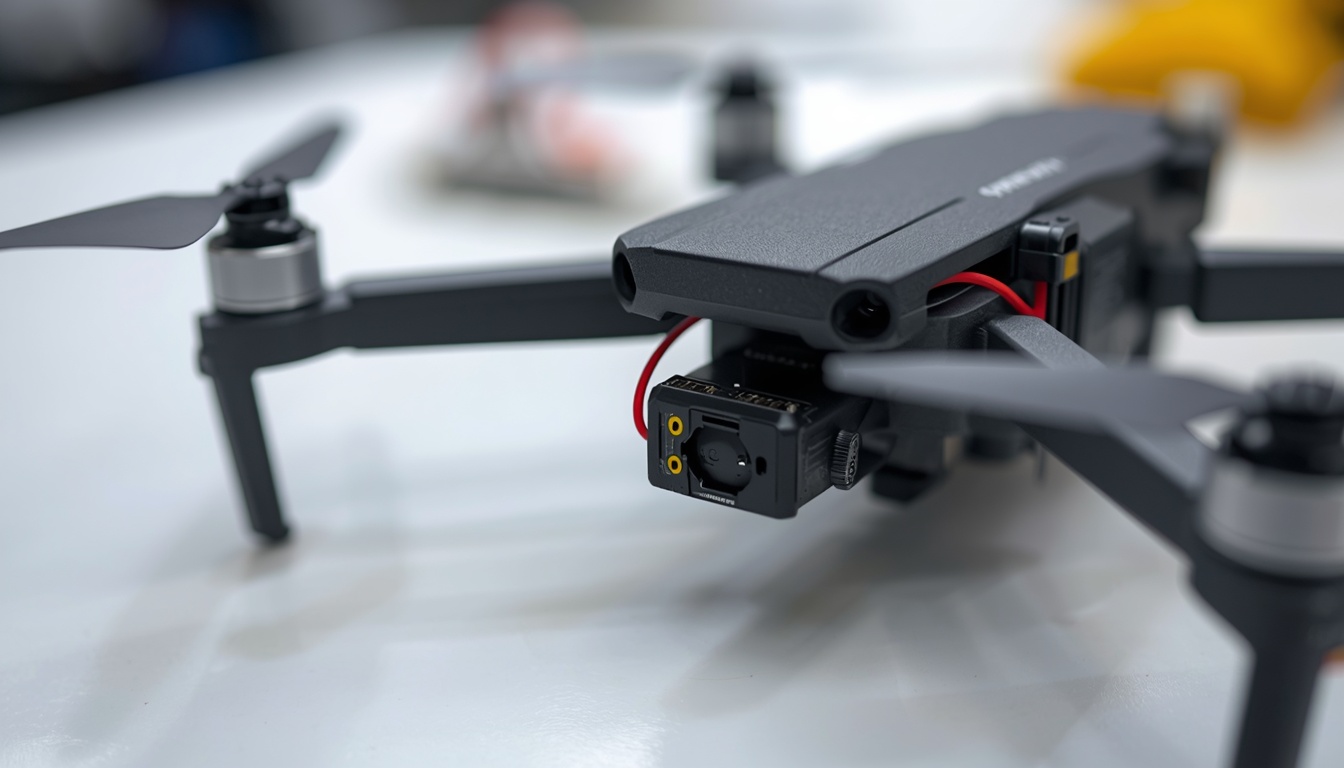
- Airbound’s aircraft is a blended wing body tailsitter built from carbon fibre, weighing 1.5 kilograms with a payload to weight ratio of 1.5 to 1.
- The company claims delivery costs as low as 10 paisa per kilometre and says it has completed over 10,000 total flights to date.
- The rollout will proceed in phases, covering pilot operations, route mapping, ecosystem partnerships and regulatory coordination, while the industry awaits a wider beyond visual line of sight regulatory framework.
Most conversations about the future of delivery in India focus on roads. Faster bikes, denser dark store networks, ten minute promises that have reshaped how urban India shops. Almost none of that conversation has reckoned seriously with the physics of the alternative: lifting a package off the ground entirely and letting it travel in a straight line through open air, unconstrained by traffic signals, potholes or the unpredictable geometry of a crowded Indian street. This week, a small aerospace startup and a state government decided to test that alternative at a scale few countries have attempted.
Airbound, a Bengaluru-based aerospace company, has signed a memorandum of understanding with the Andhra Pradesh Drone Corporation to build what both parties are calling the Amaravati Capital Region Drone Delivery Network, an aerial logistics system spanning Amaravati, Vijayawada and Guntur. The agreement was signed by Geetanjali Sharma, Managing Director and Chairman of the Andhra Pradesh Drone Corporation, and Naman Pushp, Founder and CEO of Airbound, in the presence of Union Civil Aviation Minister Kinjarapu Ram Mohan Naidu. The stated target is audacious by any global standard: 10,000 daily drone flights across Andhra Pradesh within the coming year.
To put that number in context, it helps to understand what a drone flight actually represents in a logistics network. It is not a single package moving from one fixed point to another the way a delivery truck route works. It is a discrete, individually navigated, individually permitted aerial journey, requiring airspace clearance, route mapping, weather contingency and a regulatory approval chain that most logistics networks never have to think about. If Airbound and the Andhra Pradesh Drone Corporation actually reach 10,000 of these flights a day, that would represent one of the largest commercial drone delivery operations anywhere in the world, placing Amaravati alongside the handful of pilot cities globally, mostly in China and a small number of American test corridors, that have attempted aerial logistics at genuine metropolitan scale rather than isolated proof of concept.
The aircraft at the centre of this ambition is unusual even within the drone delivery category, which has generally split between quadcopters optimised for vertical lift and fixed wing aircraft optimised for horizontal range. Airbound’s platform is a blended wing body tailsitter, an aircraft design that takes off vertically like a helicopter but transitions into efficient horizontal flight like a fixed wing plane once airborne, combining the operational flexibility of vertical takeoff with the energy efficiency and range of forward flight. Built from carbon fibre, the aircraft weighs just 1.5 kilograms and carries a payload to weight ratio of 1.5 to 1, meaning it can carry one and a half times its own body weight, a genuinely demanding engineering specification for an aircraft this light. Airbound states this design enables delivery costs as low as 10 paisa per kilometre, a figure that, if it holds up at commercial scale, would represent a cost structure roughly twenty times cheaper than conventional last mile delivery methods, according to the company’s own claims.
That last line deserves attention, because it captures the actual structural insight behind drone delivery economics that often gets lost in the novelty of the technology itself. A conventional delivery truck achieves efficiency through scale: many packages moving together, sharing the cost of the vehicle, the driver and the fuel across the entire route. A drone achieves a different kind of efficiency, through elimination: no driver, no vehicle wear on congested roads, no traffic delay, and a route that is a straight line rather than a winding path through city streets. Pushp’s framing, that a single drone moving a single package can achieve the efficiency of a fully loaded truck, is the central economic argument the entire industry is making, and Amaravati is now the largest live test of whether that argument holds up outside a controlled pilot environment.
Airbound’s track record gives the claim more credibility than a pure startup pitch would carry on its own. The company has already completed over 10,000 total flights in India, including more than 1,000 healthcare delivery missions in partnership with Narayana Health in Bengaluru, moving medical supplies and diagnostics between facilities. That partnership matters because healthcare logistics is widely regarded as the most demanding proving ground for drone delivery: time sensitivity is absolute, payload integrity cannot be compromised, and the regulatory and safety scrutiny applied to medical cargo is considerably stricter than for general ecommerce parcels. A company that has already operated successfully in that environment has cleared a higher bar than most drone delivery operators attempting their first major commercial deployment.
The honest regulatory friction sitting beneath all of this ambition is the absence of a finalised framework for Beyond Visual Line of Sight operations, the regulatory category that governs whether a drone can fly outside the direct field of vision of its human operator. Most current commercial drone operations in India, including pilot healthcare delivery programmes, operate under tighter visual line of sight restrictions precisely because the BVLOS framework remains a work in progress. A genuinely city-scale drone delivery network spanning Amaravati, Vijayawada and Guntur, moving packages across distances that routinely exceed what a single operator can visually track, is functionally impossible without a mature BVLOS regulatory regime in place. India’s Drone Rules 2021 and the Digital Sky platform have streamlined registration and operational permissions considerably, but the wider BVLOS framework that the industry has been waiting for is still being finalised. The 10,000-flights-a-day target is, in that sense, as much a regulatory bet as it is a technological or commercial one.
If the Amaravati network reaches its stated scale, it will become more than a single state’s infrastructure achievement. It will become the working template that every other Indian state government watching this rollout will study closely, the proof point that determines whether drone delivery in India remains a series of isolated, well-publicised pilot programmes, or becomes genuine shared logistics infrastructure that any healthcare provider, retailer or logistics company can plug into the way they would a road network or a telecom tower. The MoU has been signed. The aircraft has already flown thousands of missions. What happens next depends on whether India’s regulatory machinery can move at the same pace as its engineering ambition.