
Maruti Suzuki Incubation Programme Cohort 5: Five Startups Selected for AI, Battery Recycling Partnership 2026
Seven thousand four hundred startups screened. Thirty eight chosen as partners. India’s largest carmaker has quietly built a startup scouting machine more disciplined than most venture funds, and its fifth cohort just landed, with a battery recycling bet at the centre.
- Maruti Suzuki has onboarded five startups, MiniMines, Easework AI, Sarvam AI, Siftly and CodeMate AI, from the fifth cohort of the Maruti Suzuki Incubation Program, run in partnership with NSRCEL at IIM Bangalore.
- MiniMines will support environmentally friendly recycling of end-of-life lithium-ion batteries and recovery of valuable materials for Maruti Suzuki’s EV strategy.
- Sarvam AI will deploy multilingual generative AI agents across customer touchpoints, while Easework AI will automate procurement workflows for indirect consumables using agentic AI.
- Siftly will use generative AI to enhance brand visibility, and CodeMate AI will accelerate internal software development for Maruti Suzuki’s business processes.
- Since 2019, Maruti Suzuki has screened around 7,400 startups, engaged with over 250, and onboarded 38 as formal business partners.
- Beyond MSIP, the company runs the Maruti Suzuki Accelerator for growth-stage startups, the Mobility Challenge, the Nurture programme with IIM Calcutta Innovation Park, and FundRays with ISB Hyderabad.
Carmakers do not usually talk about their startup pipelines the way venture capital firms do. They talk about production targets, EV roadmaps, dealer networks and quarterly sales numbers. Maruti Suzuki, somewhat quietly over the past seven years, has been running a parallel operation that looks, on close inspection, less like a corporate social responsibility programme and more like a disciplined, multi-stage venture sourcing engine, built entirely to find the small companies that can solve problems Maruti’s own twenty-thousand-person workforce has not been able to crack internally.
The headline number from this week’s announcement is simple: five startups, MiniMines, Easework AI, Sarvam AI, Siftly and CodeMate AI, have been onboarded from the fifth cohort of the Maruti Suzuki Incubation Program, run in partnership with NSRCEL, the entrepreneurship centre at IIM Bangalore. Each will now work directly with Maruti Suzuki teams on a specific, named business problem. But the headline number is not the interesting one. The interesting number is the seven thousand four hundred startups Maruti has screened since 2019 to arrive at thirty eight it has actually onboarded as partners. That is a conversion rate of roughly half a percent. For comparison, even the most selective early-stage venture funds in India typically accept somewhere between one and three percent of the deals they review. Maruti Suzuki’s filtering process is, by that measure, more selective than most institutional capital allocators in the country.
Look closely at the five companies chosen this round, and a clear pattern emerges. This is not a programme chasing novelty for its own sake. It is targeting specific operational bottlenecks that Maruti’s scale has made expensive and structurally difficult to solve through conventional vendor relationships. MiniMines focuses on environmentally responsible recycling of end-of-life lithium-ion batteries, recovering valuable materials in the process. As Maruti accelerates its own EV production, the question of what happens to a battery pack at the end of its life is no longer hypothetical. It is becoming a near-term operational and regulatory obligation, and very few companies in India have built credible, scaled battery recycling capability. Partnering with a specialist startup rather than building that capability from scratch internally is the kind of pragmatic, capital-efficient decision that defines mature corporate innovation programmes.
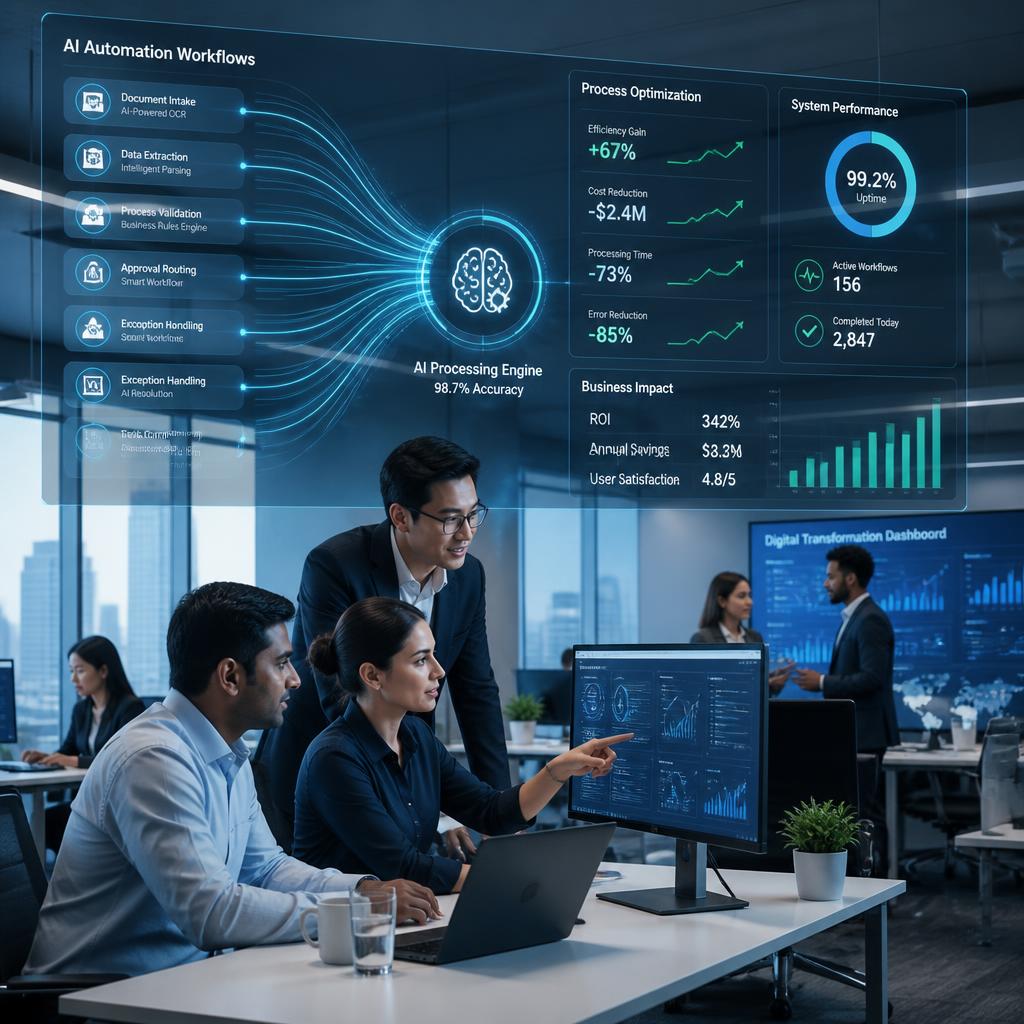
The other four selections cluster around a quieter but equally telling theme: the automation of work that large enterprises have historically thrown headcount at rather than technology. Easework AI is automating end-to-end procurement workflows for indirect consumables using agentic AI, the category of artificial intelligence systems capable of independently executing multi-step tasks rather than simply answering questions. That is not a glamorous problem. Procurement of office supplies, maintenance materials and safety equipment is the unglamorous plumbing of a large manufacturing organisation. But it is also exactly the kind of repetitive, rules-based, high-volume process where agentic AI delivers measurable efficiency gains quickly, without the long deployment timelines that more ambitious AI projects often require.
“At Maruti Suzuki, we have been actively working with startups to co-create innovative and practical solutions to address real business challenges. We are delighted to collaborate with five more startups. One of these startups, MiniMines, will support us in safely recycling end-of-life batteries, while the other four startups will help improve customer engagement and drive efficiency across our business operations.”
Hisashi Takeuchi, Managing Director and CEO, Maruti Suzuki India
Sarvam AI, one of India’s most closely watched generative AI companies, will deploy multilingual AI agents across Maruti’s customer touchpoints, a deployment that matters more than it might initially appear given the breadth of Maruti’s customer base across dozens of Indian languages and dialects. A customer in Coimbatore and a customer in Lucknow expect to be understood and served in their own language, and building that capability at the scale of India’s largest carmaker has historically required either prohibitively large multilingual customer service teams or technology that simply did not exist at sufficient quality until very recently. Siftly’s generative AI brand visibility tools and CodeMate AI’s accelerated software development capabilities round out a cohort that, taken together, is less about flashy innovation theatre and more about quietly compounding operational efficiency across procurement, customer engagement, software velocity and sustainability compliance simultaneously.
What separates the Maruti Suzuki Incubation Program from a typical corporate accelerator is the breadth of the surrounding architecture supporting it. MSIP is just one of several distinct programmes Maruti runs, each calibrated to a different stage of startup maturity. The Maruti Suzuki Accelerator targets growth-stage startups with existing traction. The Mobility Challenge engages mature mobility innovations that are closer to commercial deployment than experimental. Nurture, run in partnership with IIM Calcutta Innovation Park, works with idea-stage ventures that have not yet built a product. And FundRays, launched with ISB Hyderabad, focuses specifically on investment readiness, helping programme alumni become fundable by external venture capital once they graduate from Maruti’s internal engagement. That is a remarkably complete pipeline architecture for a traditional manufacturing company to have built, spanning everything from raw idea to growth-stage commercial deployment.
The honest tension in this model, and one that startup founders in India have quietly raised in conversations about large corporate innovation programmes generally, is the asymmetry of leverage. A startup engaging with Maruti Suzuki gains enormous credibility, real-world deployment at industrial scale, and access to a customer relationship that would take years to build independently through normal sales channels. But the startup is also, by definition, the smaller and more dependent party in that relationship. Maruti sets the terms of engagement, defines the business problem, and retains the option to walk away or build the capability internally once the startup has proven the concept works. The thirty eight startups that have made it through to formal partnership status over seven years represent genuine wins on both sides. But the half a percent conversion rate from screening to partnership is also a reminder of how steep the climb is, and how much leverage sits with the corporate side of that table throughout.
Maruti Suzuki’s broader bet, made explicit through Takeuchi’s repeated public framing, is that the speed and complexity of technological change in automotive manufacturing, from EV battery lifecycle management to multilingual AI customer engagement to agentic procurement automation, has outpaced what any single organisation, however large, can build entirely in-house at the pace the market now demands. The fifth MSIP cohort is not a one-off announcement. It is the latest data point in a seven-year experiment testing whether a legacy manufacturer can stay technologically current not by acquiring its way to relevance, but by systematically, patiently, and at genuine scale, partnering its way there instead.