
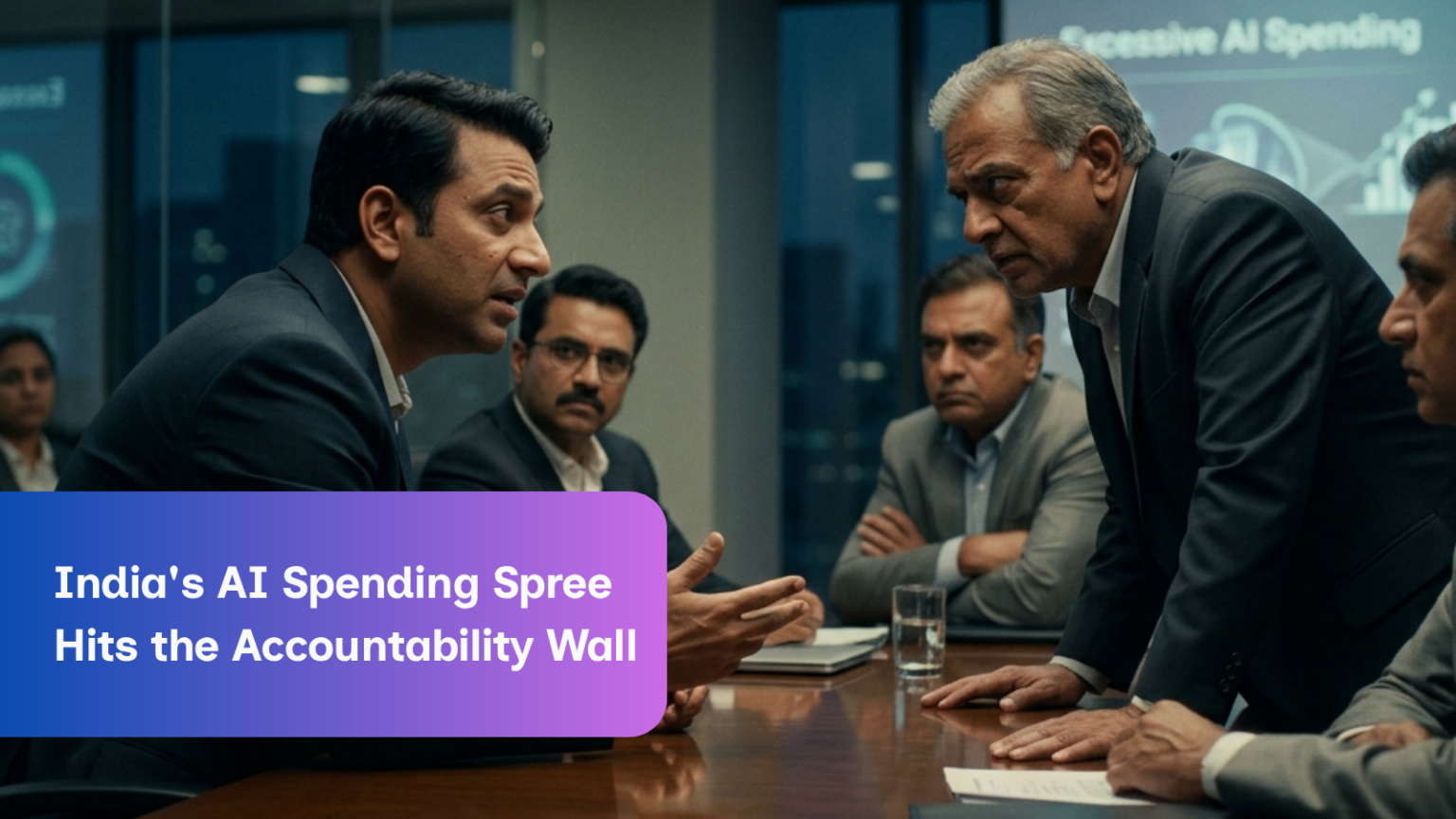
Indian enterprises are spending too much, and too fast on Artificial Intelligence (AI) than they can prove it's working — and boards have noticed.
Indian enterprises have spent the past two years pouring money into artificial intelligence — chatbots for customer service, copilots for coders, dashboards promising to reinvent everything from logistics to lending.
Now the boards that approved those budgets are demanding something more than just enthusiasm: proof.
Honestly, the AI-Adoption numbers tell a story of scale without depth.
• 59% percent of enterprise-scale organizations in India already have AI actively in use, according to IBM, with another 27% actively exploring it.
• Money is following interest — Indian businesses invested an average of $31 million in AI in 2025, outpacing the global average of $26.7 million, per a SAP-Oxford Economics survey.
• Yet a separate Zinnov study, done with OpenAI and Z47, found that roughly 25% of surveyed enterprises are "Enforcers" — companies issuing top-down AI mandates without the execution muscle to back them up, and nearly 20% of that group can't measure any value from AI at all.
That gap — between deployment and demonstrable return — is exactly what's rattling boardrooms.
"When you look at sanctioned deployments of AI, I suspect it is still very much in the initial stages," says Ram Mohan, Managing Partner at Blue Bridge Consultants. Individuals, he notes, have raced ahead of their organizations. Formal, company-sanctioned rollouts have not.
AI is no longer optional in Indian business strategy.
It's assumed. What's changed is the tolerance for ambiguity around what it actually buys.
Boards and CFOs are asking pointed questions before signing off on the next wave of spending, and that scrutiny could slow approvals for the kind of large, ambitious deployments companies were greenlighting almost reflexively a year ago.

Part of the problem is that nobody quite knows what AI will cost tomorrow.
"It's perhaps a little uncertainty over the ROI in the long run because if you look at some of the biggest components of cost like the tokens and infrastructure, today it is still not very clear what would be the final landed cost," Ram Mohan explains. "The cost benefit analysis is where I would suspect a lot of enterprises still don't have a good handle on."
That uncertainty compounds an older problem: quality gains and customer-experience improvements are notoriously hard to price.
Indian organizations are broadly optimistic on paper — 93% expect positive AI ROI within three years, and the reported average return has climbed to 15% in 2025, with projections putting it at 31% within two years, according to the same SAP-commissioned study.
But optimism and measurement are different things, and few companies can point to a documented, board-level case study proving the math.
Part of the trouble, Ram Mohan argues, is that companies keep solving the wrong problems. "They go for the low hanging fruit which is not necessarily the best use case for an ROI."
His advice: chase the expensive, slow, painful processes — not the easy wins.
"Look at the use cases which provide the largest benefit, for example, something which takes too long to deliver or something which is too expensive to deliver, and use those use cases rather than what is easy to do using AI today."
There's a governance failure underneath that, too.
Too often, he says, technologists set the agenda instead of the business. "The most common drawback that I've seen is you let the CIO or organization make the decision on what AI is used for.
Decisions should be driven by the business rather than the technology choice that you make.
So what does good measurement look like?
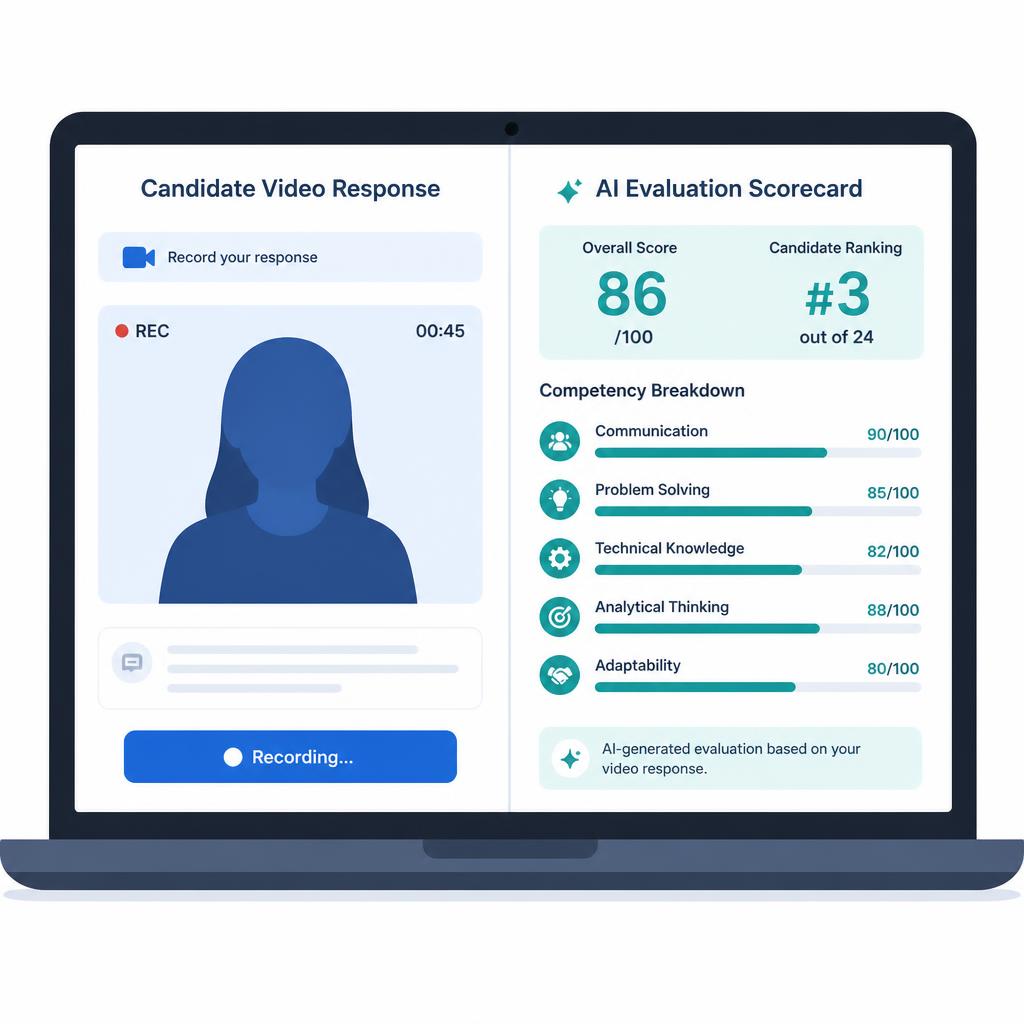
Ram Mohan points to three levers: productivity, cost reduction, and quality of output.
Simple metrics. Trackable ones.
The kind that survive a board meeting.
Companies that anchor AI spending to specific, expensive-to-solve business problems — and then actually monitor those three metrics over time — build a durable case for continued investment. It's a shift from AI as a technology story to AI as a business discipline.
Expect that discipline to reshape the next 18 to 24 months of Indian enterprise AI.
The immediate effect will likely be conservative: boards rewarding fast, quantifiable wins over sprawling, transformative bets.
That's a real cost.
Some of the most valuable use cases are also the slowest to prove out, and short-term ROI pressure could starve them of the runway they need. But the long game favors the disciplined. Enterprises that can tie AI initiatives to hard business outcomes — and pair that with real governance — won't just survive the scrutiny.
They'll be the ones still standing when the next budget cycle asks the same question, only louder: what did we actually get for this?