

How Google’s No-Code Agent Builder Tools Let Business Teams Create Customer Facing AI Agents Directly
Google’s newest generation of no-code tools now lets ordinary business teams, not just engineers, design customer facing AI agents through drag and drop canvases and plain language prompts, quietly reshaping who actually gets to build enterprise software.
Highlights:
- Google Agentspace offers a no-code Agent Designer for building custom AI agents
- Agents can connect directly to enterprise data and tools like Gmail, Jira and Outlook
- Workspace Studio agents completed more than 20 million tasks in a single 30 day period
- Early adopter Kärcher saw a 90 percent reduction in feature development drafting time
- Agent Designer combines a natural language chat pane with a visual flow canvas
- Dialogflow CX remains the low-code path for more advanced customer service agents
For most of the past decade, building any genuinely useful piece of enterprise software has required a developer somewhere in the process, someone fluent enough in code to translate a business team’s plain language request into something a computer could actually execute. Google’s latest generation of AI agent building tools is aimed directly at dismantling that dependency for a meaningful category of business software, letting people with zero coding background design functioning, deployable AI agents through little more than a visual canvas and a conversation typed in ordinary language.
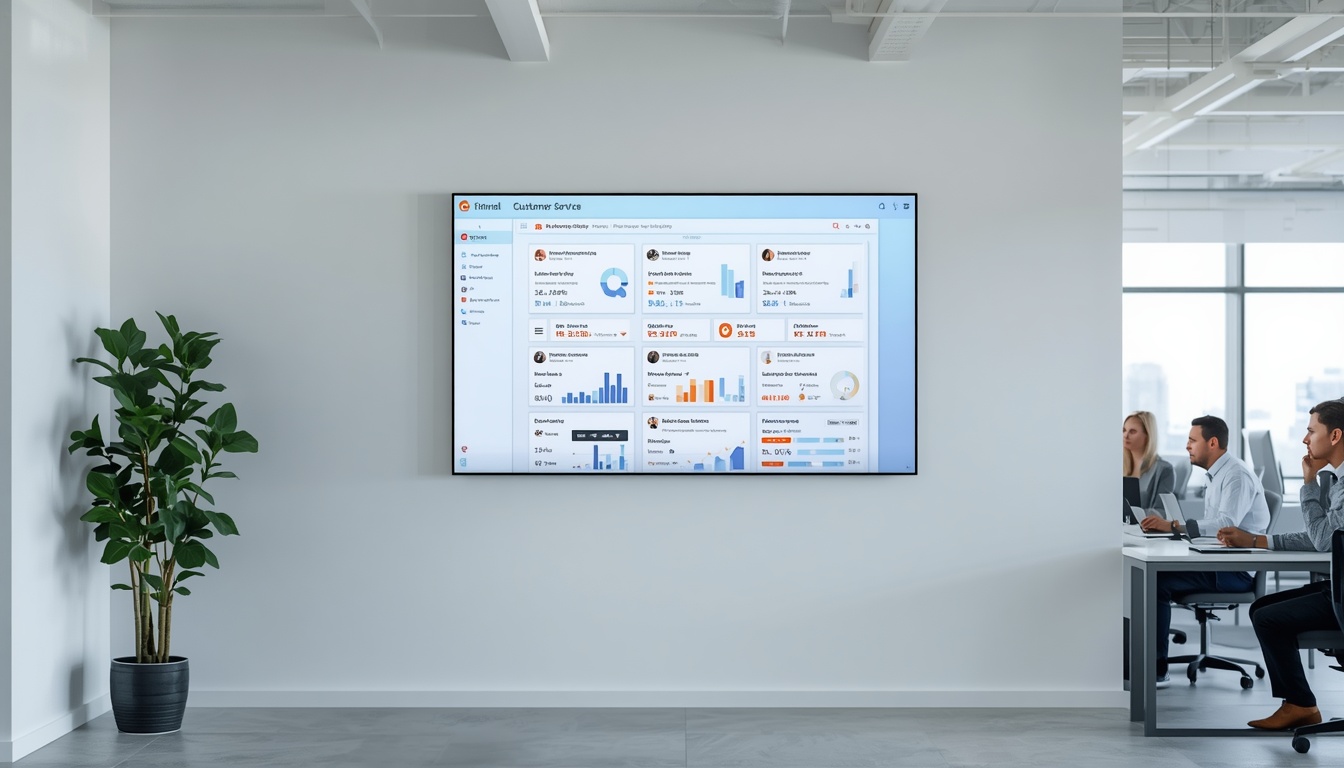
The centrepiece of this shift is Agentspace’s Agent Designer, described by Google as an interactive no-code and low-code platform for creating, managing and launching both single step and multi step agents. What makes Agent Designer genuinely distinctive compared to earlier generations of business automation tools is how it structures the actual building experience. The interface is split into two coordinated panes working together: a chat pane offering a purely conversational interface where a user describes in plain language what they want an agent to do, refining its instructions and behaviour through ordinary back and forth conversation rather than technical configuration screens, and a designer pane offering considerably more granular, low-code control for users who want finer command over the agent’s underlying configuration, organised across separate tabs covering the agent’s overall workflow logic, execution scheduling, and a live preview environment for testing how the agent actually responds before it goes live.
The practical capabilities this unlocks are genuinely substantial rather than merely cosmetic simplification of an otherwise unchanged underlying process. Agents built through Agent Designer can connect directly to a genuinely wide range of enterprise data sources and third party tools, including Gmail, Google Drive, Jira and Outlook, alongside Google’s own broader Workspace ecosystem, meaning a business user with no engineering background can construct an agent capable of, for example, monitoring incoming customer emails, cross referencing that information against internal documentation stored in Drive, and automatically drafting an appropriate response or escalation—an integrated, multi step workflow that would have required meaningful custom software development to build even a few years ago. The platform also supports multi step agents composed of subagents working together to orchestrate genuinely complex tasks, alongside scheduling functionality that lets these agents run automatically on a recurring basis rather than requiring manual triggering each time.
The adoption numbers behind this shift toward no-code agent building are worth examining directly, since they offer a genuinely useful signal of whether this technology has moved meaningfully beyond hype toward measurable, practical usage. Google Workspace Studio, a closely related no-code agent building platform powered by the company’s Gemini 3 model, reported that agents built through the platform completed more than 20 million tasks within a single 30 day period during its early Gemini Alpha testing programme—a genuinely large volume of automated task completion for a tool still in its relatively early adoption phase.
Highlighting the core philosophy behind the product suite, Farhaz Karmali, Product Director for Google Workspace Ecosystem, noted:
“Previous automation tools were too technical and rigid for everyday users. Our goal is to make it possible for anyone to build agents that understand context and execute tasks natively within their workflows.”— Farhaz Karmali, Product Director, Google Workspace Ecosystem
Specific early adopter results offer a useful, concrete illustration of what this kind of tooling can actually deliver in practice rather than in marketing language alone. Kärcher, working alongside Google Cloud implementation partner Zoi, reported a 90 percent reduction in the time required to draft feature development documentation after adopting Workspace Studio’s agent building capabilities, a genuinely dramatic efficiency gain for a specific, well defined administrative task that previously consumed considerable staff time without requiring any particularly sophisticated judgement—precisely the kind of repetitive, moderately complex but ultimately rule bound work that no-code AI agents appear best suited to meaningfully accelerate.
It is worth understanding where these no-code tools sit within Google’s broader, deliberately tiered agent building strategy, since the company has clearly structured its offerings to serve genuinely different technical audiences with different needs rather than treating agent building as a single, undifferentiated category of tool. For business users and citizen developers without coding backgrounds, Agentspace’s no-code Agent Designer represents the most accessible entry point, aimed primarily at building internal, employee facing productivity and enterprise search agents rather than customer facing applications requiring the more rigorous conversational design and safety guardrails that direct customer interaction typically demands. For teams specifically building customer facing conversational agents, including customer service and support applications, Google positions its Conversational Agents platform, built around the more mature Dialogflow CX engine, as a low-code pathway offering considerably more specialised tooling for the particular demands of customer facing conversation design, intent recognition and multi turn dialogue management than the more general purpose Agent Designer canvas is built to handle. Beyond both of these, the Vertex AI Agent Development Kit remains available as a genuinely code first, developer oriented option for teams building the most technically sophisticated, custom agent architectures where neither no-code nor low-code tooling offers sufficient flexibility.
Governance and security considerations run consistently throughout Google’s framing of this entire agent building ecosystem, a deliberate emphasis given how much enterprise hesitation around deploying AI agents at scale has historically centred on legitimate concerns over data access, security and auditability rather than pure technical capability. Administrators retain built in tools to control precisely which applications and data sources any given agent can access, alongside centralised monitoring capabilities that let organisations visualise and audit agent activity across their broader deployment, addressing the genuine and reasonable concern that broadly empowering non technical employees to build agents connected to sensitive enterprise data could otherwise create meaningful, difficult to track security and compliance exposure if left entirely ungoverned.
There is a broader industry pattern worth situating this specific Google product strategy within, rather than treating it as an isolated technical development. Recent enterprise surveys suggest 88 percent of organisations plan to launch some form of AI agent initiative within the coming six months, reflecting a genuinely rapid, industry wide shift away from earlier generations of purely assistive generative AI tools—chatbots that simply answer questions when prompted—toward considerably more autonomous agent based workflows capable of independently executing multi step tasks with comparatively limited ongoing human supervision. That shift is playing out across the broader enterprise software industry simultaneously, with comparable multi agent orchestration platforms including IBM’s watsonx Orchestrate pursuing similar ambitions around eliminating organisational silos and manual handoffs between different enterprise software systems, suggesting Google’s own no-code agent building push reflects a genuinely broad industry convergence rather than a uniquely Google specific strategic bet.
Viewed evenly, Google’s expanding suite of no-code and low-code agent building tools represents a genuinely meaningful democratisation of enterprise software development capability, backed by concrete early adoption numbers and specific efficiency gains that extend well beyond speculative marketing claims into measurable, real world deployment outcomes. The considerably harder, still unresolved question is whether this kind of accessible, non technical agent building genuinely scales safely and reliably as more organisations move beyond internal productivity use cases toward the more consequential customer facing agent deployments where errors carry direct reputational and financial cost—a transition that will test whether Google’s layered, governance conscious approach to agent building tooling can actually keep pace with how quickly business teams themselves are likely to want to push these newly accessible capabilities into increasingly high stakes, customer facing territory.