

Cerebras Unveils CS-4 AI Accelerator Claiming Thirty Times Faster Inference Speed Than Leading Nvidia GPU Systems
A California chipmaker has unveiled a wafer scale computer it says delivers thirty times the speed of leading Nvidia systems, escalating a hardware rivalry that could reshape how the world’s most advanced AI models actually get deployed.
Highlights:
- Cerebras unveiled the CS-4, its newest rack scale AI accelerator, on August 18
- The system claims up to 30 times more tokens per second per user than leading GPUs
- CS-4 is built from three new Wafer Scale Engine 3 Turbo processors
- It packs roughly 4 trillion transistors and delivers 750 PFLOPS of AI compute
- The system offers 10 times higher throughput per watt compared to its predecessor
- First CS-4 shipments to select customers are expected within the current quarter
Every few months in the current AI hardware race, a new claim arrives promising to upend the established order, and most of those claims fade quickly once independent testing catches up with the marketing. Cerebras Systems’ latest announcement deserves a closer, more careful look than most, both because of the specificity of its numbers and because of the company’s own track record of previously outpacing conventional GPU systems on inference speed, a claim that has held up reasonably well under scrutiny in the past. On August 18, at an event in San Francisco, Cerebras introduced the CS-4, the fourth generation of its flagship AI computer, and the company is not being modest about what it believes this machine represents, describing it as the fastest AI accelerator currently in the industry.
The core claim driving this announcement is a genuinely striking one. Cerebras says the CS-4 delivers up to 30 times more tokens per second per user than leading GPU-based systems on comparable workloads, a metric that matters enormously for anyone building AI products where responsiveness directly shapes user experience—chatbots, coding assistants, voice agents, and any other application where a model needs to generate a fast, fluid stream of output rather than simply produce a correct answer eventually. Andrew Feldman, Cerebras’ chief executive officer, framed the new system around a philosophy the company has been building toward for years, explaining that the CS-4 was designed around the idea that the next meaningful leap in AI infrastructure cannot come from improving a single component in isolation, that compute, power, cooling, and input-output capacity all have to advance together as a unified system rather than as separate upgrades bolted onto an existing architecture.
“In AI, speed is productivity. Historically, fast inference meant using smaller and less capable models. Cerebras CS-4 delivers industry-leading speeds on the largest frontier models, fundamentally changing the paradigm.”
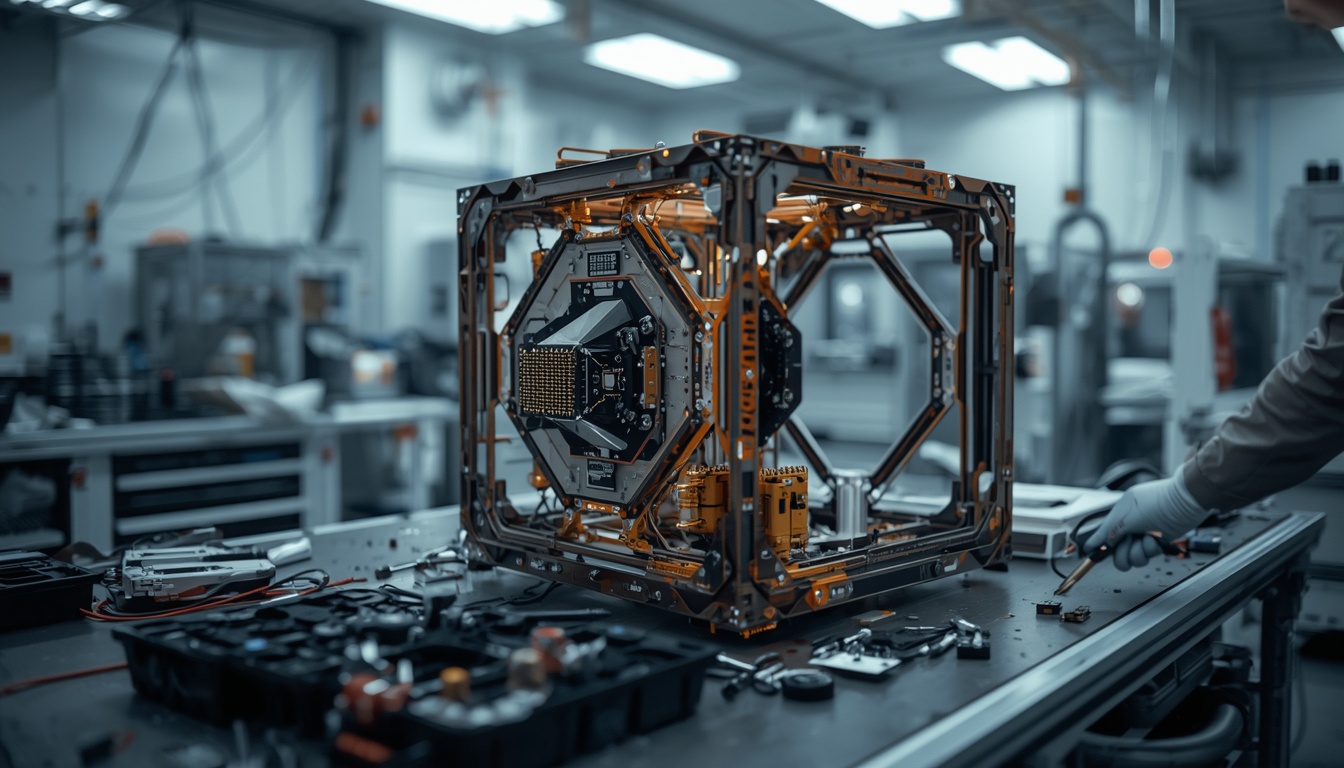
Understanding why Cerebras’ approach produces these speed claims requires understanding what actually makes the company’s hardware fundamentally different from Nvidia’s dominant graphics processing units. Cerebras builds what it calls Wafer Scale Engines, enormous chips manufactured from an entire silicon wafer rather than the many small individual chips that conventional processors are typically cut into. The CS-4 is built from three new WSE-3 Turbo processors, which Cerebras describes as the largest AI semiconductors ever built, together packing roughly 4 trillion transistors. Crucially, these chips use static random-access memory (SRAM) rather than the dynamic random-access memory (DRAM) that conventional GPU systems rely on. SRAM is considerably faster than DRAM, though also more complex and expensive to manufacture at scale, and Cerebras’ architecture allows it to store all the numerical values underpinning an AI model directly on the chip itself, avoiding the need to constantly shuttle data back and forth across a connective link to separate memory chips, a process that Cerebras argues represents one of the fundamental bottlenecks slowing down conventional GPU-based systems.
The full technical specifications disclosed alongside the launch are worth laying out plainly, since they offer a more complete picture than the headline speed claim alone:
-
AI Compute: 750 PFLOPS of total compute across its three processors.
-
Memory Bandwidth: 129.6 petabytes per second.
-
System I/O Bandwidth: 7.2 terabits per second.
-
Wafer-to-Wafer Interconnect Latency: As low as 2 microseconds, essential for seamlessly coordinating massive models across multiple chips.
-
Generational Improvement: Up to twice as fast in execution and up to 10 times higher throughput per watt compared to the previous CS-3 generation.
Practical deployment details matter here too, and Cerebras has been relatively direct about where things currently stand. The CS-4 is presently being sampled by a small group of select customers, with the company stating that broader market availability will follow later in the current quarter. This staged rollout—sampling first with a limited customer set before wider release—is a fairly standard practice for hardware at this scale and price point, allowing early customers to validate real-world performance claims before the system reaches a broader market, though it also means the 30-times speed claim remains, for now, a figure generated primarily through Cerebras’ own internal benchmarking rather than through extensive independent third-party verification across a wide range of real-world workloads.
One additional strategic detail worth highlighting is Cerebras’ positioning around the current global memory chip shortage. Because the CS-4 relies on SRAM manufactured directly onto its own wafer-scale chips rather than requiring external DRAM memory modules, the company has pointed out that its architecture sidesteps a supply constraint that has been affecting large portions of the broader AI hardware industry, where demand for high-bandwidth memory chips used in conventional GPU systems has periodically outpaced available manufacturing capacity. That positioning gives Cerebras a genuine operational advantage independent of raw performance claims, insulating its supply chain from a bottleneck that has, at various points, constrained how quickly some of its competitors could actually ship hardware to customers regardless of how fast that hardware performs on paper.
It is worth situating this announcement honestly within the broader competitive landscape rather than treating it purely on Cerebras’ own terms. Nvidia remains, by an enormous margin, the dominant player in AI data centre hardware, commanding a level of market share, developer ecosystem lock-in through its CUDA software platform, and manufacturing scale that a single hardware announcement from a considerably smaller rival is unlikely to meaningfully disrupt in the near term. Cerebras’ own prior-generation systems have already claimed significant speed advantages over Nvidia GPUs in specific inference workloads, claims that industry observers have generally found credible for the particular use cases Cerebras optimises for—primarily fast, interactive token generation for already trained models—rather than the broader range of AI training and inference workloads where Nvidia’s more general-purpose GPU architecture continues to hold considerable advantages. The CS-4’s real test, in other words, will not be whether it beats Nvidia in a narrow, favourably framed benchmark, but whether the specific advantages it offers—blazing-fast token generation for latency-sensitive applications and immunity to memory chip supply constraints—prove valuable enough to a broad enough set of customers to meaningfully grow Cerebras’ share of a data centre hardware market Nvidia still overwhelmingly dominates.
Viewed evenly, Cerebras’ CS-4 announcement represents a genuinely credible, technically substantive escalation in one of the more consequential rivalries currently playing out in AI infrastructure, even as the company’s own internally generated benchmark claims deserve the same healthy scepticism any vendor’s self-reported performance figures warrant until independently verified across a broader range of real-world deployments. What the announcement does make clear, regardless of how the specific 30-times figure eventually holds up under wider scrutiny, is that the race to build faster, more efficient AI inference hardware remains genuinely contested, and that Nvidia’s dominance, while still overwhelming in absolute market terms, is facing sustained, technically credible pressure from architecturally distinct competitors rather than simply incremental challengers building marginally faster versions of the same underlying GPU approach.