

Delhi High Court denies ANI’s injunction bid against OpenAI’s ChatGPT\
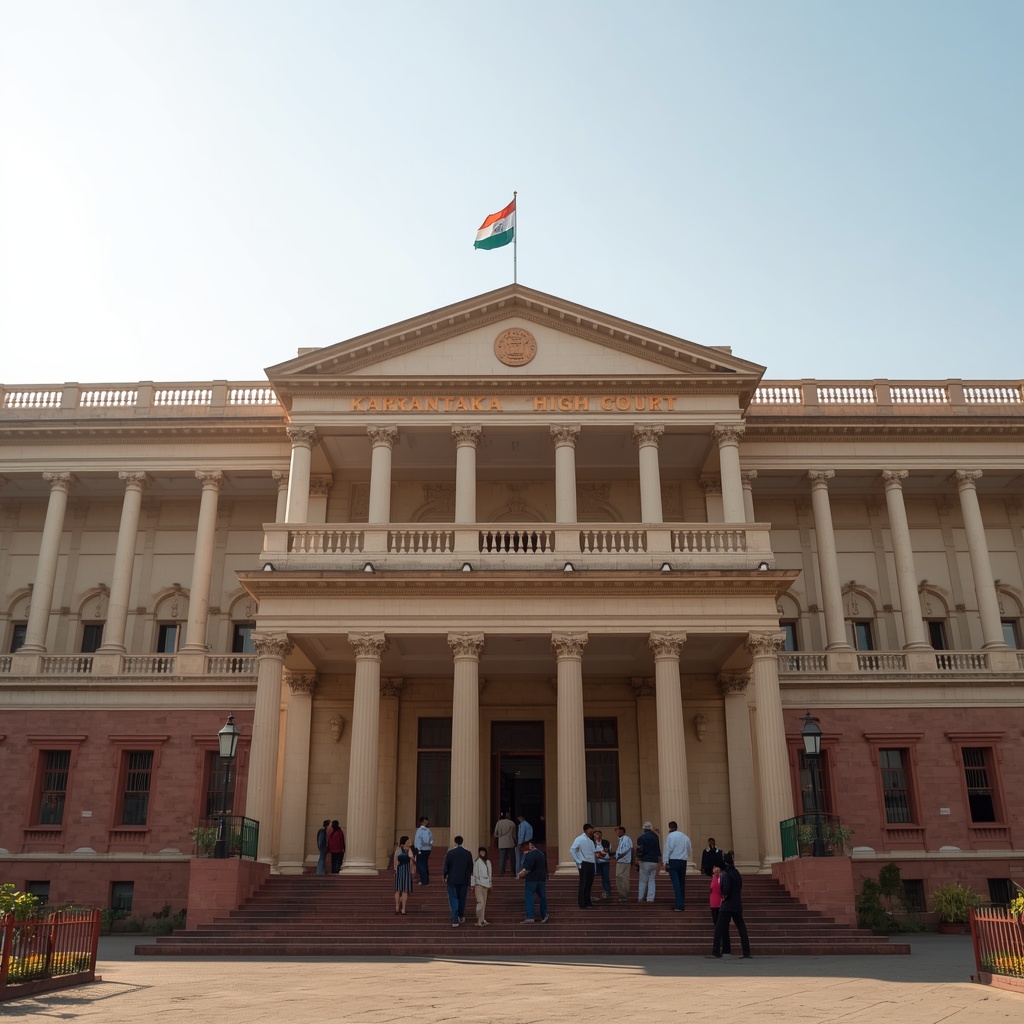
The Delhi High Court has refused to stop ChatGPT from using ANI’s news content, ruling AI training counts as fair dealing under Indian copyright law, a decision that could shape how every AI company in India treats journalism for years to come.
Highlights:
- The Delhi High Court dismissed ANI’s interim injunction application against OpenAI’s ChatGPT
- Justice Amit Bansal ruled that storing ANI’s content for AI training falls under fair dealing
- The court found ChatGPT’s outputs were not substantially similar to ANI’s original content
- OpenAI had already blocklisted ANI’s domain from training data in October 2024
- Major Indian publishers under the Digital News Publishers Association are watching the case closely
For nearly two years, one of India’s biggest news agencies has been fighting a fairly fundamental question in court, whether a chatbot is allowed to learn from journalism without paying for it. The Delhi High Court has now given its first real answer, and it is not the one Asian News International wanted.
Justice Amit Bansal dismissed the interim injunction application filed by ANI against OpenAI, ruling that the company’s storing of ANI’s published content to train ChatGPT does not amount to copyright infringement under Indian law.
The case traces back to November 2024, when ANI filed a 287 page lawsuit, the first of its kind in India, alleging OpenAI had illegally used its content to train ChatGPT and that the tool had, on occasion, generated false information wrongly attributed to the news agency. The suit quickly grew beyond a single company dispute. Several other Indian publications later joined proceedings, including members of the Digital News Publishers Association, whose membership spans some of the country’s largest media houses, among them the Times Group, Hindustan Times, India Today Group, and The Hindu.
“OpenAI’s act of storing ANI’s works does not amount to copyright infringement, since outputs were not similar to ANI’s outputs,” Justice Bansal said while pronouncing the judgment, adding that ANI had failed to satisfy the court that any memorisation or regurgitation of its work had occurred through ChatGPT’s responses.
The court’s reasoning rested on a specific legal mechanism. It held that using copyrighted material to train a large language model falls under the fair dealing provision in Section 52(1)(a) of the Copyright Act, meaning such use does not constitute infringement under Section 51. The court also examined how ChatGPT actually generates answers using a technique called Retrieval Augmented Generation, and concluded that outputs produced this way were not substantially similar to ANI’s original reporting, a distinction that mattered considerably to the final ruling.
OpenAI’s defence throughout the case combined several distinct arguments. The company challenged whether Indian courts even had jurisdiction, pointing out that its AI models are not trained within India and that its servers sit in the United States. It also argued that machine learning is inherently transformative, that raw news facts cannot be copyrighted in the first place, and that any publisher unwilling to have its content crawled could simply request to be added to a blocklist. Notably, OpenAI had already blocklisted ANI’s own domain from future training data back in October 2024, a step the company pointed to as evidence of good faith even while disputing the underlying infringement claim.
Explaining the court’s reasoning further, Justice Bansal noted that irreparable injury would be caused, not only to OpenAI, but to the public at large, if an interim injunction were granted at this early stage of proceedings, adding that ANI had failed to establish a prima facie case and that the balance of convenience did not favour restraining ChatGPT.
The case has also drawn in voices well beyond the two original parties. Broadband India Forum, represented by senior advocate Kapil Sibal, intervened to argue that restricting AI tools from using media reports would violate citizens’ fundamental right to receive information under Article 19 of the Constitution. Amicus curiae Dr Arul George Scaria, a law professor at the National Law School of India University, offered the court a more technical framing, distinguishing between expressive and non expressive use of copyrighted material, and arguing that OpenAI’s use of ANI’s content was, in most instances, non expressive and therefore permissible.
It is important to be precise about exactly what this ruling does and does not settle. This was an interim order on ANI’s request for urgent injunctive relief, not a final verdict on the underlying copyright infringement suit itself. The Delhi High Court had earlier framed four distinct legal questions for consideration in the broader case, including whether storing copyrighted data for AI training infringes copyright, and whether AI generated responses themselves can constitute infringement, questions that remain open for fuller argument as the main suit continues.
That distinction matters enormously for how this ruling should actually be read. OpenAI has won this particular battle, but the war, in the form of the full trial on ANI’s substantive claims, is still ahead. Courts frequently decline interim relief while still allowing a case to proceed to a more thorough examination of the facts, and today’s order should be understood as the court declining to freeze the situation before hearing the complete evidence, rather than a definitive ruling that AI training on news content is always lawful in India.
The stakes extend well beyond ANI and OpenAI specifically. India currently has no dedicated legal framework addressing how AI companies may use copyrighted content for training, leaving courts to stretch existing copyright law, largely designed for a pre AI world, onto genuinely novel questions about memorisation, transformation, and fair use in machine learning contexts. As one legal analysis of the case put it, this dispute is less a routine copyright disagreement and more a foundational test of how India will regulate AI’s access to proprietary content, with implications reaching well beyond this single case’s own facts.
There are reasonable arguments on both sides that this ruling leaves genuinely unresolved. Publishers have a legitimate interest in ensuring their journalism, often expensive to produce and increasingly central to how AI systems answer factual questions, is not simply absorbed into these systems without compensation or attribution. At the same time, the public interest argument OpenAI and its supporting interveners raised, that AI tools helping ordinary users access information faster serves a genuine public good, and that overly aggressive copyright restrictions could meaningfully slow AI research and public discourse, is not a frivolous position either. The court’s finding that ChatGPT’s outputs were not substantially similar to ANI’s original reporting is the specific factual thread this ruling actually hangs on, and it is a finding that could look very different in future cases involving different AI systems, different prompting techniques, or clearer evidence of near verbatim reproduction.
What happens next matters considerably more than this single interim order. As the main suit proceeds, and as similar disputes likely emerge involving other Indian publishers and other AI companies, this case is shaping up to be the reference point Indian courts, and Indian AI policy more broadly, will keep returning to. Whether that eventually produces a clear, workable framework balancing publisher rights against AI innovation, or a patchwork of inconsistent interim rulings across different courts and different fact patterns, is a question this order alone cannot answer, and one the rest of ANI versus OpenAI will need considerably more time in court to resolve.