
MapmyIndia CE Info Systems Q1 FY27 Results: Profit Rises 8.6 Percent As Revenue Climbs 14.9 Percent On Strong Auto Growth
India’s homegrown mapping company grew profit and revenue again this quarter, leaning on automotive and IoT deals with major vehicle makers, even as costs rose faster than sales and the stock kept falling despite a business that keeps quietly expanding.
Highlights:
- CE Info Systems, which operates as MapmyIndia, posted a consolidated net profit of 49.7 crore rupees for the June quarter, up 8.6 percent year over year
- Revenue from operations rose 14.9 percent to 139.7 crore rupees, driven largely by automotive and IoT linked business
- Automotive segment revenue jumped 29 percent on new deals with Tata, Suzuki Motorcycle, Vespa, Ultraviolette, Ampere, and VinFast
- Total expenses grew 26.6 percent, outpacing revenue growth and pressuring margins
- The company’s core mapping revenue was nearly flat while its IoT linked business nearly doubled
- Shares fell after the results, extending a decline of close to a third over the past year
CE Info Systems, the company better known by its consumer facing brand MapmyIndia, opened its new financial year the way it has tried to open most recent ones, with modest but real profit growth rather than a dramatic swing in either direction. For the quarter ended June, the company reported a consolidated net profit of forty nine point seven crore rupees, up eight point six percent from forty five point eight crore rupees in the same quarter last year. Revenue from operations climbed fourteen point nine percent to one hundred thirty nine point seven crore rupees from one hundred twenty one point six crore rupees a year earlier. Chairman and managing director Rakesh Verma summed up the quarter simply, saying the new financial year had begun with another period of profitable growth as the company continues what he called its evolution into an AI powered, deep tech mapping and location intelligence business.
That description captures something true about MapmyIndia’s long term positioning even if the quarter itself was fairly ordinary by the company’s own recent standards. Founded to build India specific digital maps at a time when global platforms had little incentive to chart the country’s smaller roads, rural areas, and constantly shifting addresses in fine detail, MapmyIndia has spent nearly three decades building what it calls the country’s largest proprietary map database. It now sells that data and the software built on top of it to three broad groups of customers, automakers who embed its navigation into vehicles, enterprises that need location intelligence for logistics, retail, or operations, and government bodies that use its mapping and analytics tools for planning and public services. Against Google’s dominant but not always India specific maps, the company has carved out a position as the default homegrown option, a status that has become more valuable as government agencies increasingly favour local providers for sensitive location data.
The company listed on Indian stock exchanges in an initial public offering a few years ago that was oversubscribed many times over, reflecting investor appetite at the time for a rare profitable, homegrown technology listing in a market otherwise dominated by loss making new economy debuts. That listing set expectations for MapmyIndia to behave differently from its more richly valued, cash burning consumer internet peers, trading instead on steady profit growth and dividends. The company has largely delivered on the dividend part of that promise, but the growth side has been choppier, a pattern this quarter continues rather than resolves. Government policy has worked mostly in the company’s favour along the way. India’s National Geospatial Policy opened up mapping data that had previously been tightly restricted, while also encouraging public agencies to prefer Indian owned platforms for anything touching national infrastructure, defence, or citizen data, a preference that has fed a steady stream of public sector contracts to MapmyIndia over foreign alternatives. Its ongoing collaboration with chipmaker Qualcomm, aimed at building homegrown navigation solutions for the auto industry, fits the same pattern, positioning the company less as a head on challenger to Google Maps for everyday consumer use and more as the compliant, security cleared choice for any application where data sovereignty matters.
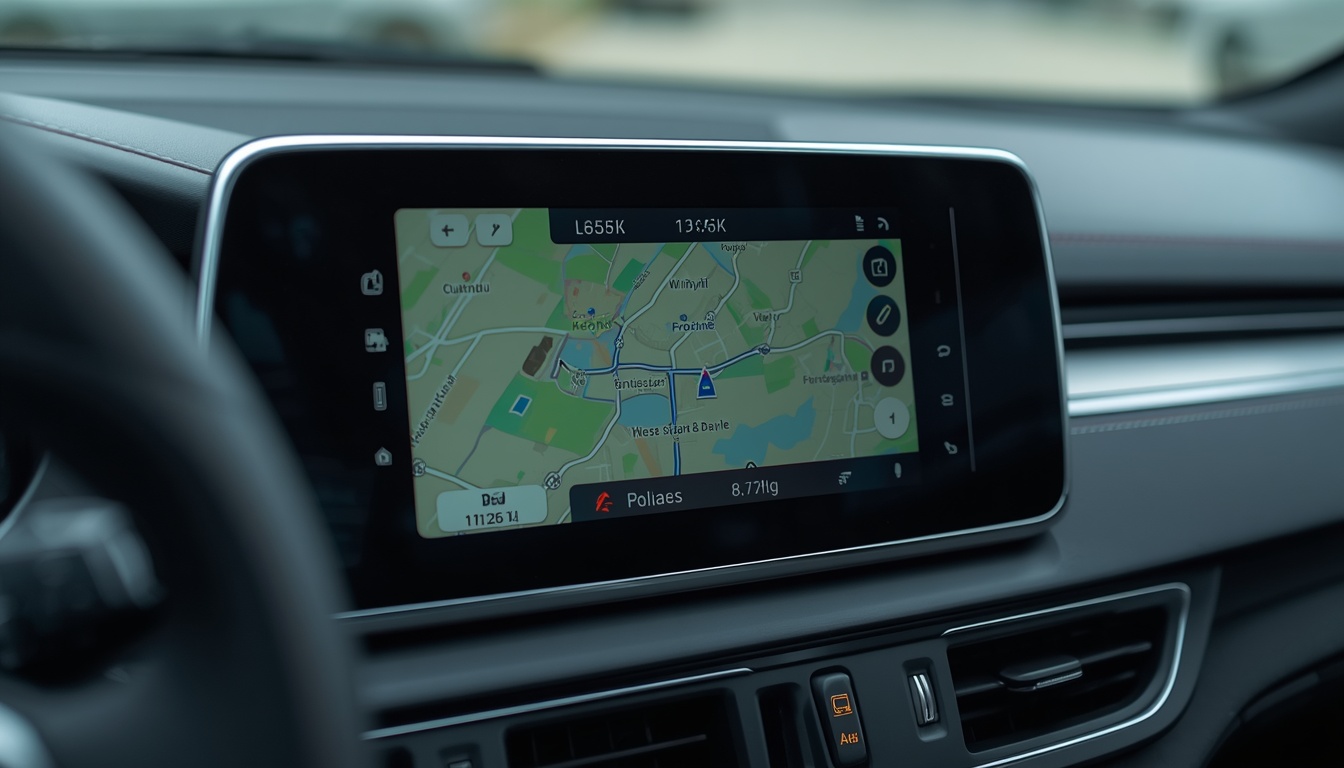
The quarter’s details show that positioning translating unevenly across the company’s three reporting segments. Automotive revenue, the business of licensing maps and navigation into vehicles, rose twenty nine percent from a year earlier to fifty eight point eight crore rupees, comfortably the fastest growing part of the company. Growth there came from continued demand for connected mobility features. During the quarter, Tata’s Sierra electric vehicle adopted MapmyIndia’s trip planning tool built specifically for electric cars, while two wheeler makers including Suzuki Motorcycle, Vespa, Ultraviolette, and Ampere launched new models carrying the company’s navigation platform. MapmyIndia also expanded its device based tracking deployments with Vietnamese electric vehicle maker VinFast and renewed a contract with a large two wheeler manufacturer. That momentum tracks a broader shift in Indian mobility, where electric two wheelers and connected vehicle features have moved from niche to mainstream over the past couple of years, handing MapmyIndia a wider base of vehicle programs to win navigation contracts on. Enterprise revenue grew more slowly, up six percent to sixty four point two crore rupees, aided by new work across logistics, financial services, manufacturing, telecom, and renewable energy customers, including a video based tracking contract with an online bus booking platform and expanded programming interface deployments with a logistics company.
Underneath the segment numbers sits a bigger structural story. The company’s core mapping business, what it calls map led revenue, was almost flat, edging up from ninety eight point two crore rupees to roughly ninety eight point seven crore rupees. The real growth engine this quarter was its internet connected device business, IoT led revenue, which nearly doubled from about twenty three point four crore rupees to around forty one crore rupees. Joint managing director Rohan Verma used part of the earnings call to explain why investors should look at the combined, consolidated numbers rather than any single subsidiary in isolation, noting that government contracts often get won by the parent company on the strength of its credentials and then get executed through a separate government focused subsidiary, while IoT hardware work is similarly routed through its own unit. That structure, he suggested, makes the standalone numbers on their own a poor guide to how the business is actually performing.
The stats around costs tell a slightly less comfortable story than the profit headline alone suggests. Total expenses jumped twenty six point six percent to ninety two point nine crore rupees from seventy three point four crore rupees a year earlier, growing faster than revenue did. Earnings before interest, tax, depreciation, and amortisation came in at fifty six point one crore rupees for the quarter. Other income of nineteen point seven crore rupees, largely interest earned on the company’s cash reserves, helped push total income for the quarter to one hundred fifty nine point four crore rupees and cushioned the bottom line even as operating costs rose faster than sales. Measured quarter on quarter rather than year on year, the picture softens further, with revenue down around three point six percent from the roughly one hundred forty five crore rupees booked in the previous quarter, a reminder that growth has not moved in a straight line even as the year on year comparisons still look healthy on their face.
The quarter also arrives against a slightly bruising full year backdrop. For the fiscal year that ended in March, MapmyIndia’s per share earnings fell to roughly twenty four point six rupees from twenty seven rupees the year before, even as full year revenue rose about fourteen percent to just over five hundred twenty seven crore rupees. Net profit for that full year actually declined by close to nine percent, with the company’s profit margin slipping to twenty six percent from thirty two percent, largely because expenses grew faster than sales across most of the year. Seen against that backdrop, a June quarter that grew both revenue and profit, even modestly, reads as a small step back toward the margin discipline investors had come to expect from the company before that slide began.
Investors read the quarter with some caution. Shares fell in the session after the results were announced, extending a difficult run for the stock, which has lost close to a third of its value over the past year even as the underlying business kept growing revenue and profit. The gap between a growing company and a falling stock usually comes down to valuation and expectations, and MapmyIndia has traded at a rich multiple for years on the promise that its data moat and government relationships would eventually translate into much faster growth. A full year that saw profit actually decline for fiscal 2026, even as revenue rose fourteen percent, has made some investors question how quickly that promise will be fulfilled, and this quarter’s cost growth outpacing revenue growth will not fully settle that question either way.
Zoomed out, the fair read on MapmyIndia is that it remains a well entrenched, profitable business in a market that increasingly values domestic control over sensitive geographic and location data, a trend visible in its expanding government linked work and in earlier partnerships such as its collaboration with chipmaker Qualcomm to build homegrown automotive location solutions. At the same time, its core mapping revenue has plateaued while costs climb, and its newer IoT business, though growing quickly, still runs on thinner and less proven margins than the mapping software that built the company’s reputation. Whether MapmyIndia becomes the AI powered geospatial platform that Verma describes, or settles into a smaller, steadier business serving Indian automakers and government departments, will likely be decided less by any single quarter and more by whether IoT and enterprise revenue can keep growing fast enough to offset a mapping business that, for now, is barely growing at all. The thirty first annual general meeting, scheduled for the eleventh of August, will give shareholders their first chance to press management directly on which of those two paths the company is actually on.