
Cresa’s Hot Water Soluble Pads Aim To Solve India’s Twelve Billion Pad Disposal Problem
India throws away twelve billion sanitary pads every year, almost all of them destined for a landfill, and Pune based Cresa believes the fix is a pad simple enough to dissolve in a bucket of hot water and vanish before it ever becomes waste.
Highlights:
- India discards roughly 12.3 billion sanitary pads a year, producing over 113000 tonnes of menstrual waste
- Cresa’s pads are designed to dissolve completely in hot water, leaving a flushable slurry behind
- Founder Sarika Kulkarni Pathak previously held a patented sanitary napkin design credited to Johnson and Johnson
- The company is incubated at MIT WPU’s technology business incubator in Pune
- About 98 percent of India’s menstrual waste currently ends up in landfills or water bodies
Somewhere in India, roughly every second, a used sanitary pad gets wrapped, hidden, and thrown into a bin, a small, private act repeated by millions of women every single day, and one that almost nowhere in the country has a genuinely safe place to end up.
India generates an estimated 12.3 billion disposable sanitary pads every year, producing more than 113,000 tonnes of menstrual waste annually, roughly 377 tonnes a day. Of that staggering volume, close to 98 percent ends up in landfills, sewers, or water bodies, largely because most households have no standard way to segregate this specific kind of waste from everything else.
Cresa GreenTech, a Pune based startup founded in 2021, has built its entire product around a fairly simple, almost stubborn idea, if the pad itself dissolves, the disposal problem stops being a problem at all.
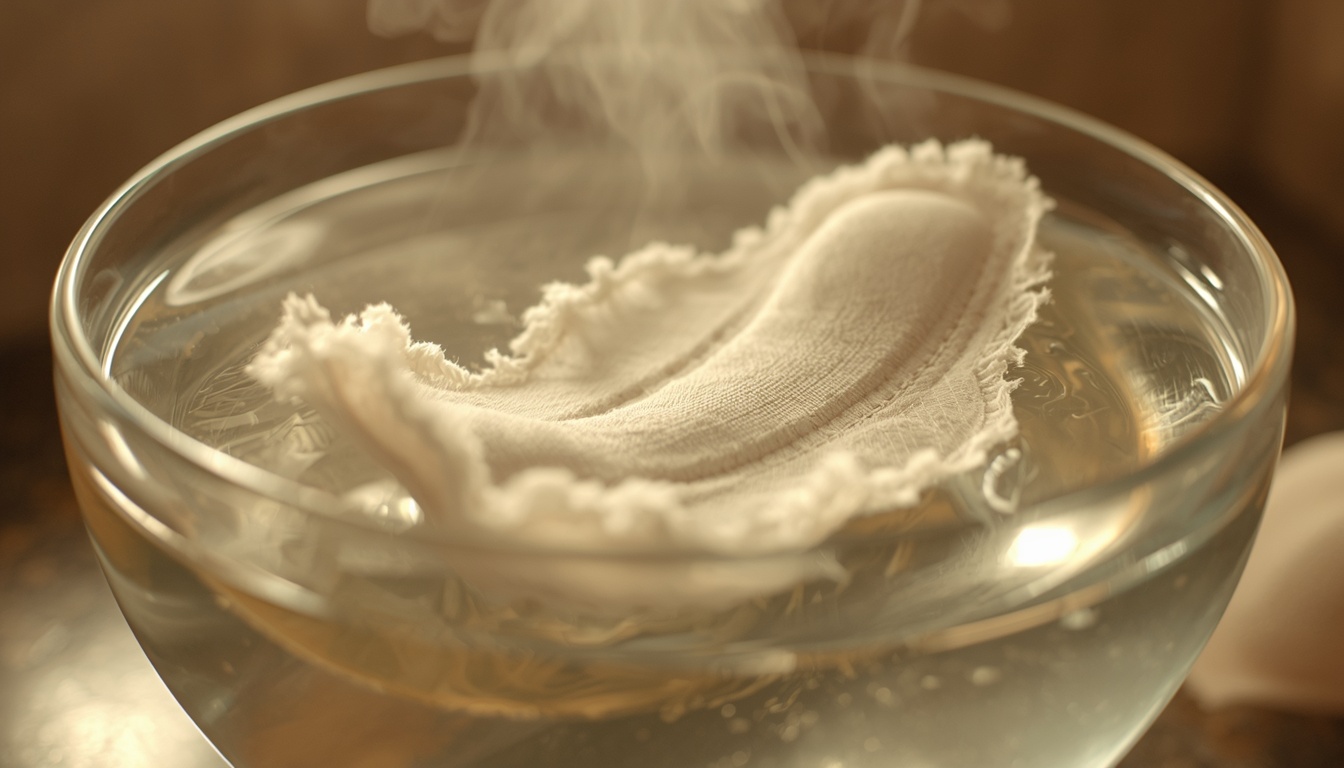
The company’s core product is what it calls a hot water soluble sanitary pad, built with a soft topsheet, a permeable backsheet, and biodegradable, water soluble components layered around an absorbent core made from plant fibres. Used normally throughout the day like any conventional pad, it takes on an entirely different life once discarded, submerged in a container of hot water, it dissolves into a slurry that can be safely flushed away, leaving nothing behind that needs sorting, burning, or burying.
“The disposal of sanitary napkins has become a big issue in India,” the company states plainly, pointing to a structural gap most conversations about menstrual hygiene skip past entirely, that even where access to pads has genuinely improved, almost nothing has been built to handle what happens to them afterward.
The founder behind Cresa did not arrive at this problem casually. Sarika Kulkarni Pathak, a mechanical engineer with a master’s degree in industrial design, spent years working across a genuinely varied engineering career before turning to menstrual waste specifically, developing a crankshaft mechanism for Wheels India, an air cooling system model for Emerson, a compact water purifier for a corporation in the United States, and, in a detail that reads almost like foreshadowing, a multi utility sanitary pad disposal unit at a research facility in Pashan, Pune, alongside a patented design for a more convenient, easy to carry sanitary napkin credited to Johnson and Johnson.
That specific industry background matters considerably for how seriously Cresa’s technical claims deserve to be taken. This is not a founder encountering the menstrual hygiene sector for the first time with an outsider’s enthusiasm, it is someone who spent years inside the exact manufacturing and design constraints that have historically made most sanitary products, plastic heavy, slow to decompose, difficult to dispose of safely, before setting out to solve the disposal half of that equation specifically.
The environmental math behind conventional pads is genuinely stark once laid out plainly. A typical commercial sanitary napkin is roughly 90 percent plastic, the equivalent of four to five plastic bags packed into a single product, and takes somewhere between 500 and 800 years to decompose in a landfill. Cresa’s pads, by contrast, are built to biodegrade in conventional landfill and marine conditions alike, using no herbicides or harsh chemicals that might otherwise leach into waterways as the product breaks down.
There is a genuine public health dimension sitting behind these numbers too, one that rarely makes it into conversations focused purely on environmental waste. Because India lacks standard household segregation for menstrual waste, used pads typically end up mixed with ordinary household refuse, later sorted manually by waste pickers who face direct exposure to pathogens including E coli, salmonella, hepatitis, and tetanus through that handling, a health burden carried disproportionately by some of the most economically vulnerable workers in the country’s informal waste economy.
Cresa is not building its solution purely around individual household purchases either. The company has said it is developing dedicated dissolving bins designed for institutional settings, corporate offices, hostels, schools, and colleges, spaces where large volumes of menstrual waste accumulate daily but where individual hot water disposal at a bathroom sink is simply impractical.
Beyond the product itself, Cresa has spent considerable effort on community education, running menstrual health awareness sessions at government schools, distributing pads through NGO partnerships to underprivileged communities in Mumbai and rural Maharashtra and Karnataka, and working to normalise conversations around a topic still carrying real stigma across much of the country.
The company operates as a DST supported venture incubated at MIT WPU’s Technology Business Incubator in Pune, and has drawn support from institutions including Aspire Institute in the United States and corporate CSR partners, reflecting a funding path built more around grants, incubation support, and CSR partnerships than large scale venture capital, at least at this stage of the company’s life.
There is a growing policy tailwind behind this kind of work too. India’s Ministry of Housing and Urban Affairs, through its Clean City initiative, has increasingly turned its attention toward menstrual waste specifically, treating it not merely as an overlooked category of household refuse, but as a genuine public health and environmental crisis deserving dedicated municipal attention.
It is worth applying a fair amount of scrutiny to how complete a solution Cresa’s current product actually represents, rather than treating hot water solubility as an unambiguous end to the disposal problem. The pad’s core mechanism still asks something real of the user, access to hot water, a container to dissolve it in, and a few extra minutes of active effort at precisely the point in a day when convenience tends to matter most. That is a meaningfully higher behavioural bar than simply wrapping a pad and tossing it in a bin, even if the environmental payoff is considerably better once that extra step is actually taken.
There is also a fair, genuinely useful comparison sitting within the same emerging category of Indian menstrual hygiene startups. A newer entrant, Flawsome, has built what it describes as a more advanced alternative, a pad that can be flushed directly through any plumbing setup without the hot water dissolution step, while also auto disintegrating within roughly 28 days even if a user simply throws it away without taking any special action at all. Flawsome’s own founders have pointed to Cresa specifically as an earlier step in this category’s evolution, one that required an active hot water dissolution process before disposal, a distinction worth taking seriously rather than dismissing as mere competitive framing, since it highlights a genuine, meaningful difference in how much behavioural change each specific product actually demands from the person using it.
None of this diminishes what Cresa represents within India’s broader menstrual hygiene landscape. It tackles a problem that mainstream sanitary product manufacturers, Procter & Gamble and Johnson & Johnson among them, have shown little urgency addressing despite dominating the market through scale manufacturing and aggressive advertising, and it does so with a founder whose engineering credentials give the underlying science genuine credibility rather than marketing gloss. Whether hot water dissolution proves durable enough as a category, or whether the market eventually consolidates around passive, no effort alternatives like Flawsome’s auto disintegrating design, is a question India’s roughly 12.3 billion pad a year disposal crisis will keep asking long after any single company’s specific answer to it.