
Google And YouTube Launch Digital Wellbeing Guidebook With NIMHANS And Fortis Healthcare For Indian Families
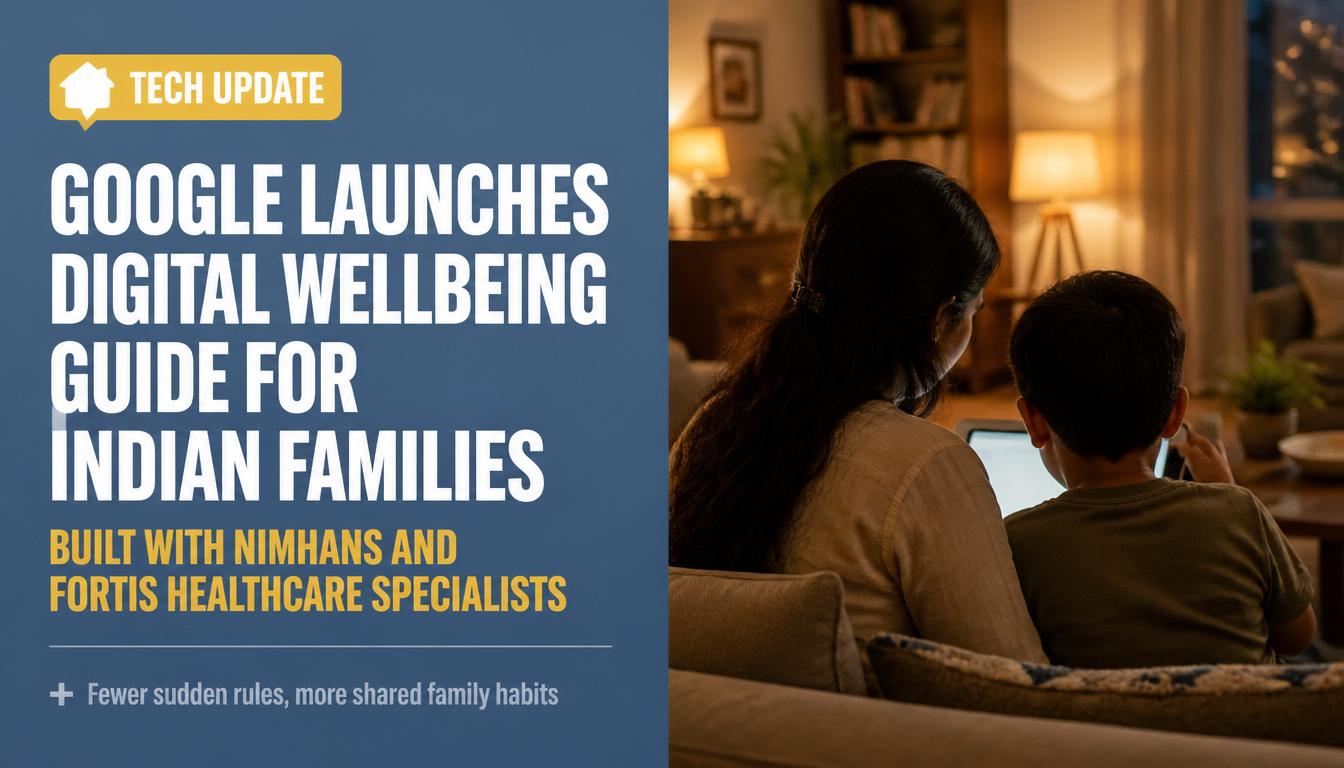
Google India and YouTube have partnered with NIMHANS and Fortis Healthcare specialists to launch a digital wellbeing guidebook, arguing Indian parents need collaborative habits, not sudden device snatching, to help children build a healthier relationship with screens.
Highlights:
- Google India and YouTube have launched a Digital Wellbeing Guidebook developed with NIMHANS and Fortis Healthcare
- The guidebook favours collaborative family habits over sudden screen time restrictions or device snatching
- It includes tools like Family Link screen time limits, School Time Mode, and a default sleep blackout for teens on YouTube
- The guide specifically addresses shared device households common across Indian families
- NIMHANS clinical psychologist Dr Manoj Kumar Sharma says abrupt rules make children feel isolated rather than understood
Almost every Indian household with a teenager has lived through some version of the same argument, a parent abruptly switching off the WiFi, or quietly confiscating a phone mid scroll, followed by the wounded silence that usually comes next. Google thinks it has identified exactly why that approach keeps failing.
Google India and YouTube have launched the Digital Wellbeing Guidebook for Indian Families, developed in consultation with mental health specialists from NIMHANS, Fortis Healthcare, and MAX Healthcare, alongside education experts, child development professionals, and parenting advocates.
The guidebook is built around a fairly specific diagnosis of what typically goes wrong in Indian households, not the absence of rules, but the way those rules tend to arrive.
“Tech conflicts in Indian homes usually start with sudden, abrupt rules like parents abruptly shutting off the WiFi or snatching devices away without warning,” said Dr Manoj Kumar Sharma, professor of clinical psychology at NIMHANS’s SHUT Clinic, which stands for Service for Healthy Use of Technology. “Instead of forcing sudden restrictions that make children feel misunderstood and isolated, parents need a collaborative playbook to build boundaries together.”
That framing, boundaries built together rather than imposed suddenly, sits at the centre of the entire guidebook, which the companies describe as moving deliberately beyond simple screen time limits toward practical, evidence based strategies families can use to co create healthier digital routines.
The guide covers a fairly wide range of everyday scenarios. It offers advice on structuring family conversations about technology use, setting examples through parents’ own device habits, creating genuinely offline activities and technology free zones within the home, and negotiating what the guide calls family media agreements rather than one sided rules.
One section addresses a reality specific to many Indian households, families relying on a single shared smartphone or tablet across multiple generations, rather than each family member having their own device. For these households, the guide highlights practical tools like profile switchers, designed to protect younger users from inappropriate content while preserving adult privacy on the same physical device, a genuinely different challenge from the single user per device assumption that underlies most Western digital wellbeing guidance.
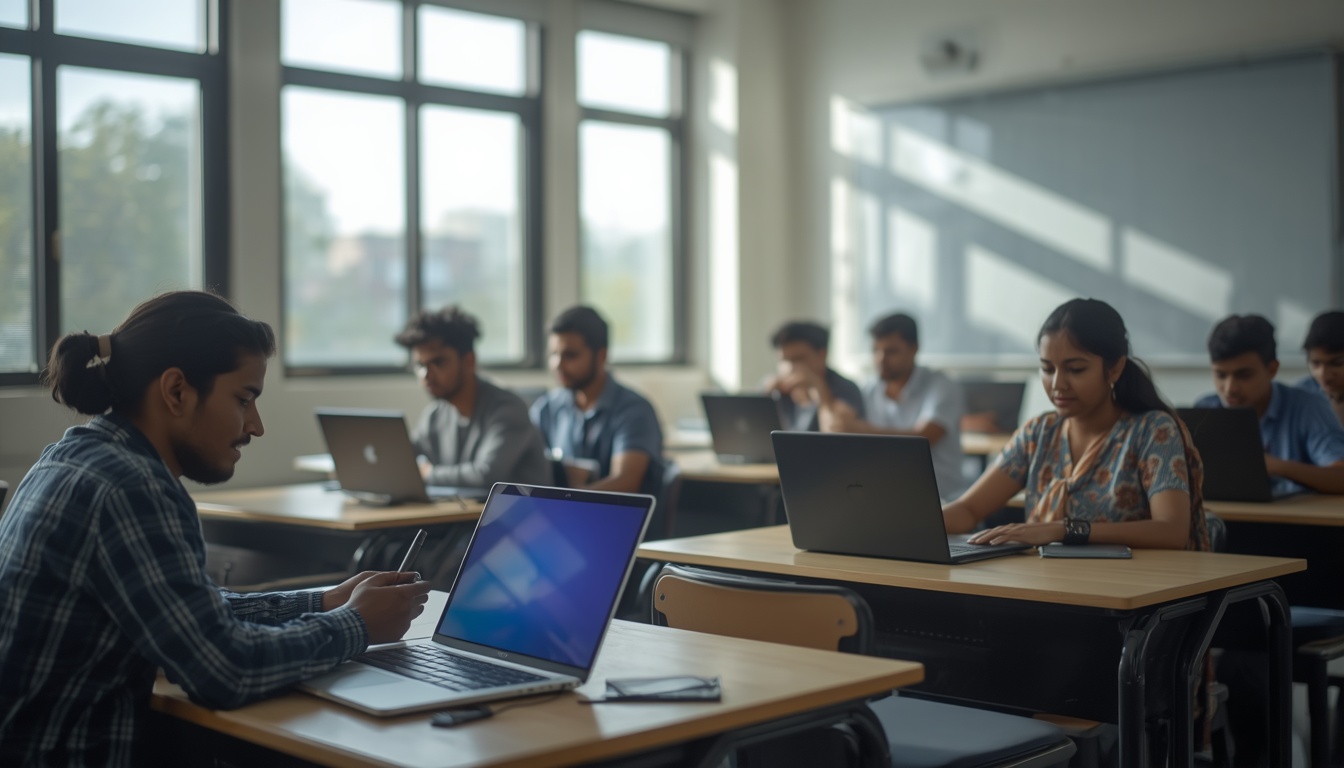
Another section focuses specifically on education, addressing how students use digital platforms while preparing for school examinations and competitive entrance tests, and suggesting ways to build structured, distraction free learning environments around that academic use rather than treating all screen time as equally recreational.
“As a parent of four myself, I know these conversations at the dinner table are never easy,” said Dr Garth Graham, global head of healthcare and public health at YouTube, framing the guidebook as something built from lived parental experience as much as clinical research.
Alongside the behavioural guidance, the guidebook walks through a fairly detailed set of existing Google and YouTube tools parents can actually put to use. Through the Family Link app, parents can set screen time limits and schedule School Time Mode, which silences nonessential notifications and restricts phone functionality to approved apps such as calculators and study portals during school hours. On YouTube specifically, families can use supervised accounts through YouTube Kids or a regular YouTube account with customised, age based content settings managed through Family Center, alongside features like Take a Break reminders and Bedtime Reminders that prompt natural stopping points during viewing sessions.
Certain defaults are built directly into the teen experience. Younger users can have break prompts scheduled automatically, while teenagers get a default 10 p.m. to 6 a.m. sleep blackout window accompanied by a 30 minute advance alert, and families can set Shorts viewing limits down to zero minutes if they choose to disable the feature entirely for a given account.
This initiative is not an isolated, India only gesture. It builds on a broader global commitment Google has been making around youth digital wellbeing, including an expanded 50 million dollar digital wellbeing fund in the United States supporting programmes that have reportedly equipped a million schoolchildren with digital citizenship skills and funded dozens of youth mental health nonprofits worldwide. The Indian guidebook represents that same global framework, deliberately adapted for local realities rather than a simple translation of a Western resource.
It is worth reading a corporate led initiative like this with a fair amount of scrutiny rather than pure endorsement. Google and YouTube are not neutral, disinterested parties in conversations about how much time children spend on screens, since youth engagement with their platforms is directly tied to the advertising revenue that underpins their core business model. A guidebook emphasising collaborative habit building rather than firm restriction, while clinically reasonable advice on its own merits, also happens to be the framing least likely to meaningfully reduce the actual hours children spend on Google’s own products, compared to a more restriction focused approach that platforms have historically resisted.
That tension does not necessarily make the clinical guidance wrong. The core psychological insight, that sudden, unexplained restrictions tend to breed resentment and secretive workarounds rather than genuine behavioural change, is well supported by existing research on adolescent development and family communication more broadly, independent of who happens to be publishing it. The involvement of independent, credible institutions like NIMHANS lends the guidance real clinical weight that a purely corporate authored resource would lack.
Whether Indian families actually adopt this more collaborative approach at scale, or whether the guidebook remains a well produced resource that generates initial media coverage without meaningfully shifting how households actually negotiate screen time day to day, will depend less on the quality of the advice itself and more on whether parents already stretched thin by work and daily life have the time, patience, and consistency required to build the kind of ongoing, negotiated family media agreements the guide envisions, rather than reaching, understandably, for the much faster fix of simply switching off the WiFi.