

Hostinger CEO Giedrius Zakaitis Shares A Practical AI Playbook For Indian MSMEs At MSME Sparks
Hostinger’s newly appointed chief executive brought a three word playbook to India’s biggest MSME gathering, own your infrastructure, launch fast with AI, and talk to customers through it, a pitch built on the same company now counting India as its single largest market.
Highlights:
- Hostinger CEO Giedrius Zakaitis outlined a practical AI playbook for Indian MSME founders at MSME Sparks 2026
- India crossed 1 million Hostinger customers in May 2026, making it the company’s largest single market globally
- A Hostinger survey found 91 percent of Indian side business owners already use AI tools, against 62 percent in the United States
- The company has also launched Hostinger Ecommerce, letting small sellers manage every sales channel from one owned dashboard
- Zakaitis became Hostinger’s CEO in June 2026 after 14 years at the company, starting out answering support tickets
Fourteen years ago, a young man in Lithuania spent his days answering customer support tickets from small business owners frustrated that getting a website online meant fighting technology never built with them in mind. This year, he became the chief executive of the company he was once troubleshooting for, and brought that same frustration, now solved by AI, to a stage full of Indian entrepreneurs.
Giedrius Zakaitis, appointed Chief Executive Officer of Hostinger in June 2026, addressed founders at MSME Sparks 2026, YourStory’s five day gathering of Indian small business owners, policymakers, and ecosystem builders, held virtually from June 22 to 25 and closing with a grand finale at ITC Gardenia, Bengaluru, on June 26.
His session tackled a wall that has, for most Indian MSME founders, simply been assumed to exist, that building a genuine online presence meant hiring a developer, spending months on setup, and wrestling with technology never designed for someone without a technical background.
“Getting a business online used to mean hiring a developer, spending months on setup, and navigating technology that wasn’t built for you,” the session’s own framing put it. “For most MSME founders, that wall was real, and it kept great ideas from becoming real businesses. That wall no longer exists.”
Zakaitis built his talk around drawing on Hostinger’s own experience building AI tools already used by millions of small business owners globally, translating that experience into what founders could actually do differently, use AI to build a professional online presence, automate day to day operations, and compete against companies many times their size, without writing a single line of code.
The playbook rests on a structure worth naming plainly, own the foundation of your business rather than renting it entirely from platforms you do not control, launch quickly using AI to remove the technical barriers that once made speed impossible for a small team, and use that same AI layer to actually talk to customers, answering, following up, and staying present across every channel a modern buyer expects a business to show up on.
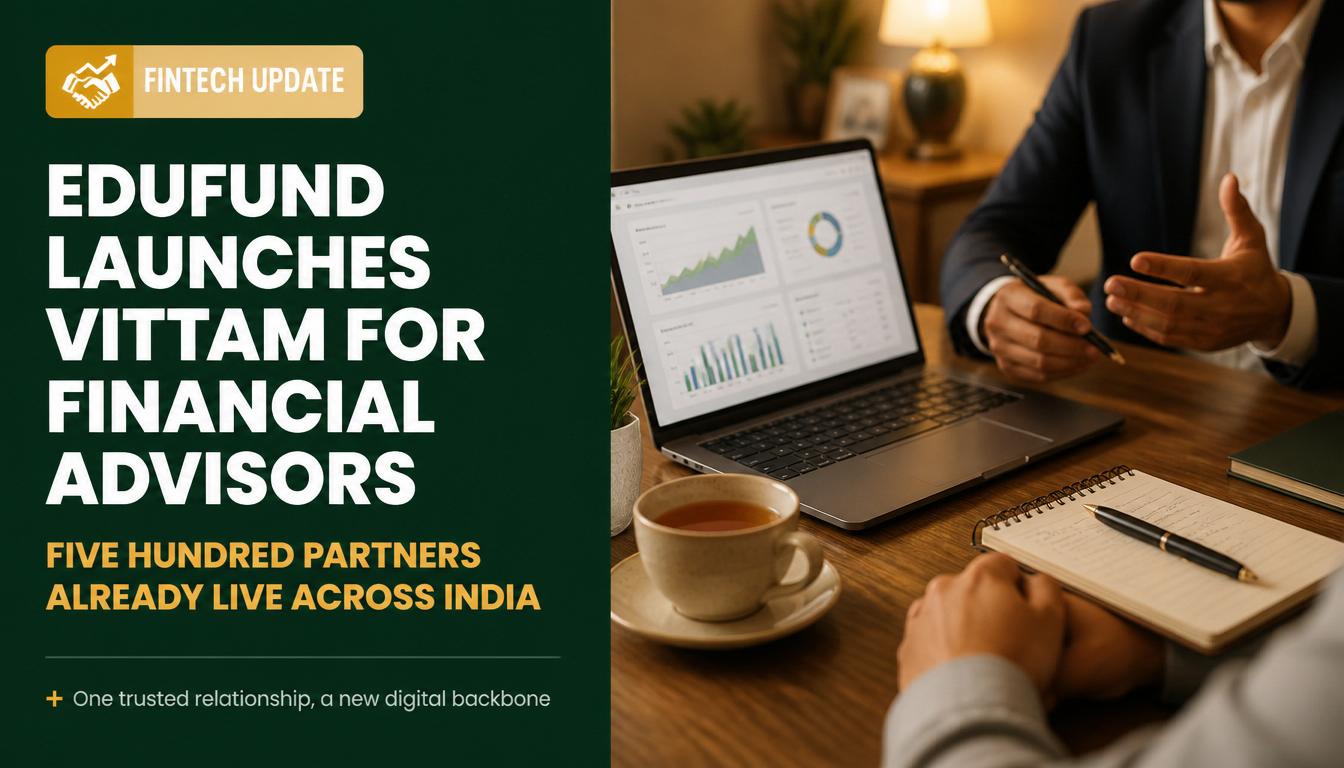
That first pillar, ownership, is not an abstract talking point for Hostinger, it is the explicit logic behind a product the company launched only weeks before this address. Hostinger Ecommerce gives small sellers a single dashboard to manage inventory, orders, payments, shipping, and customer data across every channel they sell through, website, social media, messaging apps, rather than rebuilding their operations each time a new channel becomes important.
“Commerce is moving from simple stores to ecosystems, where people discover products across channels and AI agents increasingly help them choose, compare, and buy,” said Auksė Žirgulė, Head of Hostinger Website Builder and Ecommerce, describing the product’s core logic. “For small sellers, the opportunity is huge, but only if their business can move as fast as their customers do. They should not have to guess which channel will matter next.”
The stakes behind that ownership argument are described in fairly stark terms elsewhere in the company’s own materials, that a business built entirely inside a platform it does not own is one policy change away from losing everything it has built, a risk considerably more familiar to small sellers who have watched a social platform algorithm shift, or a marketplace fee structure change, quietly upend a business overnight.
India’s specific place in this strategy is not incidental. Hostinger crossed 1 million customers in India in May 2026, making the country its largest single market globally, accounting for nearly 20 percent of its 5 million customers worldwide, a dramatic climb from just 1,629 India customers in 2014. That growth is now supported by a dedicated Mumbai data centre, improving performance specifically for Indian users rather than routing traffic through infrastructure built for other markets.
Perhaps the most striking figure Hostinger has put behind this India specific push comes from its own research. A survey of 4,002 respondents conducted in January 2026 found that 91 percent of Indian side business owners already use AI tools in their work, compared with just 62 percent in the United States, a gap that flips the usual assumption that AI adoption trends flow from wealthier markets outward, and instead suggests Indian small business owners are, by this measure, already ahead.
Reflecting on his own path to the role, Zakaitis has described the throughline connecting his years in customer support to his current job plainly. “Back then, getting a small business online meant fighting with technology, which was too complicated for most people. That is still the problem we solve, now with AI doing the hard parts.”
It is worth reading a newly appointed chief executive’s playbook for an entire national market of small businesses with a fair amount of commercial context attached. Hostinger is not a neutral educator here, it is a company whose own growth depends directly on Indian MSMEs adopting exactly the kind of AI powered tools it sells, and a keynote urging founders to own their infrastructure, launch fast, and communicate through AI is, not coincidentally, also a fairly precise description of Hostinger’s own product roadmap. That does not make the underlying advice wrong, the risk of building a business entirely inside a rented platform is genuine and well documented, but it is worth noting plainly that the company delivering this playbook also happens to sell the infrastructure it recommends founders go build.
There is also a fair question about how evenly this AI opportunity is actually distributed across India’s small business landscape. Hostinger’s own data speaks to a genuinely large and rapidly growing customer base, but a 91 percent AI adoption figure drawn from a survey of side business owners likely skews toward founders already digitally engaged enough to respond to that kind of survey in the first place, rather than capturing the far larger population of India’s roughly 5.93 crore MSMEs operating with considerably less digital infrastructure, connectivity, or English language tooling comfort than Hostinger’s existing customer base represents.
None of this diminishes the genuine substance behind Zakaitis’s underlying argument. The technical barriers that once separated a determined small business owner from a professional online presence genuinely have collapsed faster than most institutional narratives about MSME digitisation have caught up to, and a founder who spent fourteen years personally troubleshooting exactly that friction has more credibility making this argument than most keynote speakers claiming the same thing secondhand. Whether Own it, launch it, talk to them becomes a genuinely useful mental model Indian founders actually adopt, or simply a memorable framing from one vendor’s keynote among the dozens MSME founders hear at events like this every year, will depend less on how well the phrase lands on stage, and more on whether the AI tools behind it prove as accessible to India’s smallest, least connected businesses as they already have to the million customers Hostinger has already won.