

Amagi Media Labs Reports 760 Percent Jump In Q1 FY27 Net Profit As Revenue Crosses 436 Crore Rupees
The Bengaluru born streaming technology company has delivered its strongest quarter since listing, with profit jumping over 760 percent and operating margins turning firmly positive, months after its January IPO.
Highlights:
- Consolidated net profit rose to Rs 33.91 crore, up from Rs 3.94 crore a year ago
- Revenue from operations grew 32.4 percent year on year to Rs 436.88 crore
- EBITDA turned positive at nearly Rs 30 crore, against a loss last year
- Profit before tax rose sharply to Rs 40.41 crore from Rs 6.59 crore
- CEO Baskar Subramanian’s term was extended by five years to November 2031
- Amagi listed on the BSE and NSE on January 21, 2026
There is a particular kind of pressure that comes with reporting your first full quarter of earnings after going public, every number gets read as a verdict on whether the listing was justified. Amagi Media Labs, the Bengaluru headquartered media technology company that connects broadcasters and streaming platforms to their audiences through cloud native infrastructure, appears to have passed that test convincingly. For the quarter ended June 30, 2026, the company’s consolidated net profit surged to Rs 33.91 crore, up from just Rs 3.94 crore in the same period last year, a rise of more than 760 percent, and the stock responded immediately, climbing to a fresh all time high on the exchanges.
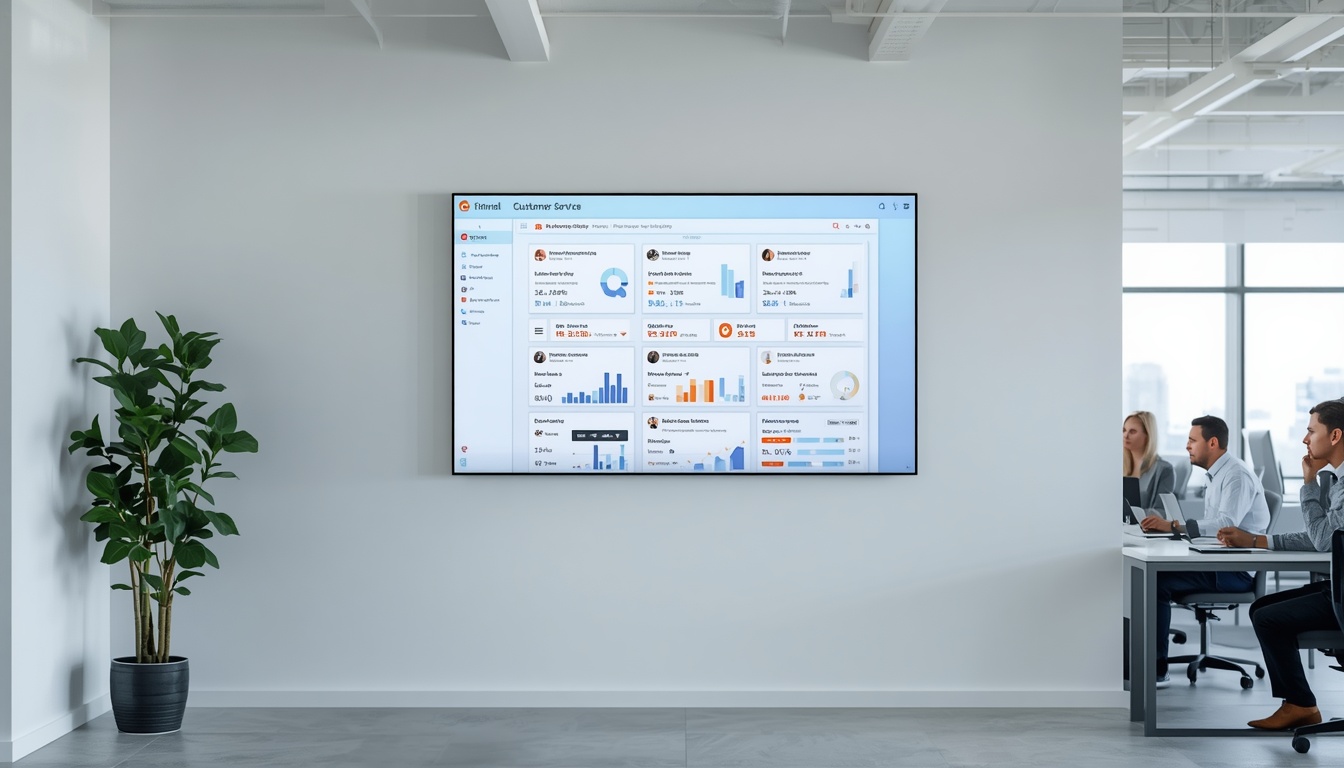
Amagi’s story is, in many ways, a quiet one within India’s startup ecosystem, less flashy than the consumer facing names that dominate headlines, but arguably more consequential for how television and streaming actually works behind the scenes. Founded in 2008, the company builds cloud based broadcast technology that lets media companies deliver linear and connected television content without the traditional cost and complexity of physical broadcast infrastructure. It completed its initial public offering earlier this year, with its shares listing on both the BSE and NSE on January 21, 2026, and this quarter marks one of the first real windows into how the business is performing under the scrutiny that comes with being a public company.
The topline numbers alone would have been a respectable quarter for most companies at this stage of growth. Revenue from operations rose 32.4 percent year on year to Rs 436.88 crore, up from Rs 330.06 crore in the same quarter last year, and grew a further 10 percent sequentially from the March quarter. Management pointed out that even after stripping out favourable currency movements, constant currency growth stood at a healthy 21 percent, suggesting the expansion was not simply a function of exchange rate tailwinds but reflected genuine demand growth for its platform. Including other income, the company’s consolidated total income for the quarter came in at Rs 454.46 crore, compared to Rs 344.33 crore in the year ago period.
What made the quarter genuinely stand out, though, was the shift on profitability. Amagi’s EBITDA turned positive at Rs 29.8 crore, or roughly Rs 50 crore by some measures depending on adjustments applied, a sharp reversal from a loss of Rs 1.2 crore in the same quarter last year. That swing matters because it signals the company is finally beginning to demonstrate the kind of operating leverage that investors typically look for once a SaaS style business scales past a certain revenue threshold, where each additional rupee of revenue costs progressively less to serve. Profit before tax rose to Rs 40.41 crore, up sharply from Rs 6.59 crore a year earlier, while profit margin for the quarter expanded to 7.5 percent, an improvement of 6.3 percentage points compared to the year ago period.
Not every line item moved in the company’s favour, and it is worth being straightforward about that rather than presenting the quarter as an unqualified triumph. Total expenses for the quarter rose 22.6 percent year on year to Rs 414.06 crore, driven in part by employee benefit costs, which climbed to Rs 206.35 crore from Rs 177.71 crore, and other operating expenses, which rose to Rs 200.68 crore from Rs 153.53 crore. Sequentially, profit actually declined marginally, dropping about 1 percent from Rs 34.3 crore in the March quarter, a reminder that even a standout year on year performance can still show signs of plateauing compared to the immediately preceding period. Finance costs, however, moved in the right direction, falling 26.14 percent year on year to Rs 1.13 crore, a sign of reduced borrowing pressure following the capital infusion from the IPO.
Alongside the earnings, Amagi’s board made a governance decision that carries its own signal to the market. It approved the re-appointment of Baskar Subramanian, one of the company’s promoters and a figure with more than 23 years of experience across the technology and media sector, as managing director and chief executive officer for a fresh five year term, running from December 1, 2026, to November 30, 2031, subject to shareholder approval. Extending leadership continuity by half a decade so soon after listing is generally read by investors as a vote of confidence, both from the board in its own leadership and, implicitly, in the durability of the strategy that took the company through its IPO.
The company also used its earnings disclosures to point toward where its next phase of growth might come from, flagging the expansion of artificial intelligence pilots within its product suite. Media technology has increasingly become a battleground for AI driven efficiency, whether that means automating ad insertion, optimising content scheduling, or using machine learning to personalise viewer experiences across connected television platforms, and Amagi’s positioning suggests it intends to compete on that front rather than simply on infrastructure cost. Management’s own characterisation of the quarter, as detailed in materials shared with investors, described <cite index=”30-1″>approximately 31 percent incremental adjusted EBITDA flow through</cite>, a technical way of saying that a meaningful share of every additional rupee of revenue earned during the quarter converted directly into operating profit, a metric that tends to matter far more to long term investors than headline revenue growth alone.
Basic and diluted earnings per share for the quarter stood at Rs 1.49, compared with just Rs 0.20 in the same quarter last year, though marginally down from Rs 1.54 in the preceding March quarter, broadly consistent with the sequential dip in absolute profit. Total tax expense for the quarter came in at Rs 6.50 crore, up modestly from Rs 2.65 crore a year earlier, reflecting the company’s improved profitability base. The board additionally approved a proposal to reclassify the company’s authorised share capital, keeping the total figure unchanged at Rs 247.25 crore across just under 50 crore ordinary equity shares of Rs 5 each, a largely procedural move but one that typically accompanies companies preparing the ground for future capital actions such as employee stock options or further fundraising flexibility.
Viewed without the enthusiasm that tends to accompany a stock hitting an all time high, Amagi’s quarter deserves to be read on its own genuine merits rather than through the lens of market euphoria alone. An 8.6 times jump in year on year profit is a striking headline number, but it is worth remembering it is measured against a relatively small base of under Rs 4 crore from the year ago period, meaning the percentage gain, while real, is also somewhat amplified by that low starting point. What is more durable, and arguably more important for long term investors, is the underlying operating trend, positive and expanding EBITDA, improving margins, disciplined finance costs and continued double digit revenue growth even on a sequential basis. For a company barely six months removed from its public listing, that combination of a strong quarter and reaffirmed leadership continuity offers a genuinely encouraging signal, even as the modest sequential dip in absolute profit is a useful reminder that sustaining this pace, quarter after quarter, will be the real test of whether Amagi’s public market debut lives up to the promise this quarter has set.