
Freshworks Appoints Ryan Manning As Chief Product And Technology Officer To Lead AI Strategy
Freshworks has merged product and engineering under a single executive for the first time, handing Ryan Manning, a ServiceNow and BMC Helix veteran, the job of proving that unified leadership can move faster than rivals in the AI era.
Highlights:
- Freshworks appointed Ryan Manning as its new Chief Product and Technology Officer, effective August 10, reporting directly to CEO Dennis Woodside
- He succeeds Srini Raghavan, who is leaving to build his own venture, while existing CTO Murali Swaminathan will now report into Manning, unifying product and engineering under one leader
- Manning helped scale ServiceNow around its IPO years, later led product at BMC Helix through a major transformation, and cofounded FreeAgent CRM, now known as Servis.ai
- He will oversee Freshworks’ AI, IT, and customer experience product strategy from its San Mateo headquarters
- The move is framed by Freshworks as a bid to move faster as AI reshapes enterprise service software, with the company trading on NASDAQ under the ticker FRSH
Highlights:
- Freshworks appointed Ryan Manning as its new Chief Product and Technology Officer, effective August 10, reporting directly to CEO Dennis Woodside
- He succeeds Srini Raghavan, who is leaving to build his own venture, while existing CTO Murali Swaminathan will now report into Manning, unifying product and engineering under one leader
- Manning helped scale ServiceNow around its IPO years, later led product at BMC Helix through a major transformation, and cofounded FreeAgent CRM, now known as Servis.ai
- He will oversee Freshworks’ AI, IT, and customer experience product strategy from its San Mateo headquarters
- The move is framed by Freshworks as a bid to move faster as AI reshapes enterprise service software, with the company trading on NASDAQ under the ticker FRSH
Leadership changes at software companies rarely feel dramatic from the outside, a name shifts on an org chart, a press release goes out, and life continues as usual. But every so often, a single appointment tells you exactly where a company believes the next few years of its business will actually be won or lost. Freshworks just made one of those appointments.
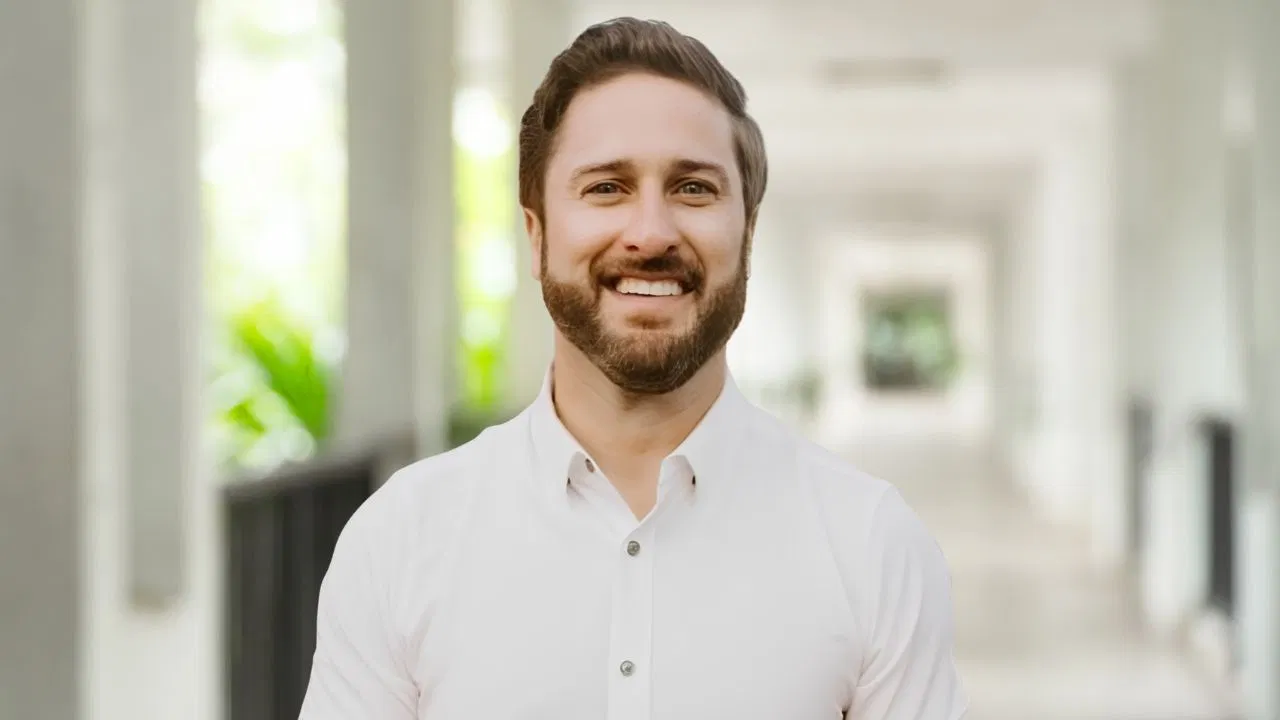
Ryan Manning will join the company on August 10 as its new Chief Product and Technology Officer, a role that consolidates product strategy and engineering leadership under one executive for the first time in Freshworks’ history. He will report directly to Chief Executive Officer Dennis Woodside, stepping into a position vacated by Srini Raghavan, who is departing Freshworks to pursue his own entrepreneurial venture. In a structural shift that says almost as much as the hire itself, Murali Swaminathan, who continues as Chief Technology Officer, will now report into Manning rather than sitting alongside him as a peer. Product and engineering, which at many software companies operate as separate kingdoms with separate priorities and separate timelines, now sit under one person’s direct authority.
The company frames this as a deliberate response to how quickly artificial intelligence is changing what businesses expect from their software vendors.
“Ryan has the unique ability to quickly turn what customers need into products that win in the market,” Woodside said in a statement announcing the appointment.
He added that bringing product and engineering back together under a single organization was about moving with more speed and less friction, language suggesting Freshworks sees internal drag, not a shortage of ideas or talent, as one of the real obstacles standing between it and faster AI driven growth.
Manning’s own background reads like a checklist of what a company hoping to accelerate its product velocity might look for. He helped build and scale ServiceNow in the years surrounding that company’s initial public offering, a period widely regarded in enterprise software circles as one of the more successful examples of scaling a technical platform business into a dominant market position. He later cofounded FreeAgent CRM, a company that has since evolved into what is now known as Servis.ai, giving him direct founder level experience building a product from nothing rather than only managing established ones. Most recently, he served as Chief Product Officer at BMC Helix, where he was recruited during a period of significant transformation, sharpening the company’s strategy around ServiceOps and agentic AI, themes that map closely onto what Freshworks is now signaling it wants to pursue at greater scale.
“AI is changing what businesses should expect from service software,” Manning said following the announcement, a framing that positions his mandate less as an incremental product refresh and more as a broader repositioning of how Freshworks thinks about its entire platform.
He will be responsible for the company’s global product roadmap and engineering organization, along with strategy across Freshworks’ artificial intelligence, IT, and customer experience product lines. He will be based at the company’s headquarters in San Mateo, California, and holds a bachelor’s degree in accounting and finance from San Diego State University, where he also serves on the board of the university’s Computer Science program, an interesting detail for an executive whose career has been built almost entirely around technical product leadership.
The timing is worth sitting with. Freshworks operates in an enterprise software category, spanning customer service, IT service management, and CRM, that is being reshaped rapidly by AI agents capable of handling tasks that once required human staff. Every major player in this space, from giants like ServiceNow and Salesforce down to challengers like Freshworks, is racing to build agentic AI features into their platforms, tools that do not just assist a human employee but can independently resolve a support ticket or triage an IT issue with minimal supervision. In that environment, the company that ships useful AI features fastest, and folds them most smoothly into existing customer workflows, tends to win disproportionate market attention, even when its underlying platform is not fundamentally different from a rival’s.
This is presumably why Freshworks chose to unify product and engineering under one executive rather than continuing to run them as separate but coordinated functions. When product and engineering report to two different leaders, even ones who collaborate well, decisions about what to build and how to build it can move through two separate chains of approval, two separate sets of priorities, and two separate cultures, one oriented around customer needs, the other around technical feasibility. Collapsing that structure into a single reporting line is a bet that faster, more unified decision making will matter more over the coming years than the checks and balances that come from keeping those functions organizationally distinct.
It is also worth naming what this appointment does not tell us. A new title and a reorganized reporting structure do not, by themselves, guarantee faster product development or sharper AI features. Plenty of companies have made similar structural changes without seeing the results they hoped for, because execution ultimately depends on the quality of the people doing the actual building, the clarity of the roadmap they are given, and how well an existing culture adapts to new leadership. Manning inherits an engineering organization and a product portfolio shaped under his predecessor, and the real test of this appointment will not be visible in a press release, it will show up over coming quarters in Freshworks’ product releases, its customer retention, and ultimately its performance on the NASDAQ.
There is also a quieter story here about departures. Raghavan’s decision to leave for his own venture, rather than being pushed out amid poor performance, suggests this transition was planned and mutual rather than adversarial, which tends to make for a smoother handover of institutional knowledge than a more abrupt exit would. Manning steps into the role during a period of relative organizational stability rather than crisis, which historically gives new executives more room to make deliberate changes rather than being forced into reactive firefighting from day one.
Taken as a whole, this appointment reflects a broader pattern across enterprise software right now, companies restructuring their leadership not because of any single crisis, but because the competitive rules of their industry are shifting under the weight of AI, and the organizational structures that worked for the last decade of SaaS growth may not be the ones that win the next one. Whether unifying product and technology under Ryan Manning proves to be the structural change that helps Freshworks outpace larger, better funded rivals remains an open question, one that will be answered not by this announcement, but by what the company actually ships in the months that follow it.