
Quick Commerce Startup Homerun Raises Fresh Funding To Scale Construction Material Deliveries Across More Indian Cities
Quick commerce startup Homerun has raised fresh capital to bring ten minute grocery speed to cement and plywood, betting that contractors tired of last minute shortages will pay a premium for construction materials delivered within ninety minutes instead of days.
Highlights:
- Homerun raised Rs 60 crore in Series A funding led by Sorin Investments in February 2026
- The startup delivers construction materials like cement, plywood and plumbing supplies within 60 to 90 minutes
- Founder Pukhraj Grewal previously built ProjectHero, a marketplace connecting construction workers with employers
- Reports suggest the startup was in talks for a larger round of around 11 million dollars led by Nexus Venture Partners
- Homerun currently processes around 200 to 250 orders daily out of five dark stores in Bengaluru
Quick commerce made its name delivering things nobody thought needed to arrive in ten minutes, a bag of chips, a phone charger, a last minute birthday candle. Cement was never supposed to be on that list. A Bengaluru startup has decided it belongs there anyway.
Homerun, a quick commerce platform for construction and home renovation materials, has raised Rs 60 crore, roughly 6.6 million dollars, in a Series A funding round led by Sorin Investments, an early stage venture firm cofounded by former KKR India chief executive Sanjay Nayar and Caravel Group chief executive Angad Banga. Sorin contributed Rs 40 crore of the round directly, with the remainder coming from Titan Capital Winners Fund, alongside participation from Sparrow Capital, Consumer Collective by Atrium, and Helios Holdings.
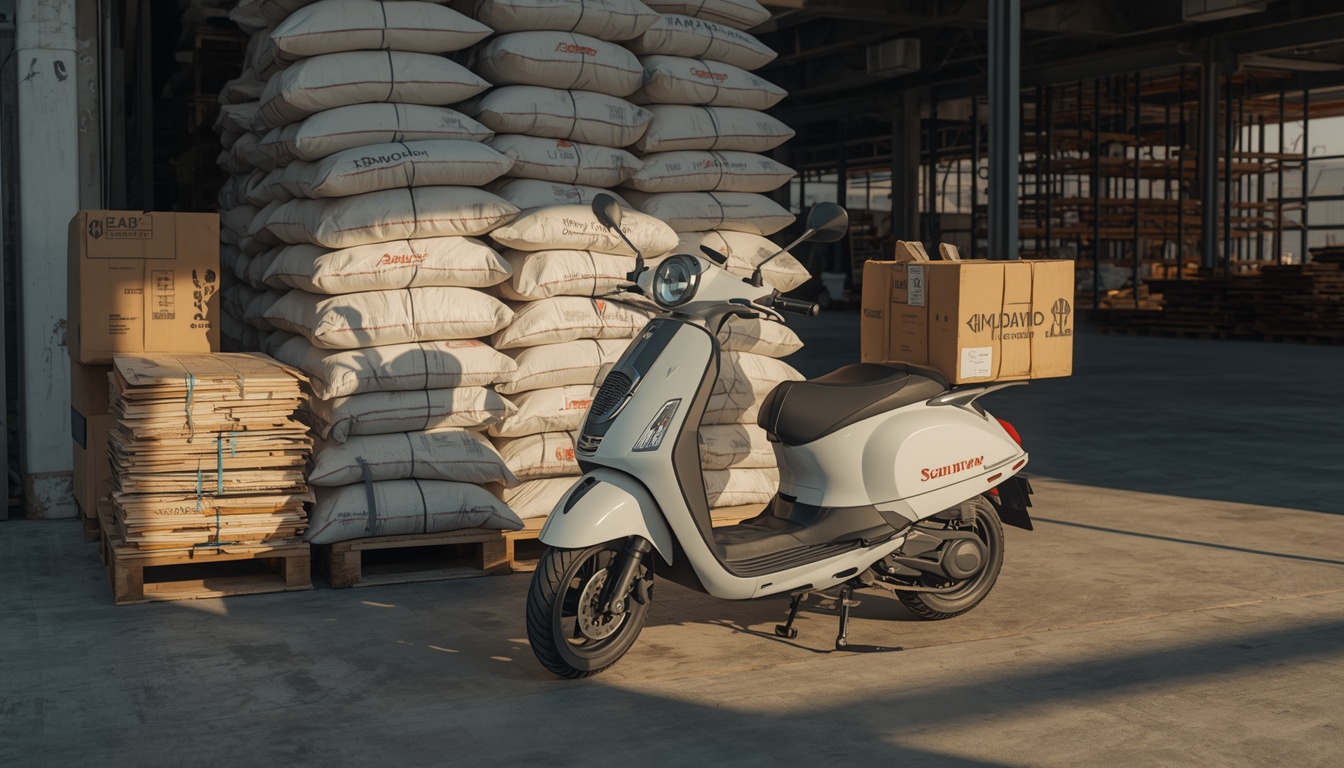
The pitch behind Homerun is deliberately narrow, and that narrowness is precisely the point. Founded in 2024 by Pukhraj Grewal, the platform delivers construction and renovation essentials, cement, plywood, electrical fittings, plumbing supplies, hardware, adhesives, and finishing products, within 60 to 90 minutes, through a hyperlocal network of dark stores modelled directly on the same logistics playbook that turned grocery quick commerce into a genuine consumer habit across urban India.
“Having spent over a decade in tech enabled operations and home improvement services, I’ve seen how procurement uncertainty can derail timelines and inflate costs,” said Pukhraj Grewal, Founder and Chief Executive of Homerun. “At Homerun, we are building infrastructure that brings reliability, transparency, and speed to a category that urgently needs it.”
Grewal’s background lends that framing genuine specificity rather than generic founder enthusiasm. He previously built ProjectHero, a marketplace connecting construction workers with employers, giving him direct, on the ground exposure to precisely the procurement delays, unreliable supply, and last minute shortages that routinely derail construction timelines and inflate project costs across India’s building sector.
The market this platform is targeting is genuinely large by almost any measure. India’s building products sector is valued at approximately 90 billion dollars, with projections suggesting it could climb toward nearly 150 billion dollars by 2028. Yet that market remains, by the account of investors backing Homerun, deeply fragmented and opaque, dominated by a sprawling network of local hardware shops with inconsistent pricing and unreliable stock rather than any organised, technology enabled retail layer.
“The retail market for building materials in India remains highly fragmented, opaque, and unreliable, despite its size,” said Subeer Monga, Partner at Sorin Investments, describing Homerun’s opportunity as addressing a genuinely mission critical gap rather than simply applying a fashionable delivery model to an unrelated category for its own sake.
The operational numbers behind this launch reflect a company still firmly in an early, testing phase rather than one operating at true scale. Homerun currently processes somewhere between 200 and 250 orders daily, out of just five dark stores, all concentrated within Bengaluru. What stands out considerably more than that order volume is the platform’s average order value, sitting at roughly Rs 7,000 per order, a figure that dwarfs typical grocery quick commerce baskets by a wide margin and reflects the fundamentally different economics of construction materials compared to daily household essentials.
“We have a high average order value of around Rs 7,000 per order, which translates to a significantly high daily business for us,” Grewal said, framing the company’s comparatively modest order count as less of a concern given how much value each individual transaction carries relative to a typical grocery delivery.
This Series A arrived barely three months after Homerun closed a considerably smaller Rs 9 crore seed round, co led by Titan Capital and Sparrow Capital in November 2025, a pace of consecutive fundraising that itself signals unusually strong early investor conviction for a category this specific and this early in its evolution. Reports that followed in March 2026 suggested the company was already in discussions for a further, considerably larger round, roughly Rs 100 crore, or about 11 million dollars, reportedly led by Nexus Venture Partners with continued participation from existing backer Sorin Investments, at a post money valuation said to be somewhere between Rs 450 and 500 crore. As of the most recent independent tracking available, that specific round’s final size, valuation, and closing status had not been confirmed publicly, and should be read as a reported, in progress conversation rather than a completed transaction.
The company’s near term plans, regardless of exactly how large its next funding round ultimately proves to be, are centred on genuinely operational priorities, expanding its product range, deepening hyperlocal dark store infrastructure, strengthening direct sourcing relationships with manufacturers and distributors, and investing specifically in fulfilment technology aimed at improving delivery reliability as it moves beyond its current Bengaluru only footprint into new cities.
It is worth applying a fair amount of scrutiny to how genuinely differentiated Homerun’s model proves once it leaves the comparative operational simplicity of a single home city. Construction materials carry meaningfully different logistics demands than groceries, bulkier, heavier goods, less predictable order timing tied to project schedules rather than daily consumption habits, and considerably more variance in what any single customer actually needs at any given moment. Homerun is far from alone in chasing this specific opportunity either, it competes directly with specialised rivals including IBO and Material Depot, alongside a newer entrant, Fixxly, which recently raised its own 5.5 million dollar round in the same broader category, evidence that investor enthusiasm for quick commerce applied to construction materials specifically has become genuinely competitive rather than a niche Homerun has to itself.
There is also a fair question worth holding about how sustainably a 60 to 90 minute delivery promise scales for a category where genuine urgency, a contractor discovering mid job that they are short on plumbing fittings, competes against a considerably larger volume of planned, non urgent procurement that traditional suppliers, offering better bulk pricing over a slightly longer timeline, may continue to win simply on cost. Homerun’s high average order value suggests genuine willingness among contractors to pay for speed and reliability when it matters, but whether that willingness extends broadly enough across the wider market to justify the capital intensive dark store infrastructure this model requires, remains a question this funding round buys the company more runway to answer, rather than one it has definitively settled.
None of this diminishes the genuine appeal of what Homerun is attempting, an unglamorous, historically underserved category getting the same reliability and speed treatment that grocery delivery already delivered to Indian consumers. Whether construction materials prove genuinely receptive to the on demand model at scale, or whether the category’s inherent bulkiness, planning heavy purchasing patterns, and price sensitive customer base ultimately favour more traditional bulk procurement over instant delivery, is the question Homerun’s rapid, back to back fundraising has bought it time to answer, but has not yet definitively resolved.