
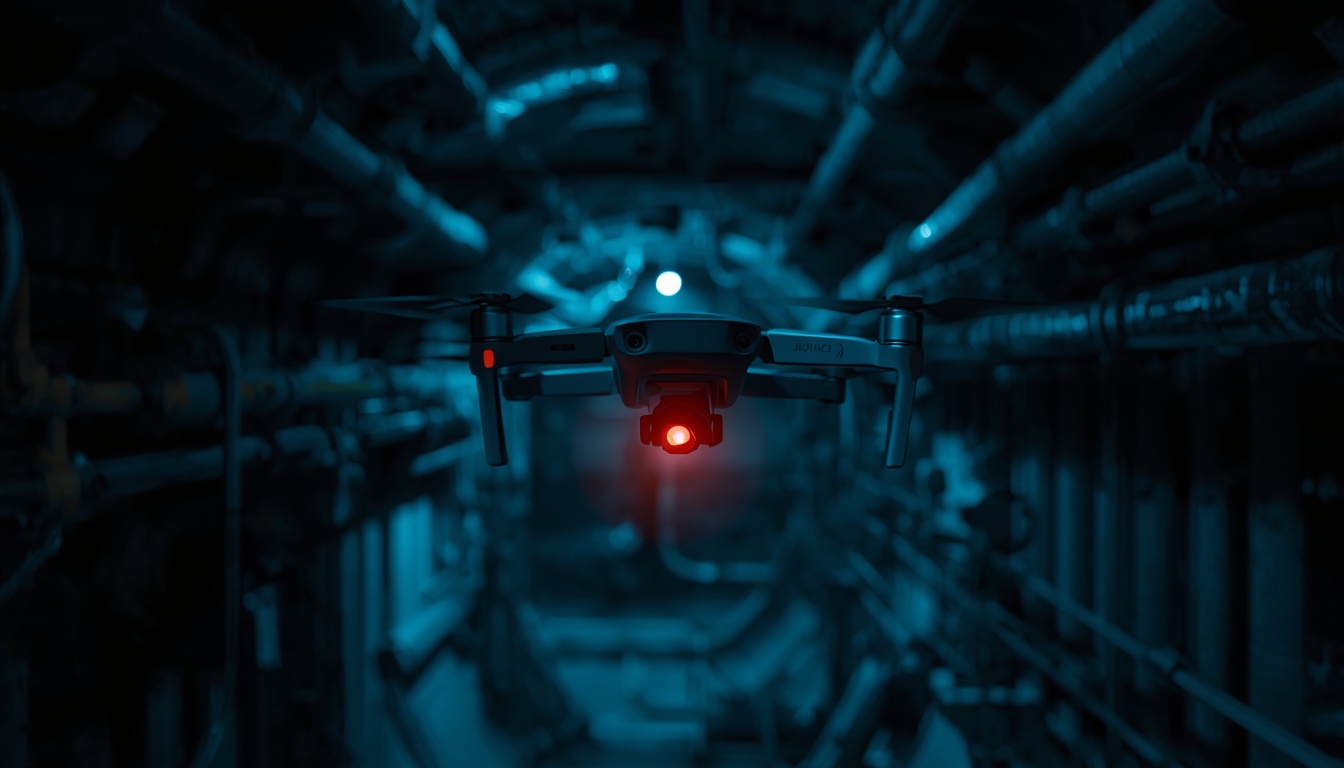
Enord Builds AI Powered Drones That Navigate Confined Spaces And Battlefields Without GPS Signals
Delhi startup Enord has spent three years teaching drones to navigate confined spaces and battlefields without satellite signals, betting that AI processed entirely onboard, not in the cloud, is what India’s defence and infrastructure sectors actually need.
Highlights:
- Enord has built an AI Pilot system letting drones navigate confined, GPS denied spaces autonomously
- The Delhi startup was founded in 2021 and emerged from incubators across IITs, IIITs, and IIMs
- Enord’s INSPECTOR drone is used for inspecting power lines, telecom towers, and industrial infrastructure
- The company recently secured a multi crore order to supply over 700 VR drone training simulators to the Indian Army
- Competing Indian drone makers like NewSpace Research have already deployed GPS independent swarm drones operationally
Fly a standard drone into a dense factory floor, a mountain tunnel, or a battlefield where signals are being actively jammed, and it will very quickly stop knowing where it is. GPS, the invisible backbone most drones depend on to understand their own position, simply does not reach into these spaces reliably, if at all. A Delhi startup has spent three years building drones that do not need it in the first place.
Enord, described on its own platforms as India’s first AI on edge drone technology startup, has built what it calls AI Pilot, a navigation system that lets drones analyse their surroundings, detect obstacles, and make real time flight decisions entirely through onboard processing, without relying on GPS or compass signals at all.
Founded on January 29, 2021, Enord emerged from incubation support spanning IITs, IIITs, and IIMs, built around what the company describes as an ethos of creating ease. Rather than treating drones as simple flying cameras, Enord’s founding thesis frames them as intelligent, autonomous entities capable of genuinely independent decision making, a distinction that shapes almost everything about how the company has built its technology since.
The mechanics of how this actually works centre on keeping intelligence local rather than remote. Enord’s drones use onboard computer vision and AI processing to understand their environment, detect obstacles, and plan flight paths in real time, rather than depending on a cloud connection or external positioning signal that may simply not exist in a confined industrial space, a mountainous border region, or an environment where an adversary is deliberately jamming GPS.
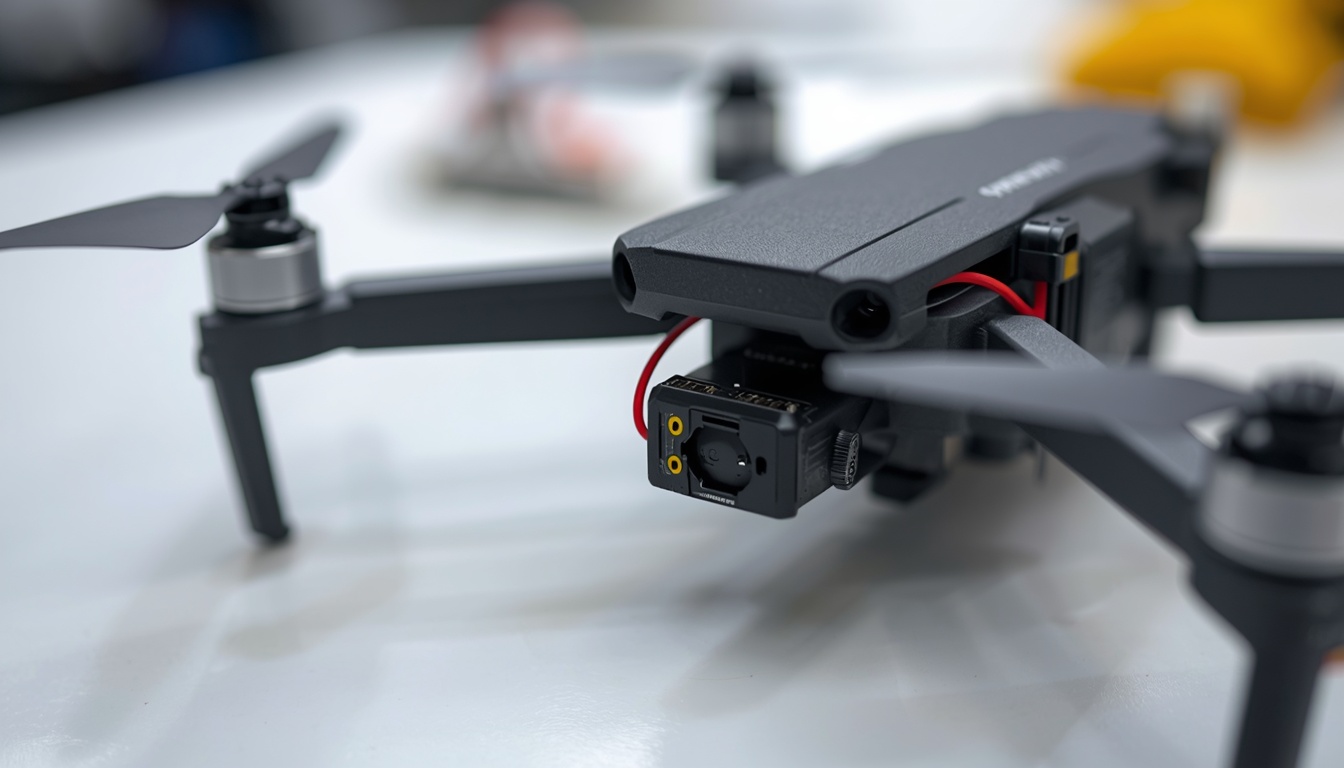
The company’s commercial flagship, a drone called INSPECTOR, is built specifically for infrastructure inspection work, checking high power transmission lines, telecom towers, and thermal plant infrastructure, tasks that often require flying in and around dense metal structures where GPS signals reflect, scatter, or simply disappear entirely. Beyond inspection, Enord has also built specialised variants for air quality monitoring and indoor navigation, alongside swappable payload systems designed to let the same core airframe serve multiple different industrial applications rather than requiring a separate purpose built drone for every use case.
“Our technology enables drones to navigate and operate in confined spaces without relying on GPS, thus creating a game changing impact on the industry,” the company has said, describing its intelligent drones as possessing an exceptional ability to analyse surroundings and make real time decisions through advanced algorithms.
The customer base Enord has built spans a genuinely wide range of sectors, utility inspection, infrastructure assessment, search and rescue, agriculture, construction, environmental conservation, and, increasingly, defence. That defence relationship has produced the company’s most significant commercial milestone to date. Enord secured a multi crore contract from the School of Artillery in Deolali, Nashik, part of the Indian Army, to supply Made in India standalone VR drone training simulators, placed under the Emergency Powers Revenue 2025 mandate. Under that contract, Enord is set to deliver more than 700 VR drone simulators to Category A establishments spanning 19 units across the country, rolled out in three phases with full completion targeted for the second quarter of 2026.
That defence contract sits within a much larger national push. India’s armed forces have been actively working to secure drone capabilities that function reliably in GPS denied combat environments, driven by growing recognition that adversaries can and do jam or spoof satellite navigation signals during actual conflict, rendering GPS dependent systems useless at precisely the moments they matter most. The Indian Army has already deployed GPS independent systems from other domestic manufacturers in live operational contexts, Bengaluru based NewSpace Research and Technology has supplied swarm drones capable of striking targets accurately without any satellite guidance at all, part of a broader wave of Indian defence tech startups racing to fill this exact capability gap.
It is worth applying real scrutiny to where Enord actually sits within that broader, increasingly crowded field, rather than treating its GPS independent capability as a unique differentiator on its own. The core problem Enord is solving, autonomous navigation without satellite positioning, is one that multiple Indian and international companies are simultaneously racing to solve, including established domestic players like NewSpace Research, which has already moved beyond prototypes into confirmed military deployment, and international specialists offering similar visual inertial navigation systems built specifically for GPS denied and GPS contested environments. Enord’s own reported funding to date, in the tens of thousands of dollars by some public tracking, is considerably smaller than the tens of millions of dollars some of its more established domestic competitors have already raised, a gap that matters given how capital intensive scaling drone manufacturing and defence grade testing genuinely is.
There is also a fair distinction worth drawing between Enord’s two current business lines. Its VR training simulator contract with the Indian Army, while a genuinely significant revenue milestone, is fundamentally a training technology sale, not a confirmation that Enord’s actual flying drones have been operationally deployed or combat tested the way some competitors’ hardware already has. Winning a simulator contract demonstrates credibility and an existing defence relationship, but it is a meaningfully different achievement than having GPS independent drones actually flying inspection or combat missions at scale, and readers should be careful not to conflate the two when assessing how far along Enord’s core navigation technology actually is toward widespread real world deployment.
None of this diminishes the genuine importance of the underlying problem Enord has chosen to solve. GPS dependency is a real and increasingly consequential vulnerability, for infrastructure inspection work in dense industrial environments, and even more urgently for defence applications where signal denial is not a hypothetical edge case but an active battlefield tactic. Whether Enord becomes one of the Indian companies that genuinely scales this capability into widespread commercial and defence deployment, or finds itself outpaced by better funded rivals solving the same fundamental problem, will depend far less on the elegance of its AI Pilot system in isolation, and considerably more on how quickly the company can convert early defence relationships and infrastructure inspection contracts into the kind of sustained, large scale deployment that separates a promising early stage drone startup from a durable defence technology manufacturer.ZZZZZZZZZZ