
- 23 July 2026
- Rishith Bharadwaj
- 0
Bengaluru East Deploys AI Cameras To Detect Potholes Across Its Worst Affected Road Stretches
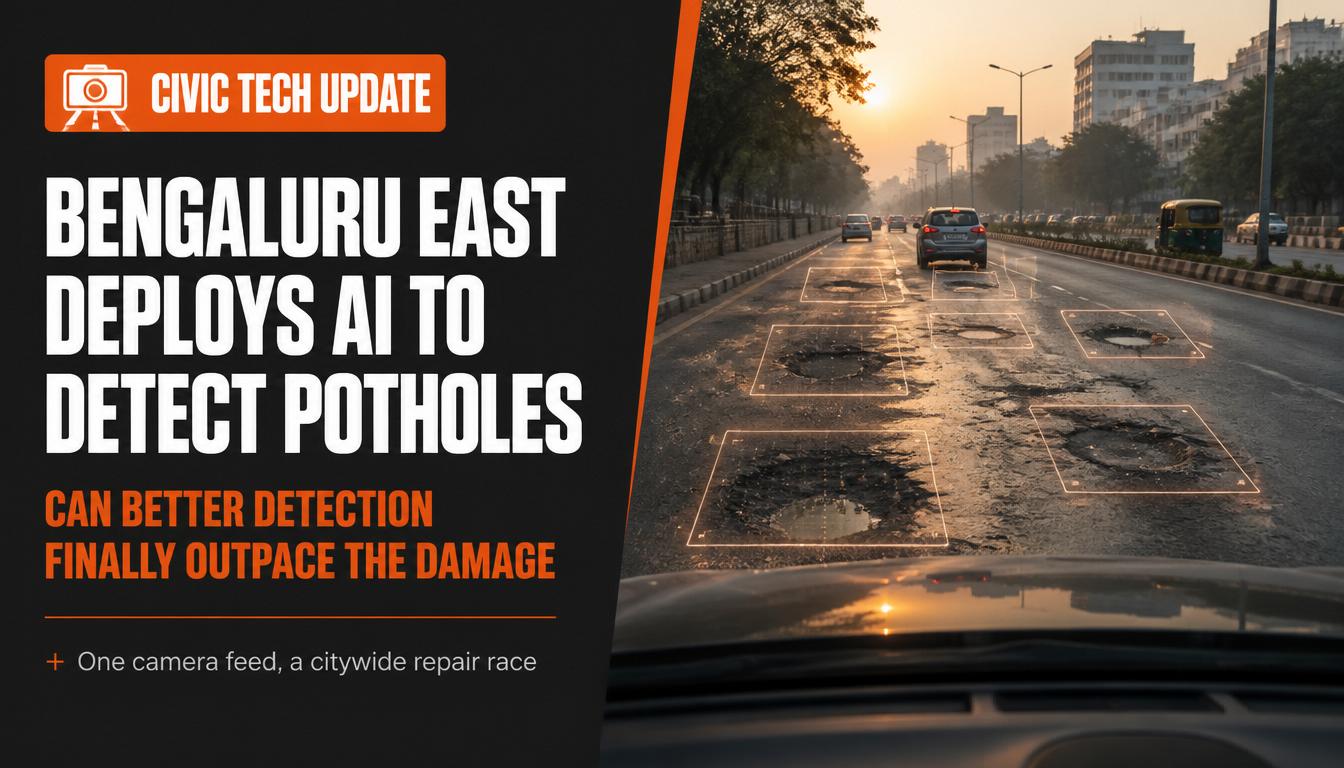
Bengaluru East, the city corporation with some of the metro’s worst reported roads, is leaning on AI powered cameras to find potholes faster than citizen complaints ever could, testing whether better detection can finally outpace a problem money alone hasn’t fixed.Highlights:
- Bengaluru East City Corporation is rolling out AI camera based pothole detection under the Greater Bengaluru Authority
- The AI camera pilot was approved earlier by Karnataka’s Chief Secretary Shalini Rajneesh
- Data shows East zone repaired only 47.6 percent of potholes identified so far
- Areas like Panathur, Balagere, and the Varthur to Gunjur stretch have been flagged as particularly bad
- The GBA is separately building a public dashboard to track pothole filling progress citywide
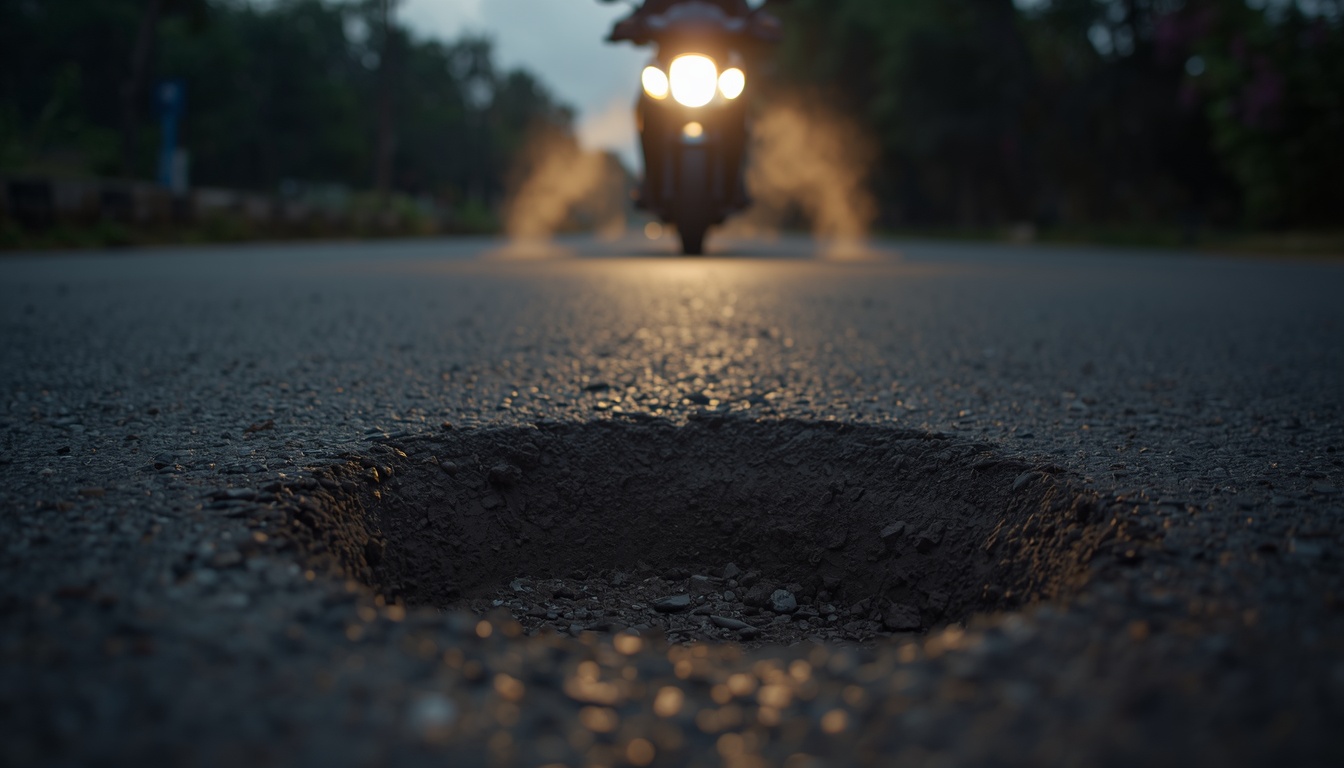
For years, Bengaluru’s relationship with potholes has followed the same basic script, a citizen complains, an app logs it, a contractor eventually shows up, and somewhere a new crater forms before the last one gets filled. Bengaluru East is now testing whether artificial intelligence can break that cycle before it starts.
Bengaluru East City Corporation, one of five newly formed corporations operating under the Greater Bengaluru Authority, is turning to AI powered camera systems to detect potholes across its road network, part of a broader technology push the GBA has been piloting to bring some order to a problem that has resisted years of manual fixes.
The AI camera approach itself is not brand new to Bengaluru’s civic machinery. The underlying pilot, using vehicle mounted cameras to automatically assess road conditions and flag potholes, was tested months ago and reportedly received approval from Karnataka’s Chief Secretary Shalini Rajneesh, who reviewed results during a high level coordination meeting. The system was designed to serve two purposes at once, assessing road conditions to highlight issues needing immediate attention, and separately analysing footage from the roughly 6,000 CCTV cameras the traffic police have already installed across the city, extracting additional monitoring value from infrastructure that already exists.
What makes the East zone’s rollout particularly notable is just how badly the data suggests this corporation needs it. A consolidated pothole dataset, compiled from citizen complaints and Bengaluru Traffic Police inputs, shows the East Corporation has repaired only 47.6 percent of identified potholes so far, moderate progress by the city’s own internal comparison, but still leaving well under half the known problem unresolved. That places East ahead of the West Corporation’s dismal 18.6 percent repair rate, but meaningfully behind the North Corporation, which leads the city at nearly 63 percent.
The human toll behind those percentages is not abstract. Residents in specific East zone neighbourhoods have been vocal about exactly where the gaps sit.
“Some sections of Panathur Road have been asphalted, but the work is of poor quality,” said Swetha S, a resident of Balagere. “In Balagere, no asphalting or road repair has been done. The Varthur to Gunjur stretch is also in a terrible condition.”
Bengaluru East City Corporation Commissioner DS Ramesh has already acted on some of this feedback directly, holding a coordination meeting with representatives from BESCOM, KPTCL, BWSSB, GAIL, the Railways, and the police to fix damaged roads, prioritising stretches including Panathur, Balagere, Vibgyor School Road, and the Arakere Lake area for urgent repair. That kind of multi agency coordination matters considerably in Bengaluru, since a large share of road damage traces back not to weather alone, but to utility agencies digging up roads for cables, pipelines, and power lines, then failing to restore the surface properly afterward.
The AI camera system itself works in a fairly straightforward way, vehicles equipped with cameras travel city roads at low speed, similar in spirit to Google Street View, capturing images of potholes and other obstacles such as broken footpaths, damaged streetlights, and debris. Coordinates are logged automatically through GPS, and the resulting data is fed to a server that engineers can access remotely, removing much of the manual, often inconsistent process of physically walking roads to catalogue damage before repair crews are dispatched.
This technology push sits alongside a broader accountability effort at the GBA level. Chief Commissioner M Maheshwar Rao has directed the creation of a live, public dashboard to track pothole filling activity and infrastructure project status citywide, an initiative reportedly pushed by senior industry figures including billionaire entrepreneur Kiran Mazumdar-Shaw, following discussions with Deputy Chief Minister D K Shivakumar. Each corporation, officials say, is now expected to fill around 300 potholes daily, backed by dedicated hot mix and cold mix material stock and jetpatcher machines for faster repair.
It is worth applying real scrutiny to how much technology alone can actually fix here, rather than treating an AI camera rollout as a solution in itself. Bengaluru’s pothole problem has never really been a detection problem in the way this rollout implicitly frames it. Citizens have been reporting potholes through apps like FixMyStreet and Raste Gundi Gamana for years, and BBMP’s own historical surveys have repeatedly logged thousands of potholes through manual and semi automated methods well before this AI camera pilot existed. The bottleneck has consistently sat downstream of detection, in contractor accountability, funding disbursement, inter agency coordination when utility works damage roads, and the sheer scale of a road network that outpaces available repair crews and materials.
There is also a fair pattern worth acknowledging plainly. Bengaluru’s civic administration has announced technology led fixes for its roads repeatedly over the past several years, sensor based surface assessment pilots, camera mounted vehicle surveys, automated machine learning driven pavement indices, each pitched at the time as the tool that would finally bring order to pothole management. Several of these initiatives quietly stalled or scaled back once initial pilot phases concluded, not because the underlying technology failed, but because the harder, less glamorous work of sustained contractor accountability and consistent funding proved considerably more difficult to maintain than the initial camera rollout itself.
None of this means AI powered detection is without genuine value. Faster, more consistent identification of road damage, especially paired with the GPS logging and centralised dashboard the GBA is now building, could meaningfully reduce the lag between a pothole forming and a repair crew being dispatched, particularly in outer zones like East Bengaluru’s IT corridor neighbourhoods that have historically received less attention than the city centre. Whether Bengaluru East’s version of this rollout becomes the corporation that actually converts better detection into a materially higher repair rate than its current 47.6 percent, or simply adds another data layer to a problem that has repeatedly proven to be about execution capacity rather than information, will depend far less on the cameras themselves and considerably more on whether Commissioner Ramesh’s office, and the contractors it holds accountable, can keep pace with what the AI system now finds.