
Skyroot Aerospace’s Vikram 1 Rocket Makes India The Third Nation With Private Orbital Launch Capability
Skyroot Aerospace’s Vikram 1 rocket reached orbit on its very first attempt, making India only the third country after the United States and China where a private company, not a government agency, has launched payloads into space
Highlights:
- Skyroot Aerospace’s Vikram 1 rocket reached a 450 kilometre orbit on its debut flight on July 18
- India became only the third country where a private company has achieved orbital launch, after the US and China
- The four stage, seven story rocket carried four customer payloads under Mission Aagaman
- Vikram 1 can carry payloads of up to 350 kilograms and includes robotic arms to help clear space debris
- PM Narendra Modi personally called Skyroot’s founders to congratulate them after the mission succeeded
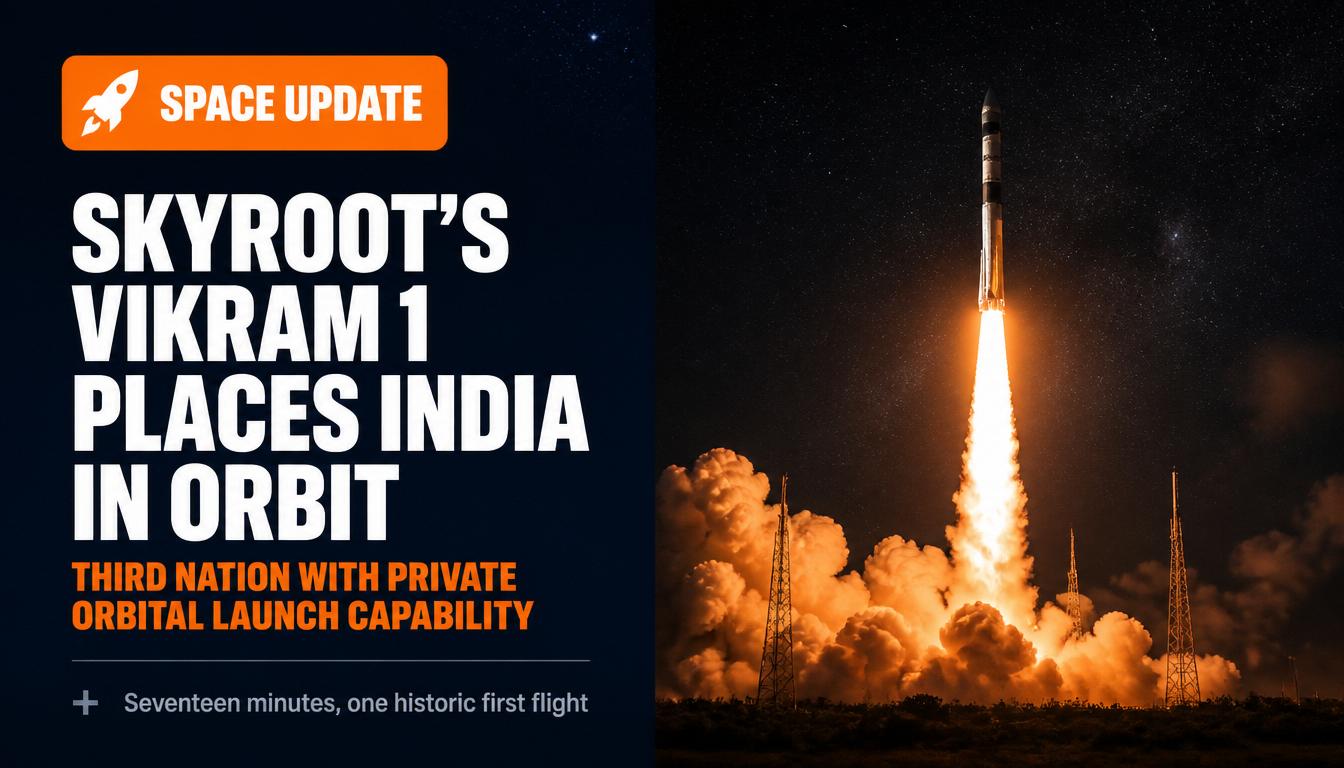
At 2:35 in the morning on July 18, a seven story rocket built almost entirely by a Hyderabad startup lifted off from India’s east coast, and seventeen minutes later, it had quietly rewritten which countries belong to one of the most exclusive clubs in the world.
Skyroot Aerospace’s Vikram 1 rocket reached a 450 kilometre low Earth orbit on its maiden flight, carrying four customer payloads and making India only the third country, after the United States and China, where a private company rather than a government space agency has successfully placed payloads into orbit.
The mission, named Aagaman, Sanskrit for arrival, launched from the First Launch Pad at the Satish Dhawan Space Centre on the barrier island of Sriharikota in Andhra Pradesh. The launch itself had been scheduled for 11:30 a.m. India Standard Time, but a planned hold pushed liftoff back by 35 minutes, a delay that ultimately proved inconsequential once the rocket cleared the pad.
“The Vikram 1 Aagaman mission is a grand success,” the mission director announced from mission control, to an eruption of cheers that had been building since the countdown began.
Vikram 1 is a three stage, 22 metre rocket capable of carrying a payload of up to 350 kilograms into low Earth orbit, and it is equipped with robotic arms designed to help clear space debris, a capability that speaks to how crowded orbital space has become even for a company just beginning its commercial journey. The mission also carried a handful of symbolic payloads alongside its technical cargo, including experimental equipment, a lab grown diamond, and a miniature 18 carat gold sculpture commemorating India’s national space programme.
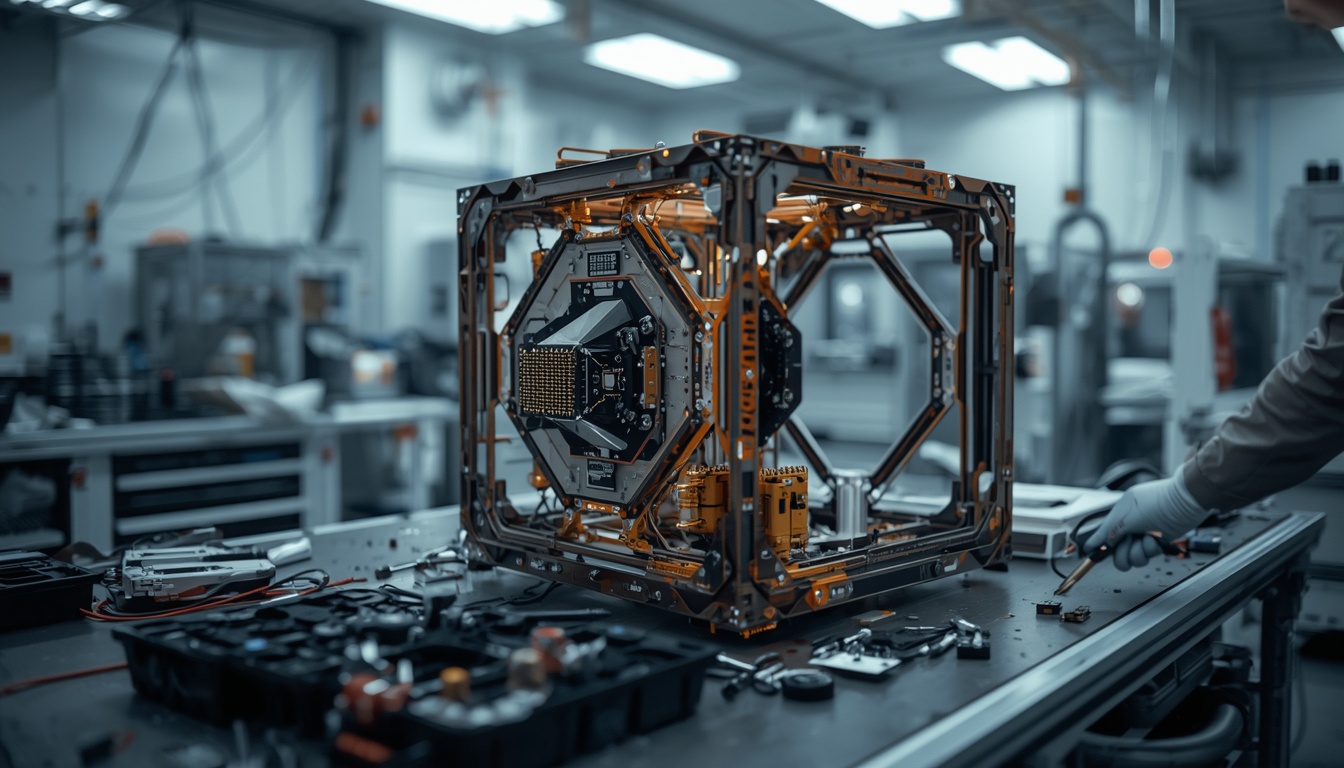
The flight tested and validated the rocket’s propulsion, avionics, telemetry, guidance, navigation, and control systems in sequence, according to Skyroot, and the fact that all of it worked cleanly on a first attempt is itself a notable technical achievement, since orbital rocket debuts fail considerably more often than they succeed across the global industry’s history.
Skyroot was founded in 2018 by Pawan Kumar Chandana and Naga Bharath Daka, both former scientists at the Indian Space Research Organisation. The company first made headlines in November 2022 with Vikram S, a smaller suborbital rocket that became the first privately built Indian vehicle to reach space, though it did not carry payloads into orbit. Vikram 1 represents the direct, considerably more ambitious next step in that same lineage.
“The small satellite launch market is deeply constrained on the supply side,” Chandana said in a statement two days before launch. “At the same time, the demand for services enabled by satellites in space will only continue to grow, and that is where Skyroot’s opportunity lies.”
Prime Minister Narendra Modi phoned Skyroot’s founders personally after the mission concluded to offer his congratulations, and later said the achievement would encourage countless young Indians to dream bigger and innovate more fearlessly. The moment carries genuine symbolic weight for a country whose space programme has, until recently, been almost entirely synonymous with ISRO, the state run agency responsible for milestones ranging from India’s Mars orbiter mission to its Chandrayaan lunar landings.
The regulatory path that made this launch possible traces back to 2020, when India’s government formally opened its space sector to private participation, a policy shift that led to the creation of the Indian National Space Promotion and Authorisation Centre as a single window agency to authorise and support non governmental space companies. Skyroot became the first Indian private company to sign a memorandum of understanding with ISRO under that new framework, and its steady progression from a 2020 policy shift, to a 2022 suborbital test, to a 2026 orbital success traces a fairly rapid five year arc by the standards of aerospace engineering.
It is worth situating this achievement carefully rather than treating it as an unqualified triumph on its own terms. A single successful debut flight, however technically clean, is not yet the same thing as a mature, repeatable commercial launch business. Skyroot has said it plans further test flights before beginning routine commercial missions, language that signals the company itself understands the difference between validating a rocket’s systems once and proving it can deliver customer payloads reliably, on schedule, across dozens of future missions.
There is also a competitive reality worth acknowledging. The global small satellite launch market that Skyroot is targeting is already served by established players, most notably Rocket Lab, which has flown dozens of successful orbital missions from New Zealand and the United States over the past several years. India’s private space sector is arriving into a market with real, entrenched competition rather than open, uncontested space, and Vikram 1’s debut success, while genuinely impressive, is the beginning of that competitive story rather than its conclusion.
Set against that broader context, what Skyroot has actually proven is narrower but still significant, that an Indian startup, built and engineered domestically without the backing of a national space agency’s full institutional weight, can design, build, and successfully fly an orbital class rocket on its first attempt. Whether that capability translates into a durable, profitable commercial launch business competing credibly against established international players, or remains an extraordinary one time engineering milestone that Skyroot cannot yet convert into repeatable revenue, will depend far less on this single July morning and considerably more on how consistently the company can now execute in the years immediately ahead.