
Plazza Raises Fifteen Million Dollars Series A To Expand AI Powered Rapid Medicine Delivery Network
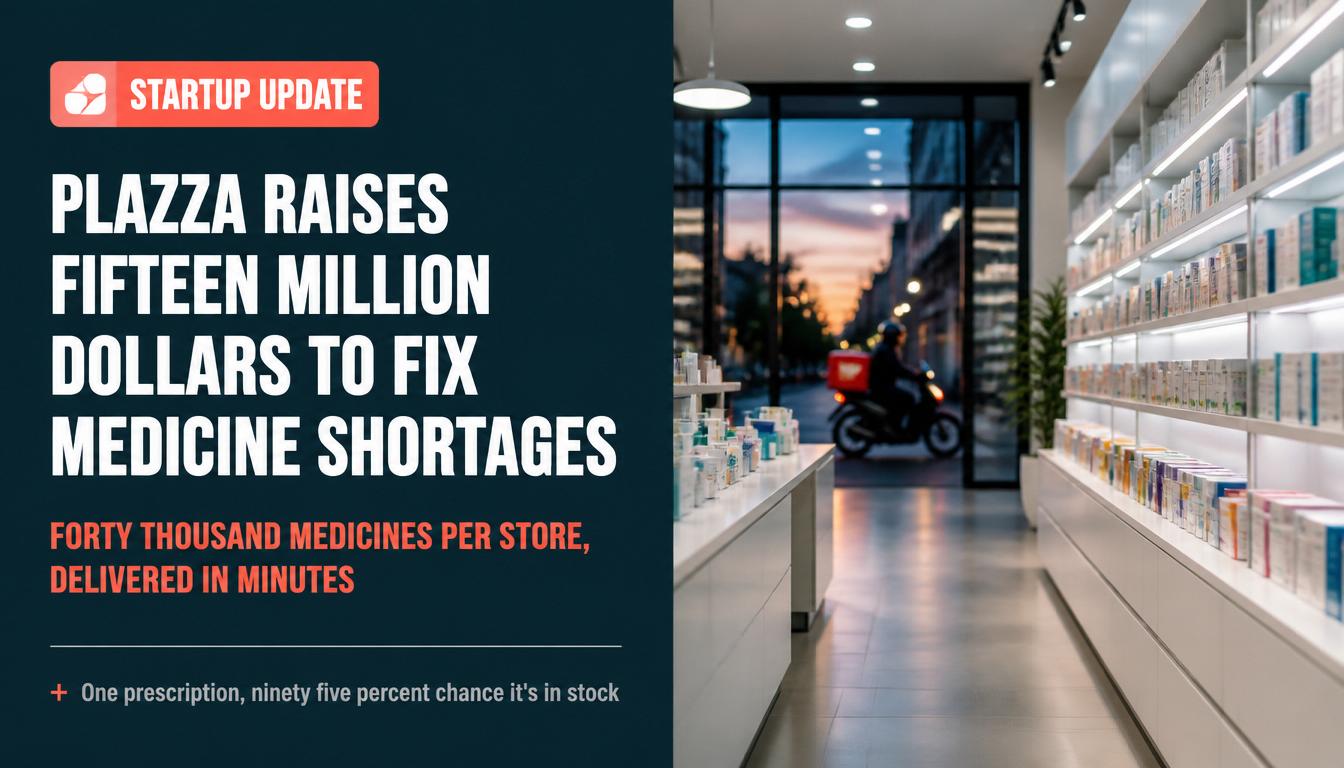
Healthtech startup Plazza has raised fifteen million dollars from Accel, Elevation, and Nexus to expand its rapid medicine delivery network, betting that stocking forty thousand products per store can fix a problem India’s neighbourhood chemists have never solved, availability.
Highlights:
- Plazza has raised 15 million dollars in a Series A round co led by Accel, Elevation Capital, and Nexus Venture Partners
- The Bengaluru startup delivers medicines within 15 to 30 minutes using AI powered inventory planning
- Each Plazza store stocks more than 40000 medicines compared to roughly 5000 at a typical chemist
- The company claims a prescription fulfilment rate above 95 percent versus an industry average of 50 to 60 percent
- Plazza reported nearly 27 fold growth in gross merchandise value between June 2025 and March 2026
Anyone who has ever stood at a neighbourhood chemist counter, prescription in hand, only to be told the medicine is out of stock, knows a particular kind of quiet frustration. It is one of Indian healthcare’s most persistent, least glamorous problems, and a Bengaluru startup has just raised serious money betting it can fix it.
Plazza, a healthtech startup building technology enabled neighbourhood pharmacies, has raised 15 million dollars in a Series A funding round co led by Accel, Elevation Capital, and Nexus Venture Partners, with existing investors All In Capital and Better Capital also participating.
Founded in 2024 by former Zomato executive Aman Priyadarshi, Plazza operates a network of pharmacies designed around a single, unglamorous insight, that medicine availability, not price or convenience, is the actual barrier standing between patients and the treatment their doctors prescribe.
India’s pharmacy retail market is estimated to be worth more than 30 billion dollars, yet it remains dominated by independent neighbourhood chemists that typically stock only around 5,000 medicines out of a universe of more than 100,000 products available in the country. That gap between what doctors prescribe and what chemists actually have on their shelves is the exact problem Plazza was built to close.
“Medicine availability shouldn’t depend on luck,” founder and chief executive Aman Priyadarshi said, describing patients who visit multiple pharmacies just to complete a single prescription as a failure the industry has quietly tolerated for far too long.
The company’s answer to this problem is deliberately unglamorous, deeper inventory, not flashier branding. Each Plazza outlet stocks more than 40,000 stock keeping units, roughly eight times what a typical neighbourhood chemist carries, powered by an AI system that predicts local demand patterns and recommends exactly which medicines each specific store should keep on hand.
That deeper inventory, paired with hyperlocal fulfilment, is designed to deliver medicines within 15 to 30 minutes of an order being placed, positioning Plazza somewhere between a traditional pharmacy and the quick commerce apps that have already reshaped how urban India buys groceries and everyday essentials.
The numbers Plazza has put forward around its own performance are notable. The company claims a prescription fulfilment rate above 95 percent, compared with an industry average the company places at just 50 to 60 percent. It also reported nearly 27 fold growth in gross merchandise value between June 2025 and March 2026, alongside data suggesting repeat customers increase their order sizes by roughly 30 percent over time, a sign, if accurate, that the model builds genuine habitual trust rather than one time convenience purchases.
The fresh capital is earmarked for a fairly focused set of priorities, strengthening the technology platform, deepening AI driven inventory and assortment intelligence, building out operational capability, and expanding the pharmacy network beyond its current Bengaluru footprint into new cities. The company has said it plans to deepen its presence across more Bengaluru neighbourhoods first, before entering new geographies over the coming months.
Unlike traditional pharmacies optimised for walk in retail, or online epharmacies that prioritise inventory breadth over delivery speed, the company frames itself as having built an entirely new operating model, one combining AI powered inventory intelligence with genuine medicine availability and rapid fulfilment simultaneously, rather than trading one off against the other.
This funding round arrives at a moment when India’s quick commerce sector has become intensely crowded and competitive, with established players like Zepto, Blinkit, and even larger platforms like Flipkart increasingly circling adjacent categories including pharmacy and healthcare delivery. Plazza’s Series A, following a smaller 1.4 million dollar seed round in 2025, suggests investors see a genuine, differentiated niche here rather than simply another entrant chasing an already saturated delivery race.
It is worth applying a measured lens to some of these figures before treating them as settled fact. A 27 fold increase in gross merchandise value sounds spectacular, but percentage growth of this scale is almost always easier to achieve from a small starting base, and the company has not disclosed the absolute revenue figures underlying that multiple, making it difficult to judge how large the business actually is today in real terms. Similarly, the claimed 95 percent prescription fulfilment rate is a company reported figure rather than one verified by an independent auditor, and it would be reasonable for outside observers to want to see this figure holding steady as the company scales well beyond its current single city footprint, where operational conditions are naturally easier to control.
There is also a structural question worth sitting with. Stocking 40,000 SKUs per outlet is a considerably more capital intensive proposition than the leaner inventory models most quick commerce categories rely on, since unsold medicine inventory carries expiry dates and regulatory handling requirements that groceries or electronics simply do not. Scaling that kind of deep, compliant inventory model profitably across many cities simultaneously is a meaningfully harder operational challenge than replicating a dark store network for a lower complexity retail category, and it is precisely the kind of execution risk that has tripped up ambitious quick commerce startups in adjacent categories before.
None of this diminishes the genuine size of the problem Plazza is targeting. Medicine availability is a real, widely felt gap in Indian healthcare access, one that has persisted despite years of digital health investment focused mostly on doctor consultations and diagnostics rather than the far more mundane last step of actually getting the prescribed medicine into a patient’s hands. Whether Plazza’s model can scale its 40,000 SKU promise profitably beyond Bengaluru, or finds the economics of deep pharmacy inventory considerably less forgiving once it leaves the comparative operational simplicity of a single home city, will determine whether this fresh funding marks the beginning of a genuinely new pharmacy retail category, or simply a well capitalised experiment that proves harder to replicate at scale than its current numbers suggest.