
India EV Sales Surge 2026: How Rising Petrol Prices Are Accelerating the Electric Vehicle Shift
Petrol just crossed ₹100 a litre in every major Indian city. For millions of two-wheeler riders, delivery agents and first-time car buyers, that number did not feel like a news headline. It felt like a deadline.
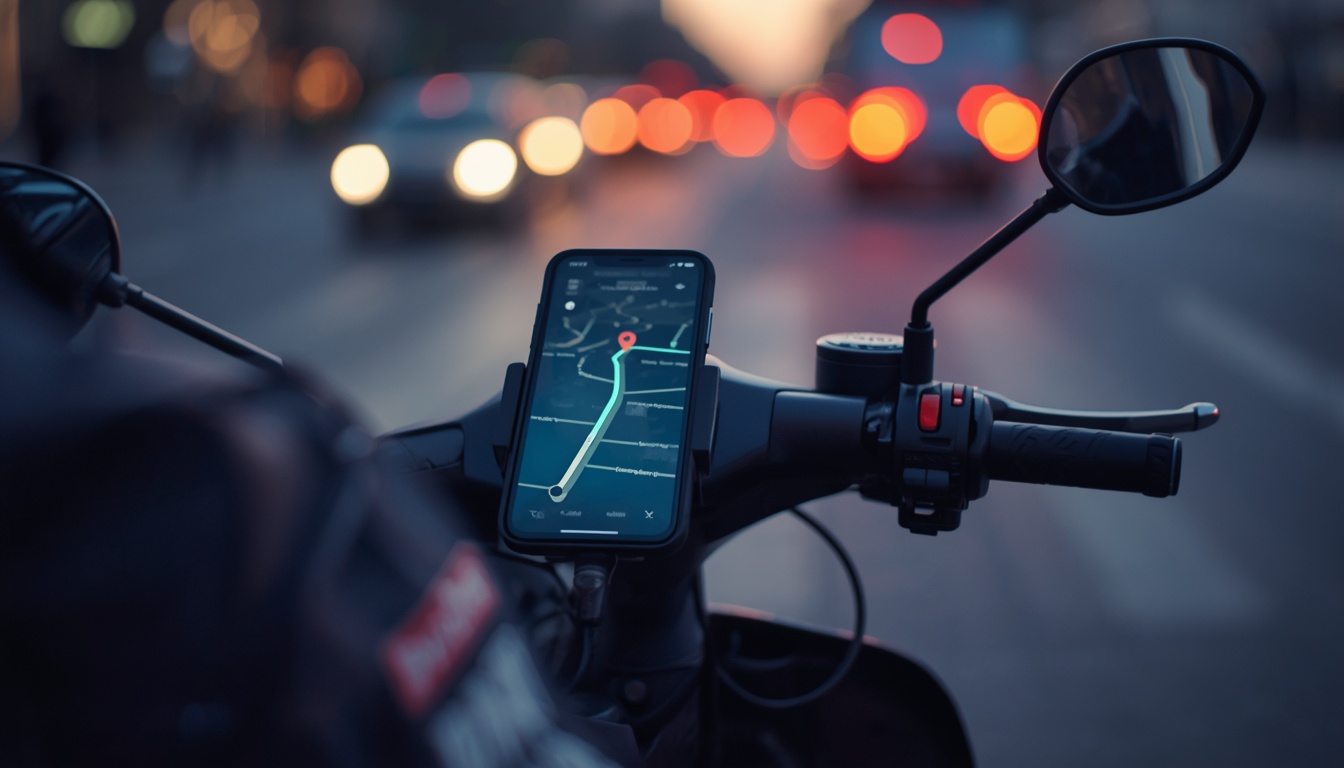
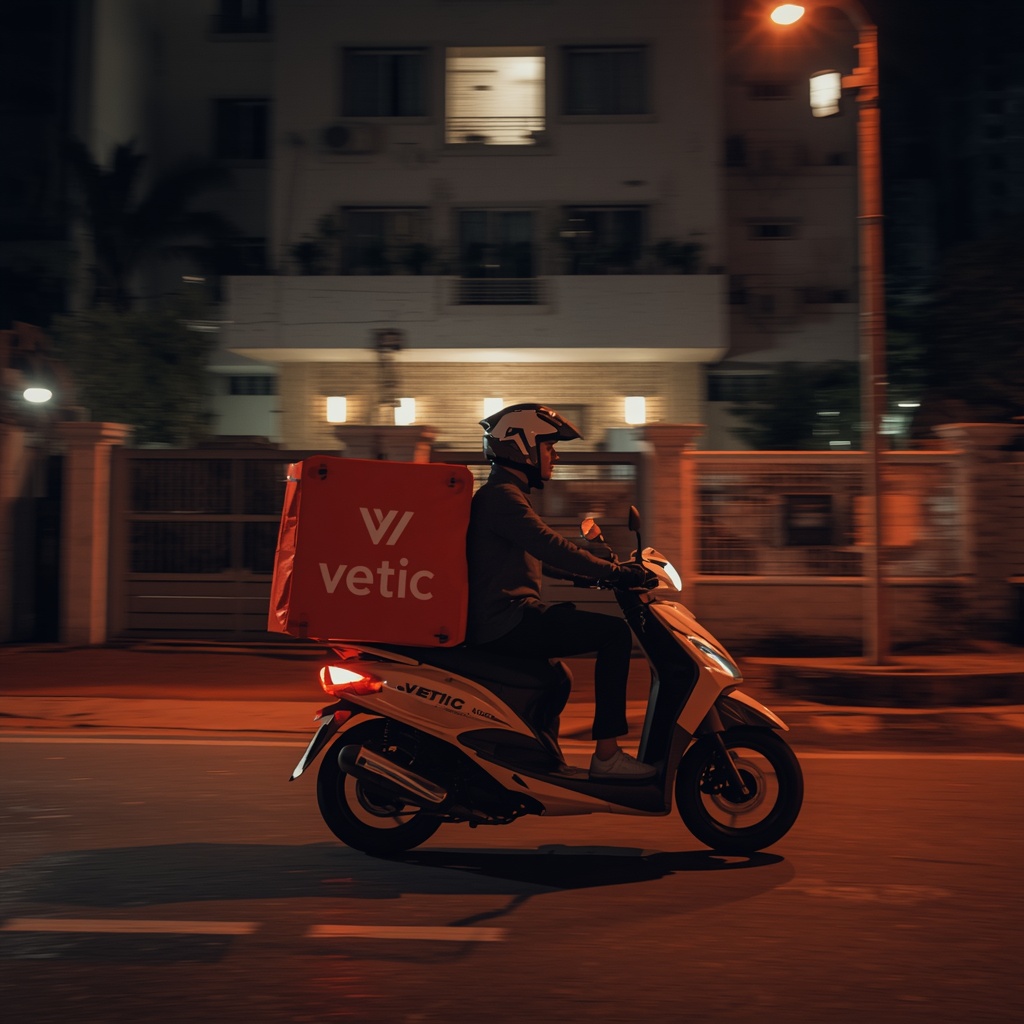
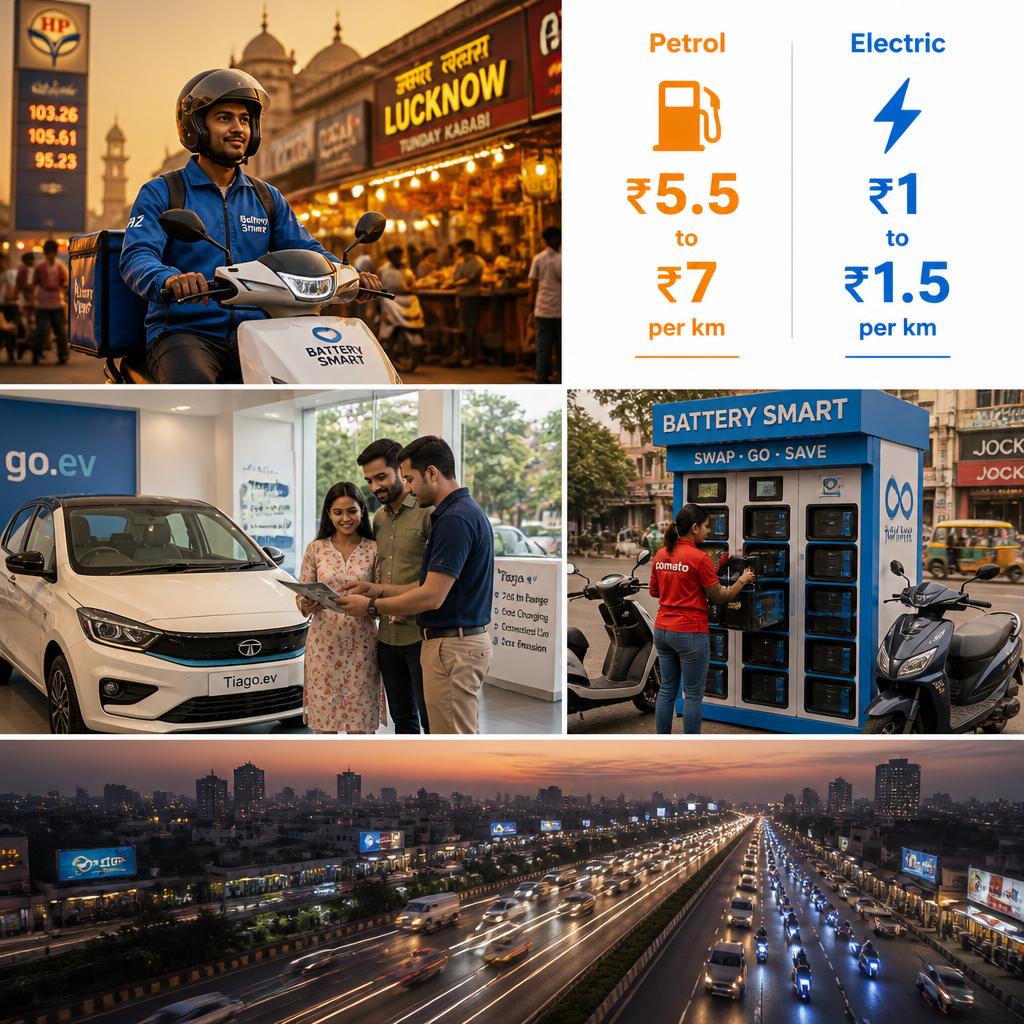
Ravi Kumar has been riding the same 125cc petrol scooter through Lucknow’s traffic for six years. He delivers food for a living, clocking close to 80 kilometres every working day. In May 2026, when fuel prices climbed past ₹100 a litre in most Indian cities, he sat down with a piece of paper, did some arithmetic and walked into an electric scooter showroom the following morning. He has not looked back.
Ravi is not an environmentalist. He has never used the phrase “carbon footprint” in a sentence. What he did was math. And across India, from delivery riders in Uttar Pradesh to salaried techies in Bengaluru to first-time car buyers in Nashik and Coimbatore, millions of people are doing the same calculation and arriving at the same answer.
India’s electric vehicle surge in 2026 is not a green story. It is a wallet story.
- India sold 2.45 million electric vehicles in FY2026, a 24.6% jump YoY.
- Two-wheelers accounted for 58% of those sales, and in April 2026 alone, that segment grew by a staggering 60.73%.
- The overall EV market penetration has crossed 8.5% of all vehicle sales, a threshold that analysts had expected India to reach only by 2027 or 2028.
The tipping point arrived ahead of schedule, and it came wrapped in a crude oil crisis.
The origin of the shock sits thousands of kilometres away from any Indian petrol pump. Renewed tensions around the Strait of Hormuz, the narrow waterway through which roughly 20% of the world’s traded oil passes, sent Brent crude prices sharply higher in early 2026.
- India imports over 85% of its crude oil, which means it absorbed that hit almost in full.
- The Indian crude oil basket cost rose 133% between January and March 2026.
- Oil Marketing Companies, already bleeding losses of approximately ₹13.50 per litre on diesel, had held retail prices artificially low for months.
When they finally moved, they moved hard. Petrol prices rose by ₹7.5 per litre in just 11 days in May 2026, one of the sharpest hike cycles in recent memory.
Delhi crossed ₹100 a litre. Consumers who had been only half-paying attention to EVs suddenly started paying very close attention indeed.
The arithmetic that follows this kind of price shock is simple and devastating to petrol’s case.
- A petrol car costs between ₹5.5 and ₹7 per kilometre to run in 2026.
- A home-charged electric vehicle costs between ₹1 and ₹1.5 per kilometre.
For a commuter covering 1,500 kilometres a month, which is ordinary for a salaried professional in a large Indian city, that gap translates to savings of over ₹8,500 every single month.
Over a year, that is more than ₹1 lakh. Over five years, a Tata Nexon EV buyer saves ₹2 to ₹3 lakh compared with someone who chose the petrol version of the same car.
The upfront premium that had long been the biggest psychological barrier to EV adoption, typically ₹1 to ₹1.5 lakh more for a car, suddenly looked very different when placed beside those running cost numbers.
“If there is a ₹10 increase in petrol price, people typically filling 100 litres a month face ₹1,000 more in expenses. That disturbs the dynamics for an entry buyer and makes them reassess their powertrain choice.” Shailesh Chandra, MD, Tata Motors Passenger Vehicles (Source: Autocar India, May 2026)
Tata Motors, the company that effectively created the mass-market EV conversation in India with the Nexon EV and the Tiago EV, is moving at a pace its own executives describe as unprecedented. Shailesh Chandra, the company’s managing director for passenger vehicles, confirmed in May 2026 that EV demand had jumped two to two and a half times in just two months. In response, Tata is scaling its EV manufacturing capacity by 50%, from 10,000 to 15,000 units per month. The Tiago EV was relaunched at ₹6.99 lakh, its lowest price ever, a clear signal that volume is now the priority.
The two-wheeler segment tells the most dramatic version of this story, because it is the segment that is most intimately connected with how ordinary Indians earn their livelihoods.
India’s electric two-wheeler market hit 1.90 lakh units in March 2026, a monthly all-time high, representing 45% year-on-year growth.
TVS Motor, Bajaj Auto and Hero MotoCorp together control 61% of this market now. These are not startups chasing a niche.
These are legacy manufacturers who built their empires on petrol engines and have now placed enormous bets on electric motors. Their dominance in the segment signals something important: the electric two-wheeler is no longer an experiment. It is the mainstream.
Uttar Pradesh has quietly become the single largest EV market in the country, with 4 lakh units sold and an 18% share of national sales. That fact alone dismantles a common assumption about EV adoption, that it is a phenomenon concentrated in wealthy, tech-forward metros.
UP is a state of 230 million people, many of them daily-wage workers, small traders and gig economy riders for whom every rupee of fuel savings is a real and significant income gain.
Battery swapping networks like Battery Smart, which now operates over 1,600 stations across 50 cities, are the quiet infrastructure beneath this adoption story.
For a delivery rider like Ravi in Lucknow, a swappable battery means no long charging wait between shifts.
It means his scooter is ready when he is.“There is a sharp jump in just two months. It is about 2 to 2.5 times what it used to be for EVs.”Shailesh Chandra, Tata Motors, on the demand spike in May 2026.
The tier-2 and tier-3 city story is equally striking and perhaps more important for what it says about where India goes from here. Two-wheelers make up 58% of EV sales in tier-2 cities and 71% in tier-3 towns. These buyers are not drawn by technology. They are drawn by payback periods.
The question they are asking is not “is this scooter good?” but “how many months before I recover the extra cost?”
When the answer to that question dropped below 18 months, and in some cases below 12, the floodgates opened.
But India’s EV story is not without its complications, and good journalism demands that they be named. There are only around 29,000 public charging stations nationally as of December 2025.
Karnataka, the most EV-ready state in the country, has approximately 6,096 of them.
In most other states, a broken-down EV on a highway at night remains a genuine and unsolved problem. The charging infrastructure gap is not a minor footnote. It is a structural ceiling on how fast adoption can travel beyond the cities.There is also a meaningful irony embedded in the fuel price story.
Oil Marketing Companies held retail petrol and diesel prices below market cost for months before the May 2026 hike, effectively muffling the price signal that would have pushed more consumers toward EVs even sooner.
The crisis accelerated EV adoption not purely through economics but through psychology. Seeing a price jump of ₹7.5 in 11 days triggered a visceral reaction that months of gradual price creep had not. The tipping point came, but it was as much emotional as it was rational.The GST rationalisation of September 2025 added a further complication. While it lowered taxes on EVs, it simultaneously reduced taxes on entry-level ICE vehicles, widening the upfront price gap between electric and petrol options by ₹1.1 to ₹1.5 lakh for passenger cars.
The policy worked against itself in one hand even as it helped in the other. Battery cost volatility, driven by the global lithium and cobalt markets, remains a structural risk that manufacturers openly acknowledge. And the end of FAME-II subsidies for electric two-wheelers in March 2026, replaced by the PM E-DRIVE scheme, removed a financial cushion that had supported early adoption. The market has matured enough to survive without it, industry observers say, but the transition bears watching carefully.Maruti Suzuki, the company that defines mass-market car ownership for most Indians, is entering the EV space in late 2026. When Maruti moves, India moves. Its entry will test whether the current momentum is a fuel-price spike response or a genuine, durable shift in how India thinks about personal mobility. The answer, most likely, is both. The fuel shock lit the match. The math keeps the fire burning.India has set a target of 30% EV penetration by 2030. Getting from 8.5% to 30% in four years requires charging infrastructure to scale at a pace the current 29,000 station count makes difficult to imagine. It requires battery prices to continue falling. It requires tier-2 and tier-3 service networks to mature so that a buyer in Gorakhpur feels as confident about their EV purchase as someone in Bengaluru. These are real potholes, both literal and economic, on the road ahead.
But Ravi Kumar in Lucknow is not thinking about 2030 targets. He is thinking about the fact that his monthly fuel cost has dropped from roughly ₹4,800 to just under ₹700. He is thinking about the loan he is paying down faster now.
He is thinking about the fact that, for the first time in years, a price hike at the petrol pump is someone else’s problem.
India’s electric revolution was always going to come. What changed in 2026 is that it stopped being a conversation about the future and became, for millions of ordinary people, a decision they made last week.