
Mindfully Sorted Sarmistha Mazumder: How Immersive Women’s Retreats Are Redefining Mental Wellness in India 2026
She worked in corporate training, watched women carry impossible loads in silence, and decided the answer was not another app. It was a weekend in the mountains with people who understood. Mindfully Sorted is what she built instead. It is working.
- Mindfully Sorted is a Bengaluru-based mental wellness platform founded by Sarmistha Mazumder, focused on working adults and particularly women, through immersive retreats, corporate counselling and a mindful travel model.
- The company has run over five editions of its flagship Flourish Women’s Retreat at locations including Yercaud, Chikmagalur, Rishikesh and Coorg, each integrating therapeutic sessions, yoga, breathwork and emotional resilience frameworks.
- It is incubated at NSRCEL, the incubator of IIM Bangalore, and has received support from IIMCIP, giving it both institutional credibility and access to entrepreneurial mentoring.
- Mindfully Sorted operates as a bootstrapped venture, building revenue through retreat registrations, corporate wellness programmes, and its developing counselling platform.
- The company’s corporate counselling arm has worked with organisations including Accenture, and provides emotional resilience and soft skills frameworks for working professionals.
- India’s mental health market is projected to reach $11.3 billion by 2030, growing at a compound annual rate of over 15%, with organised retreat-based wellness among the fastest-growing sub-segments.
- Mindfully Sorted is developing a technology platform including a Match the Therapist feature to extend its reach beyond in-person retreats to urban professionals who cannot attend residential programmes.
The thing about carrying too much, quietly, over a long period of time, is that it does not usually end with a dramatic moment. It ends with a Tuesday afternoon when you realise you have not felt like yourself in so long that you are not entirely sure what feeling like yourself actually felt like anymore. For millions of working women in India, that experience is not exceptional. It is ordinary. The pressure of professional ambition stacked on top of domestic expectation stacked on top of the daily management of other people’s needs, with almost no structured space to set all of that down and simply be in your own head without an agenda, has become the defining quiet crisis of a generation of Indian women that no workplace wellness initiative has come close to solving.
Sarmistha Mazumder noticed this for years. She worked in corporate training, building and delivering soft skills and emotional intelligence programmes for some of India’s largest organisations, including Accenture. She was good at it. She could read a room full of people who were performing fine while falling apart, and she knew exactly how to create the conditions where something honest could happen in a professional context. What she could not do, inside the 90-minute workshop format that corporate training operates in, was give people anything that lasted. The insight would land. The reflection would begin. And then the next meeting would start and everything would close back up again.
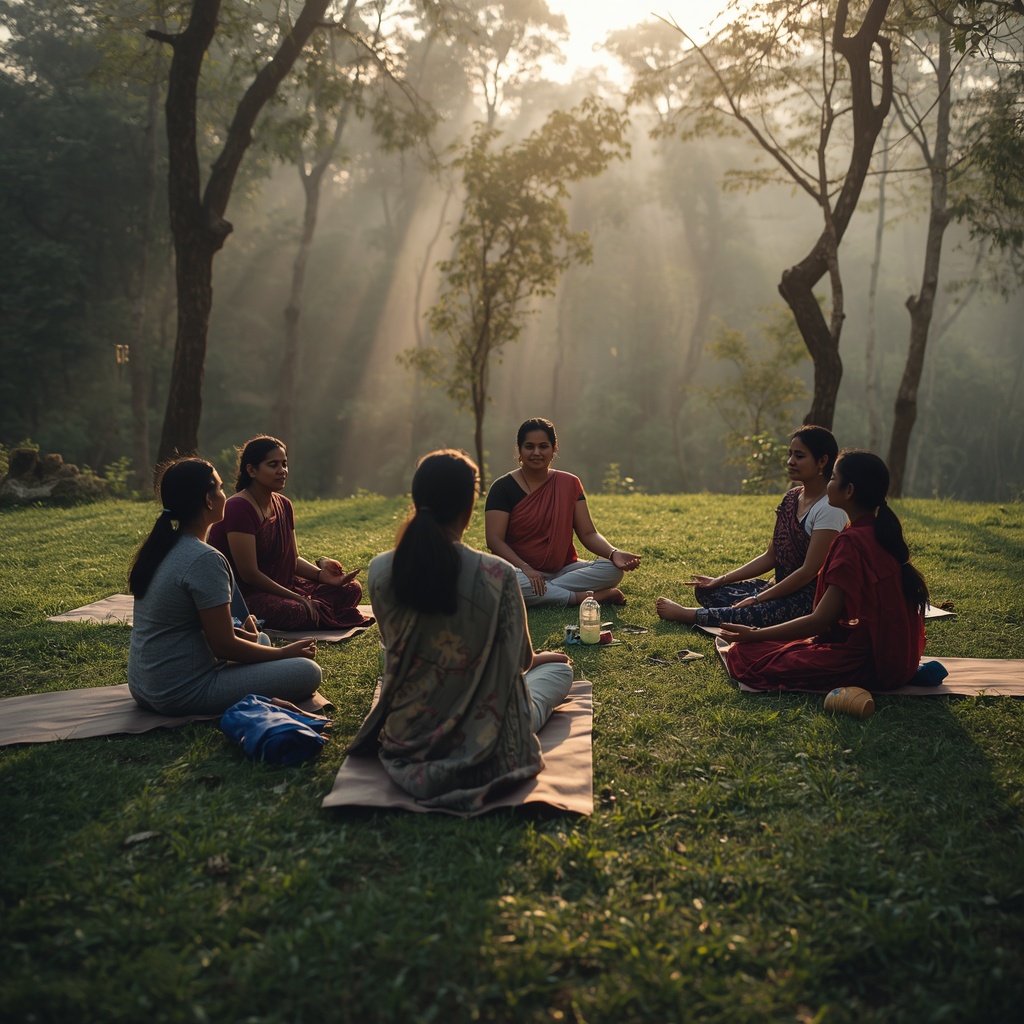
What she built instead was Mindfully Sorted, a Bengaluru-based mental wellness company that takes its work somewhere the usual interruptions cannot follow. Not into a boardroom. Not onto a screen. Into the hills of Yercaud. Into the coffee estates of Chikmagalur. Into the ashram-edged banks of the Ganges at Rishikesh. Into the green quiet of Coorg. The flagship offering is the Flourish Women’s Retreat, an immersive residential experience of two to three days that combines therapeutic group sessions led by trained counsellors and coaches, yoga and mindfulness practices, breathwork, nature-based movement, and structured reflection exercises designed to help participants not just understand what they are carrying but actively decide what to put down.
The Flourish Retreat is not a luxury spa weekend. The distinction matters and Mazumder is deliberate about making it. The goal is not relaxation, though rest is part of what happens. The goal is something more specific and more demanding: the kind of structured inner work that most people have never been given either the time or the container to do. Participants emerge from a Mindfully Sorted retreat having been facilitated by specialists, having been in genuine conversation with other women who are navigating parallel experiences, and having made decisions, often quietly, privately, without announcement, about how they want to live differently going forward.
The corporate arm of Mindfully Sorted extends the same philosophy into organisational settings, but within the constraints that corporate formats allow. Emotional resilience workshops, mental health awareness sessions, counselling access programmes for teams, and leadership development frameworks built around emotional intelligence rather than performance metrics alone. This side of the business provides a more consistent revenue base than retreat registrations, which are inherently episodic, while also creating a pipeline of individuals who experience Mindfully Sorted’s approach in a professional context and later seek out the immersive residential offering on their own.
Mindfully Sorted is incubated at NSRCEL, the startup incubator of IIM Bangalore, and has also received support from IIMCIP. That institutional backing is not simply a credential. It reflects a recognition that mental wellness delivered through immersive retreat and mindful travel formats represents a genuine emerging business category, not a lifestyle side project, and that the entrepreneurial infrastructure required to scale it responsibly needs the same support any serious startup requires. The company is also developing its technology platform, including a Match the Therapist feature that aims to extend its reach beyond residential retreat participants to urban professionals who want consistent access to qualified mental health support but cannot commit to a residential programme.
The broader context in which Mindfully Sorted is operating makes the timing of its growth meaningful. India’s mental health market is projected to reach $11.3 billion by 2030, growing at a compound annual rate of over 15%. Awareness has increased, stigma has reduced, and the post-pandemic generation of Indian professionals has a fundamentally different relationship with mental health than its predecessors. They know it is real. They know it requires attention. And they are increasingly willing to invest in addressing it in ways that go beyond the emergency psychiatric intervention that was historically how mental healthcare was framed in India. The retreat wellness category is one of the fastest-growing sub-segments within that broader market, and Mindfully Sorted sits at a specific and underserved intersection within it: the working Indian woman, aged 28 to 50, who is high-functioning by every external measure and quietly overwhelmed by everything the external measure does not capture.
Scaling Mindfully Sorted without losing what makes it work is the central challenge Mazumder is navigating. The depth of the retreat experience depends on small group sizes, carefully selected venues, and the quality of facilitation. None of those things scale easily through simply adding more retreat dates or larger cohorts. The technology layer being developed addresses part of that constraint, extending reach between retreats and into markets where the in-person residential format is not yet accessible. But the core residential experience, the thing that participants describe as genuinely life-changing rather than merely enjoyable, remains dependent on conditions that resist commoditisation. That is both the company’s greatest strength and its most honest limiting factor. The women who find Mindfully Sorted tend to return. And they tend to bring others with them. That is not a growth hack. It is the oldest form of sustainable business there is: doing something so well that the people it serves become its most credible advocates.